


 Categories
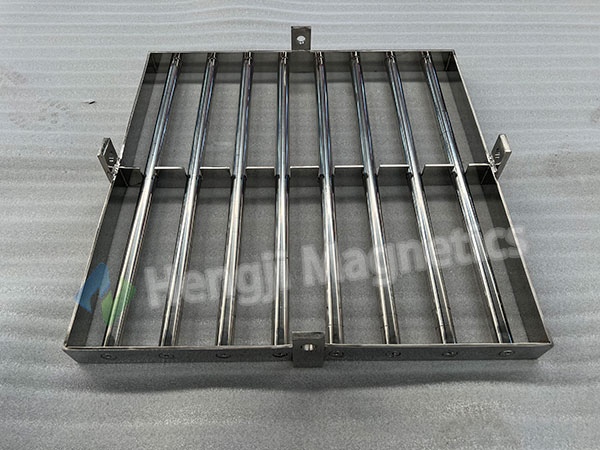
For any feed mill, managing operating costs is essential for profitability. A major, yet often overlooked, expense is the frequent replacement of worn and torn sieving screens. What if the key to significantly reducing this cost wasn’t a major capital investment, but a simple strategic adjustment? The answer often lies in optimizing the position of your magnetic grate separators. This article explains how the strategic placement of a grate magnet can protect your screens, cut costs, and improve overall plant efficiency.
The Hidden Cost: Why Do Screens Fail So Quickly?
The primary culprit is ferrous contamination. Raw materials like grains and meals inevitably contain tramp metal—nails, wire fragments, rust flakes—introduced during harvesting, transport, and handling. During processing, these hard, abrasive contaminants act like tiny blades, constantly scouring and puncturing your delicate sieve screens. This leads to:
-
Premature screen failure and costly replacements.
-
Inconsistent particle size in your final product.
-
Potential damage to downstream equipment like hammer mills and mixers.
The Common Pitfall: Why Your Current Magnet Might Not Be Working
Most mills already use magnetic grate separators. So why do screens still fail? The issue is typically placement, not the presence of a magnet. Common mistakes include:
-
Installing After the Sieve: A grate magnet placed here protects the final product but does nothing to shield the screen from damage.
-
Ineffective Positioning: A magnet installed too late in the feed line may be buried by a dense material stream, allowing contaminants to pass through untouched.
 The Proven Solution: Strategic Upstream Placement
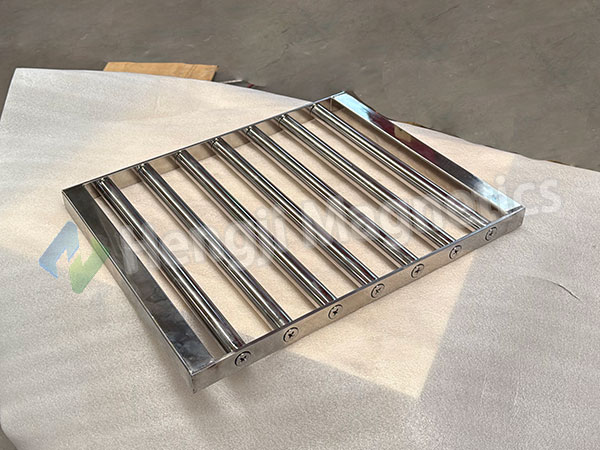
The most effective strategy is to position your grate magnet as a first line of defense. Install it directly in the transfer chute or pipeline before material reaches the sieve. This ensures ferrous metal is captured before it can damage expensive screens.
A Real-World Case Study: Dramatic Cost Savings
Consider the results from one medium-sized feed mill:
-
The Problem: The facility was replacing nearly 100 sieve screens annually, with total related costs (parts + downtime) nearing $40,000.
-
The Action: They simply relocated their existing magnetic grate separators upstream, directly into the conveyor line feeding the pre-grind stage.
-
The Result: Within a month, screen replacement frequency dropped by over 70%. After one year, screen purchases fell to under 30. This simple change saved over $20,000 in direct parts costs, plus thousands more in recovered production time—achieving a total annual saving exceeding $50,000.
 Optimizing Your Installation for Maximum Protection
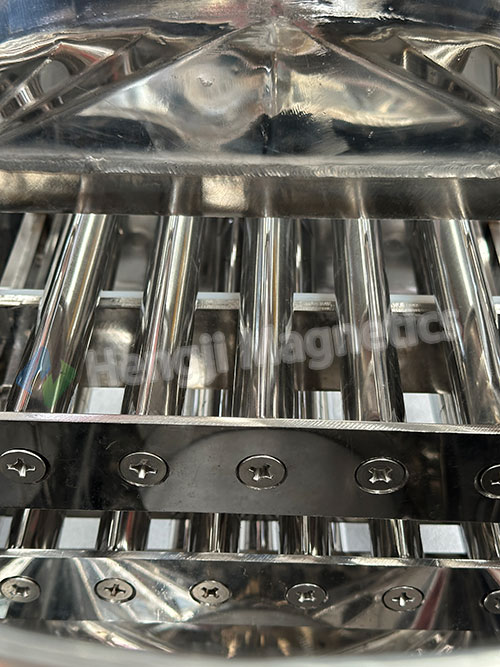
Correct placement is the first step. Optimizing the installation of your grate magnet ensures peak performance.
Adopt a “Layered Defense” Layout
For critical lines, install multiple magnetic grate separators in a staggered formation. This creates overlapping magnetic fields to catch any contaminant that might slip past a single unit.
Ensure Full Material Exposure
Position the grate magnet so the entire material stream must flow through its magnetic field. Avoid installations where material can flow around the sides or in a dense, uninterruptible column through the center.
Select the Right Magnet for the Job
-
High-Strength Magnets: Choose grate magnet units built with high-grade Rare Earth (Neodymium) magnets. They provide the powerful, deep-reaching magnetic force needed to pull fine iron from fast-moving material streams.
-
Permanent Magnet Advantage: Modern magnetic grate separators are permanent magnets. They require zero electricity to operate, making them energy-free and extremely reliable. Maintenance involves only the simple, periodic cleaning of captured metal.
The Ripple Effect: Broader Benefits for Your Mill
While protecting screens delivers immediate savings, the benefits of a well-placed grate magnet extend further:
-
Protects Downstream Equipment: By removing metal before crushing and mixing stages, you also prevent costly wear on hammer mill hammers, bearings, and mixer shafts.
-
Enhances Product Purity: Cleaner raw materials lead to a more consistent, higher-quality final feed product.
-
Improves Operational Safety: Removing metal eliminates a potential spark source and protects equipment from catastrophic damage.
Your Action Plan: Review and Optimize
Reducing your sieve screen costs could be one simple audit away.
-
Map Your Process: Identify all points where raw materials are conveyed before sieving and grinding.
-
Audit Magnet Placement: Are your magnetic grate separators acting as a true first line of defense?
-
Consult an Expert: Work with a magnetic separation specialist to analyze your specific material flow and recommend the optimal grate magnet type and positioning for your unique layout.
Conclusion: A Small Change, A Major Impact
In the quest for operational efficiency, sometimes the most powerful solutions are the simplest. Correctly positioning your magnetic grate separators is a low-cost, high-impact strategy. It directly tackles a major cost center by protecting your most vulnerable components. This smart use of a grate magnet transforms it from a simple metal catcher into a strategic asset for cost reduction, quality assurance, and equipment longevity.
Is your feed mill ready to stop the sieve drain and unlock significant savings? Contact our application engineers today. We can help you review your current setup and design an optimized grate magnet protection strategy that pays for itself many times over through reduced screen replacement and downtime.


