


 Categories
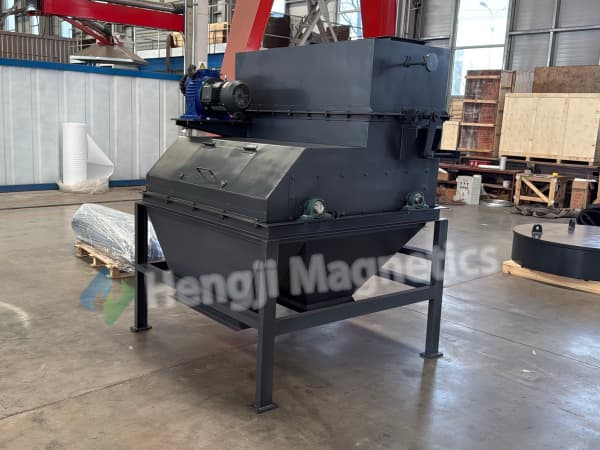
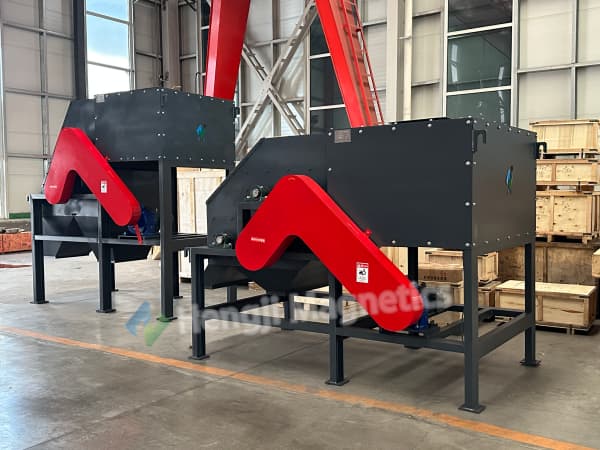
For quartz destined for photovoltaic glass, semiconductor components, or high-end lighting, purity is everything. The threshold that separates commodity quartz from premium, high-value material is often 0.01% iron oxide—just 100 parts per million. Achieving this requires more than standard magnetic separation. It demands a high intensity magnetic separator engineered for extreme precision. Specifically, a magnetic roll separatorconfigured for ultra-fine duty becomes the final gatekeeper, physically extracting the last traces of iron without chemicals. This article explains the systematic approach to reaching this purity benchmark.
The Challenge: Understanding the Last 0.1%
After crushing, flotation, and perhaps acid leaching, your quartz sand may already be quite clean—perhaps 0.1% iron remaining. But that final 0.1% is the most stubborn. It consists of:
-
Included Iron: Micron-sized particles locked within quartz grains or embedded on surfaces.
-
Weakly Magnetic Minerals: Hematite, goethite, ilmenite—far less magnetic than magnetite.
-
Surface Films: Ultra-thin iron oxide coatings adhered to quartz particles.
These contaminants are fine, weakly magnetic, and intimately associated with the quartz. Capturing them requires magnetic force of an entirely different order.
 The Ultimate Configuration: Pushing the Magnetic Roll Separator to Its Limits
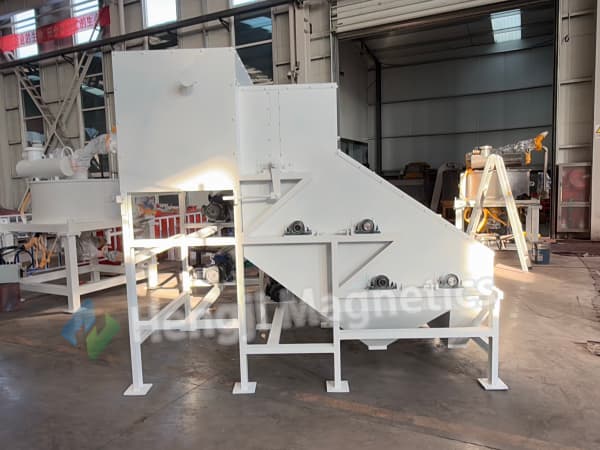
Achieving sub-100 ppm purity transforms a standard high intensity magnetic separator into a precision instrument through several critical upgrades.
1. The Magnetic Circuit: Extreme Strength Plus Gradient
-
Magnet Material: Only top-grade Neodymium (NdFeB) or Samarium Cobalt magnets suffice, arrayed in multi-pole configurations to generate surface fields exceeding 12,000 Gauss on the magnetic roll separator.
-
The Gradient Secret: Raw field strength is not enough. The roll must be fitted with a specialized matrix—fine stainless steel wool, expanded mesh, or profiled pole tips. These elements create intense magnetic gradients, generating localized forces capable of capturing sub-micron, weakly magnetic particles. This is the physical mechanism that makes deep purification possible.
2. Precision Feeding and Multi-Stage Processing
-
Thin-Layer Feeding: A precision vibratory feeder must present the quartz as a monolayer or just a few particles deep. Thick beds bury impurities, allowing them to escape the high intensity magnetic separator.
-
Three-Pass Strategy: Single-pass separation is rarely sufficient. Implement a circuit:
-
Roughing: Removes the bulk of remaining magnetic material.
-
Cleaning: The main purification stage, operating with optimized thin feed and controlled roll speed on the magnetic roll separator.
-
Scavenging: Polices the non-magnetic product and recovers any quartz lost to the magnetic stream.
-
-
Variable Speed Control: Roll speed must be finely adjustable to balance magnetic pull against centrifugal force—critical for retaining fine magnetic particles while rejecting clean quartz.
 Creating the Perfect Feed for Your Magnetic Roll Separator
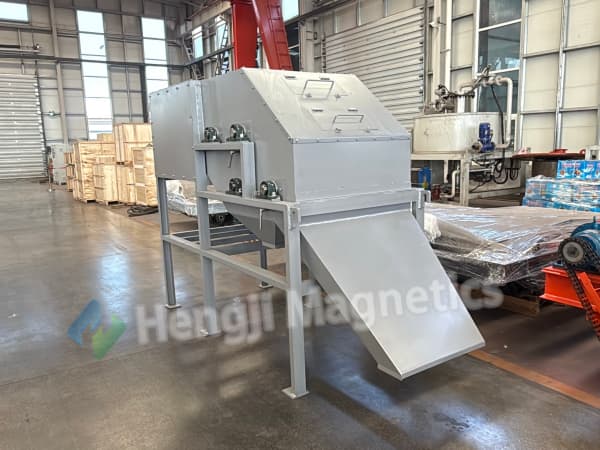
Even the most powerful high intensity magnetic separator needs properly prepared feed.
Upstream Preparation: Liberation and Classification
-
Ultra-Fine Grinding & Attrition: Use stirred mills or ceramic ball mills, not to reduce size excessively, but to liberate included iron and scrub surface coatings. Mechanical attrition breaks grain boundaries, exposing trapped impurities for the magnetic roll separator to capture.
-
Tight Size Fractions: Screen the quartz into narrow cuts (e.g., -100+150 mesh, -150+200 mesh). Magnetic force acts differently on different particle sizes. Processing each fraction separately with optimized parameters yields far better results than treating a broad size range together.
Downstream Protection: Preventing Recontamination
-
Non-Magnetic Contact Surfaces: All chutes, hoppers, and collection bins downstream of the high intensity magnetic separator must be stainless steel (304/316L) or engineered polymer. Mild steel or abraded surfaces will reintroduce iron.
-
Clean Environment: Use demineralized water if wet processing. In dry systems, consider filtered air and sealed packaging to prevent airborne contamination.
Intelligent Process Control: The Key to Consistency
Achieving 100 ppm once is an achievement. Maintaining it continuously requires smart automation.
-
On-Line Monitoring: Install an XRF-based iron analyzer at the magnetic roll separator outlet. Real-time data allows the control system to make micro-adjustments to feed rate, roll speed, or magnetic field strength (on electromagnetic models), compensating for feed variations.
-
Rigorous Maintenance: Establish a strict schedule for inspecting the high intensity magnetic separator roll matrix. Replace worn or clogged media immediately. Verify field strength periodically with a Gauss meter to detect any decay.
 Conclusion: Precision Engineering for a Premium Product
Reducing iron in quartz to below 0.01% is not a task for standard equipment. It requires a high intensity magnetic separator configured with extreme field strength, high-gradient matrix, multi-stage processing, and thin-layer feeding. It demands upstream liberation and downstream protection. And it requires intelligent control to maintain stability.
A properly engineered magnetic roll separator system is the last, critical checkpoint—a precision magnetic scalpel that extracts the final traces of iron, granting your quartz access to the world’s most demanding and lucrative markets.


