


 Categories
A wet high intensity magnetic separator operates in one of the most challenging environments in mineral processing. Slurry, abrasion, and moisture are constant, and the consequences of neglect are swift. Unlike dry equipment, where dust can be brushed away, a plate magnetic separator in wet service faces two relentless performance killers: slurry buildup that physically blocks the field, and hidden magnetic decay accelerated by corrosion. Mastering the maintenance of this equipment means mastering the management of water, slurry, and magnetic integrity.
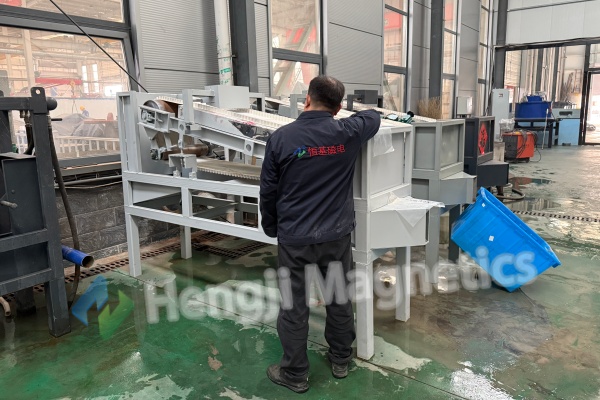
The Cleaning Imperative: Preventing “Mud Lock”
In a wet high intensity magnetic separator, the first line of defense is aggressive, scheduled cleaning. Slurry does not simply flow through—it leaves deposits that, if allowed to harden, become permanent barriers to magnetic capture.
The Magnetic Plate and Discharge Belt: Clean Every Shift
The magnetic plate surface and the discharge belt are where separation happens. They must be cleaned at least every eight hours of operation.
-
Why: Micro-fine particles, iron oxides, and clay minerals adhere to these surfaces. If not removed, they form a hardened scale that physically insulates the magnetic field from the slurry. The result is zero effective separation.
-
How: Immediately after stopping feed, use high-pressure clean water to blast the entire plate surface, both sides of the belt, scrapers, and all slurry-contact areas. Continue until discharged water runs clear. This is not optional—it is mandatory.
-
Higher Frequency: For high-solids, high-viscosity, or high-iron feeds, increase cleaning to every four hours.
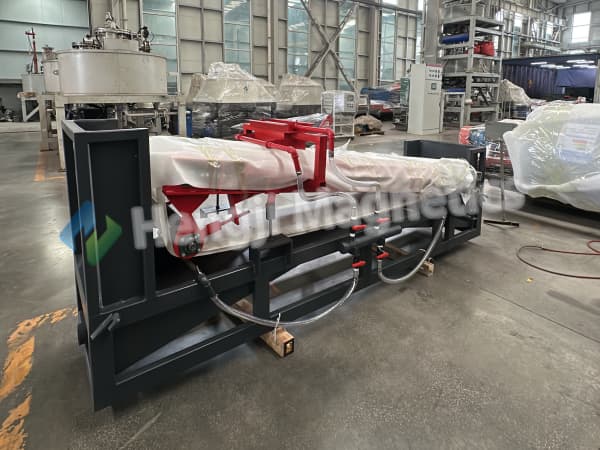 Feed Box, Weir, and Flow Channels: Inspect Daily
-
Why: Debris, fibers, and coarse particles accumulate in the feed box and along weirs, disrupting uniform slurry distribution. Uneven flow creates dead zones and localized high velocities, both of which destroy separation efficiency in any plate magnetic separator.
-
How: Open access ports daily, remove any visible debris, and flush with high-pressure water.
Drain Lines: Clear Weekly
-
Why: Settled fines gradually block drain lines and valves, eventually causing water to back up into the separator.
-
How: Back-flush or mechanically clear lines at least weekly.
The Critical Rule: Any production stop—whether planned, emergency, or shift change—begins with a complete flush of the wet high intensity magnetic separator. A dry, crusted plate is a failed separator.
Magnetic Monitoring: Detecting Hidden Decay
Slurry environments are aggressive. Even encapsulated magnets can degrade through micro-cracks, chemical corrosion, or mechanical wear. You cannot see this decay; you must measure it.
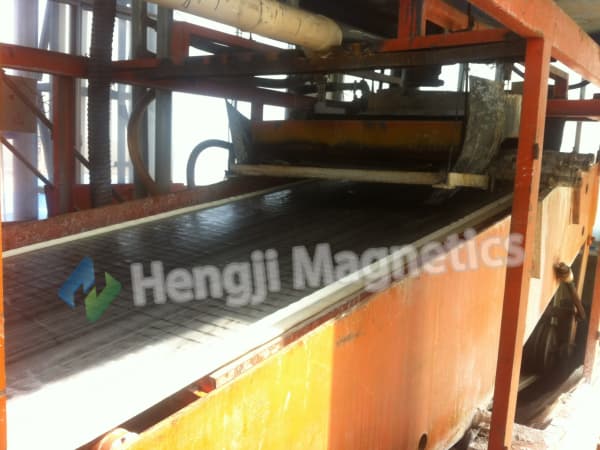 Quarterly Gauss Meter Survey: The Gold Standard
-
Procedure: Thoroughly dry the plate magnetic separator. Using a calibrated Gauss meter, take measurements at a fixed grid pattern across the magnetic plate surface (e.g., every 20 centimeters). Record the field strength at a consistent distance (typically 5mm from the surface).
-
What to Watch: Compare readings to baseline data. Pay special attention to edges, weld seams, and joints—these are the first areas where corrosion breaches the protective layer.
-
Tolerance: In wet service, allow no more than 5% local decay or 2% average decay per quarter without investigation. Any sudden drop warrants immediate inspection of seal integrity.
Process Indicators: The Early Warning System
If your wet high intensity magnetic separator is losing magnetic strength, the process will tell you before the Gauss meter does.
-
Tailings Inspection: Regularly observe tailings. Visible magnetic particles (e.g., magnetite grains or iron filings) are a direct sign that field strength is insufficient.
-
Concentrate Grade and Recovery: If feed remains consistent but concentrate grade drops or recovery falls, suspect magnetic decay after ruling out slurry density and flow variations.
-
Rinse Effectiveness: If, after flushing, a stubborn “mud film” remains on the plate surface, the magnetic field may no longer be strong enough to overcome adhesion forces. This is a symptom of decay.
Structural Integrity: Annual Deep Inspection
-
What to Check: Inspect the stainless steel protective layer over the plate magnetic separator magnets for cracks, wear, or distortion. Check all fasteners for tightness. Examine the magnet encapsulation for blisters or fissures.
-
Why: Any breach in the protective envelope allows moisture to reach the magnets, triggering rapid, irreversible corrosion and demagnetization.
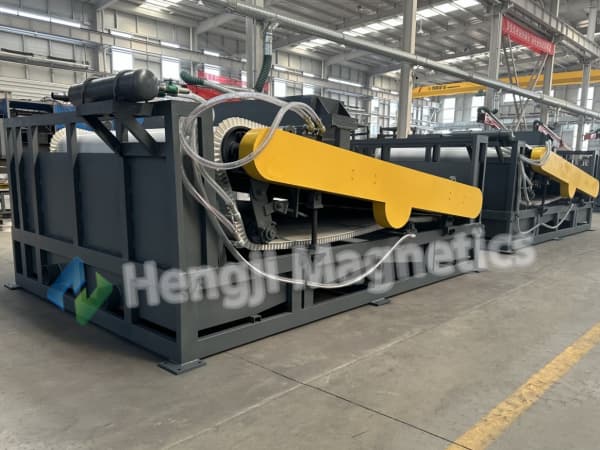 Maintenance Records: Building a Health File
For a wet high intensity magnetic separator, records are not bureaucratic overhead. They are diagnostic tools.
-
Flush Log: Record time, water pressure, and observed flush quality after each cleaning.
-
Slurry Parameters: Document feed density, pH, and temperature. These correlate directly with corrosion rates and cleaning effectiveness.
-
Gauss Readings: Maintain a time-series chart of field strength at each measurement point.
-
Corrosion Log: Photograph and document any signs of rust, coating failure, or wear.
Conclusion: Discipline Beats Degradation
A plate magnetic separator in wet service is a battle against time and chemistry. High-frequency, disciplined flushing is the shield that prevents acute failure. Systematic magnetic monitoring—quarterly Gauss surveys and attentive process observation—is the probe that catches chronic decay before it destroys performance. The formula is simple: flush every shift, measure every quarter, document everything. Your wet high intensity magnetic separator will reward that discipline with years of reliable, high-grade separation.


