


 Categories
In modern mineral processing, non-metallic mineral purification, and new material preparation, ferrous impurity content directly determines product grade and market price. Whether it is micron-scale iron powder or weakly magnetic minerals embedded deep in the material, the difficulty of removing them is directly tied to profit margins. Facing ever-tighter purity requirements, the industrial magnetic separator is undergoing a transformation from “coarse iron removal” to “precision separation.” The key to this leap is high intensity magnetic separation. This article explains how to understand and select a magnetic separator that delivers true deep purification.
Why Does Conventional Iron Removal Fall Short? How Does High Intensity Magnetic Separation Work?
Many customers ask: we already have iron removal equipment on our line, so why do black spots or excessive iron still appear in our product? The usual reason is that conventional equipment lacks sufficient field strength to penetrate thick material layers or overcome the mechanical forces holding fine, weakly magnetic impurities.
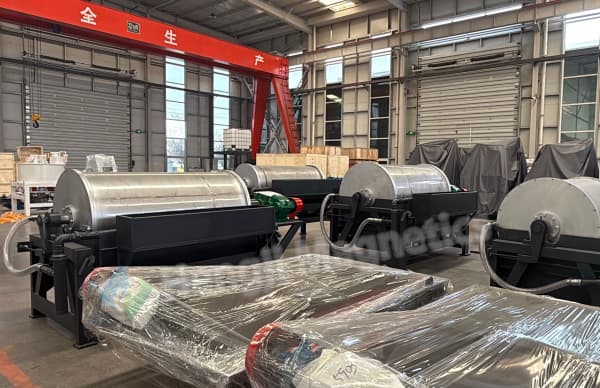
True high intensity magnetic separation is not simply adding more magnet blocks. It relies on a synergy of precision magnetic circuit design and high-performance magnetic sources. An advanced industrial magnetic separator uses computer-optimized magnetic circuits with high-coercivity, high-remanence rare earth Neodymium magnets. This design generates extremely high field strength and gradient in the separation zone. A high gradient means that magnetic field lines change sharply at the microscale, creating a powerful capture force on fine, weakly magnetic particles (hematite, limonite, paramagnetic contaminants). This overcomes gravity and centrifugal force, achieving deep purification.
 How Does an Industrial Magnetic Separator Handle Both Dry and Wet Materials?
Industrial materials vary widely—dry powders and dense slurries. A common question: can the same industrial magnetic separator adapt to different material states?
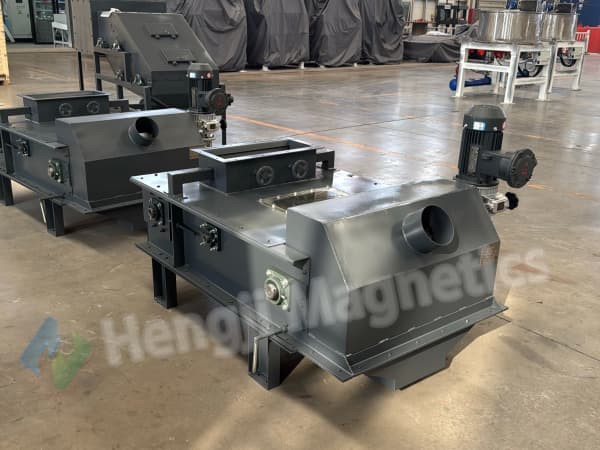
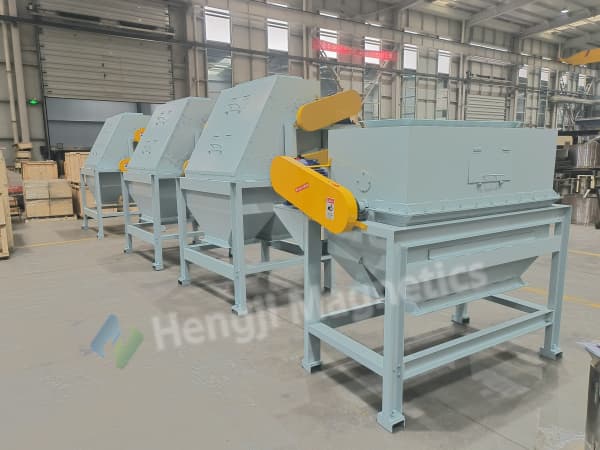
For dry powders: High intensity magnetic separation is achieved with dry permanent magnetic drum or roll designs. Inside the drum, a stationary high-intensity magnet system works with a rotating stainless steel shell. Material is fed uniformly by a vibratory feeder. Magnetic particles are held to the shell, carried out of the field, and fall off by gravity and centrifugal force. Non-magnetic material is thrown away. This non-contact separation is ideal for low-moisture, free-flowing powders.
For wet slurries: An industrial magnetic separator uses a drum-and-tank configuration. Slurry enters the tank; magnetic minerals attach to the rotating drum, are carried out of the field, and rinsed into a concentrate launder. Non-magnetic minerals flow out with the tailings. By adjusting magnetic angle, feed density, and drum speed, the equipment maintains stable high intensity magnetic separation in complex fluid environments, avoiding plugging or material loss.
Is Installation and Commissioning Complicated? How to Optimize Magnetic Separation?
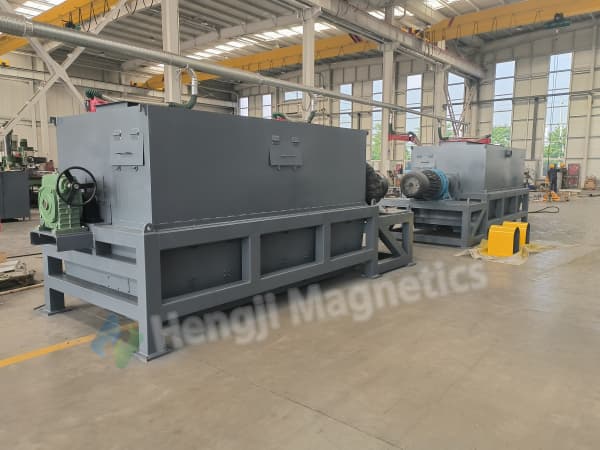
Many worry that advanced equipment has a high installation barrier. Well-designed industrial magnetic separator units prioritize ease of installation. The main unit is placed on a level floor and grounded. For dry models, verify through the viewing port that the drum rotates in the same direction as material feed. For wet models, ensure proper clearance between tank and drum to avoid friction while preventing material short-circuiting.
Commissioning fine-tunes high intensity magnetic separation. Operators adjust the magnetic angle linkage to control the separation path of magnetic versus non-magnetic materials until a clean split is achieved. Also, by setting the feed gate opening and variable-speed motor based on throughput, you ensure sufficient material residence time in the high-intensity field. If the belt drifts, simply adjust the bearing bolts on the tail pulley to correct tracking. Maintenance is straightforward.
 What About Long-Term Energy and Maintenance Costs?
Total cost of ownership is a top concern. Permanent-magnet industrial magnetic separator units have inherent energy advantages: the field is generated by permanent magnets—no excitation power, no cooling system. Operating costs are very low. They are maintenance-free, with minimal magnetic decay and safe, reliable operation.
Routine maintenance is simple: periodically grease bearings and drives, and clean residual iron from the drum surface or discharge belt. No vulnerable coils, no complex oil cooling. As long as feed is uniform and large sharp tramp iron does not damage the shell, the industrial magnetic separator will deliver long-term trouble-free operation, turning high intensity magnetic separation into tangible cost savings and efficiency gains.
Conclusion
From iron removal to purification—the difference is a single word, but the performance requirement is extreme. A superior industrial magnetic separator is not just an iron removal device; it is a strategic asset for achieving high intensity magnetic separation and raising product competitiveness. When facing purification bottlenecks, understanding magnetic circuit principles and matching equipment to your application, and choosing a separator with true high-intensity capability, will keep your enterprise ahead in fierce market competition.


