


 Categories
In steelmaking, foundries, mining, and scrap recycling, recovering iron sand from ferrous‑bearing powders and slurries is an ongoing challenge. Incomplete recovery wastes resources, degrades downstream product quality, and compromises equipment safety. The pipeline magnetic separator is designed specifically for this task—installed directly in material conveying pipelines, it separates and recovers ferrous materials in real time as material flows, efficiently extracting iron sand from powders and slurries.
How Does a Pipeline Magnetic Separator Recover Iron Sand?
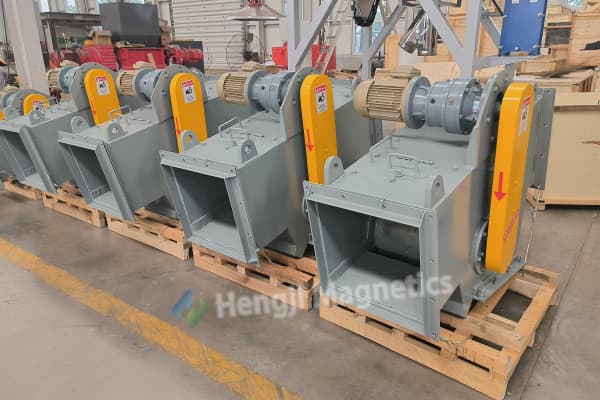
The pipeline magnetic separator operates on a straightforward principle. Installed at a specific angle in‑line with the conveying pipe, material flows by gravity through the unit. As it passes over the magnetic system, ferrous particles are attracted to the pipe floor and held there. A continuously moving magnetic assembly then carries the captured iron forward to a discharge point. At this point, non‑magnetic material, carried by inertia, follows a parabolic trajectory out of the unit through the main outlet, while the ferrous material, still held by the magnetic assembly, is carried to a concealed iron discharge port. As the magnetic assembly reverses direction at the port, the ferrous material loses magnetic attraction and falls out by gravity—achieving clean separation of iron sand from the main material stream. The magnetic separator iron sand unit uses high‑temperature, high‑strength Neodymium magnets in multiple moving assemblies to continuously capture ferrous impurities. The iron discharge port is connected to the separation device, so discharged iron sand carries minimal material carryover.
 How Effective Is the Pipeline Magnetic Separator for Iron Sand Recovery?
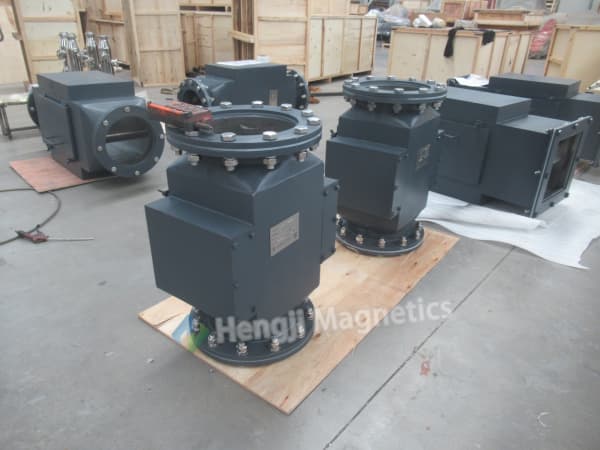
Recovery rate is the top customer concern. The pipeline magnetic separator uses high‑performance Neodymium magnets with an optimized magnetic circuit, employing multiple moving magnetic assemblies to capture ferrous impurities. It effectively adsorbs iron blocks, iron powder, and iron filings mixed in the material. For iron sand recovery in powder conveying pipelines, the unit performs in‑line separation during continuous material flow—ferrous materials are captured, carried to the discharge port, and recovered as high‑purity iron sand ready for direct reuse or sale. Compared to manual or batch removal methods, the magnetic separator iron sand unit delivers continuous automatic recovery, significantly improving production efficiency and reducing waste.
Which Industries Use the Pipeline Magnetic Separator for Iron Sand Recovery?
The pipeline magnetic separator is suitable for iron sand recovery in various powder and granular conveying applications. In steel mills, it recovers iron powder from blast furnace dust, mill scale, and slag. In foundries, it separates iron sand from old sand during reclamation. In mining, it recovers magnetic minerals during ore crushing and conveying. In cement and building materials, it removes ferrous contaminants and recovers iron powder from raw materials and finished products. In scrap recycling, it separates ferrous materials from shredded feed. The magnetic separator iron sand unit operates automatically and continuously—once started, it requires no supervision, with iron sand automatically separated and discharged, significantly reducing labor costs.
 Is the Pipeline Magnetic Separator Easy to Install?
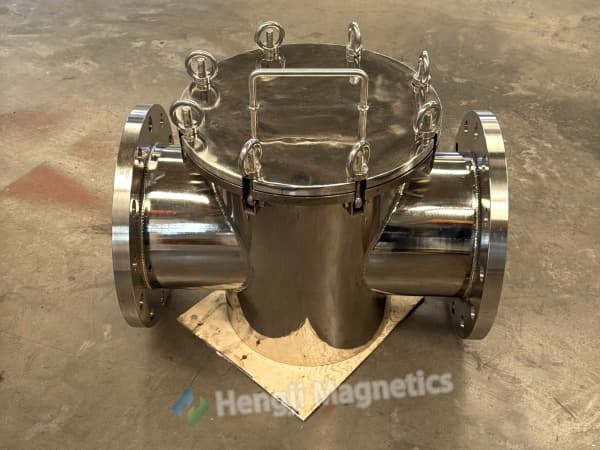
Installation is straightforward. The pipeline magnetic separator is installed at an angle of 55 to 60 degrees in‑line with the conveying pipe. Space requirements are minimal, and external dimensions can be customized to match existing pipe sizes and site conditions. The inlet connects directly to the pipe; the outlet splits into two streams—one for non‑magnetic material and one for recovered iron sand. Once installed, connect power, verify rotation direction, and the unit is ready for continuous production. The compact, lightweight design minimizes burden on existing pipeline systems, making it suitable for quick retrofits.
Is Daily Maintenance of the Pipeline Magnetic Separator Complicated?
Maintenance is very simple. The magnetic core uses rare earth Neodymium magnets sealed inside the housing, fully isolated from material—minimizing component wear. The unit uses permanent magnets for attraction and electric power only for discharge, with intermittent discharge operation—resulting in a compact design, low power consumption, and stable, reliable performance. Daily maintenance mainly involves cleaning accumulated iron from the magnetic system at the end of each work cycle. Liners are made of special wear‑resistant materials for long service life. Routine checks are limited to cleaning dust from the unit and tightening components after each iron discharge.
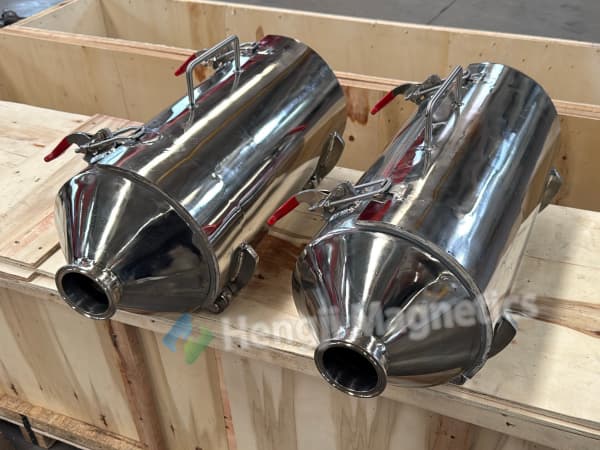
What Is the Overall Value of the Pipeline Magnetic Separator in Iron Sand Recovery?
The pipeline magnetic separator delivers multiple benefits for iron sand recovery. First, permanent magnet technology requires no power to maintain the field, keeping operating costs low. Second, continuous automatic operation eliminates the need for dedicated attendants, saving labor costs. Third, recovered iron sand is high‑purity and can be directly reused—creating direct economic returns. Fourth, timely removal of ferrous materials protects downstream crushers and mills from metal damage, reducing maintenance and downtime losses. For steel, foundry, and mining operations, a reliable magnetic separator iron sand unit not only solves iron sand recovery challenges but also ensures continuous, stable production with a manageable payback period.
Conclusion
The pipeline magnetic separator integrates in‑line iron removal with iron sand magnetic recovery, providing an online, continuous, automatic solution for separating ferrous materials during powder and slurry conveying. From steel mills to foundries, from mining plants to scrap recycling, this equipment is helping more operations achieve efficient recovery and reuse of iron sand resources. If you are seeking a breakthrough in iron sand recovery efficiency, understanding the pipeline magnetic separator may be the key step in your cost‑reduction and efficiency‑improvement efforts.


