


 Categories
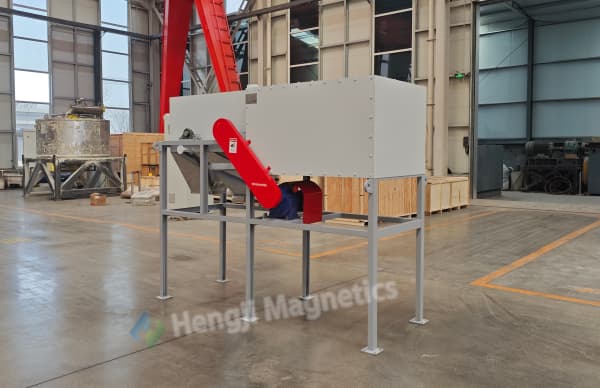
In mineral processing and powder material production, the grinding process inevitably introduces ferrous impurities—media wear debris, iron powder from liner wear, and magnetic minerals from the ore itself. These impurities directly affect product purity and threaten downstream equipment safety. The rare earth roll magnetic separator designed as a magnetic separator for grinding machine addresses this challenge by integrating rare earth high-intensity magnetic separation with in-line pipeline iron removal, delivering end-to-end iron removal from grinding to separation.
How the Rare Earth Roll Magnetic Separator Removes Iron in Grinding Applications
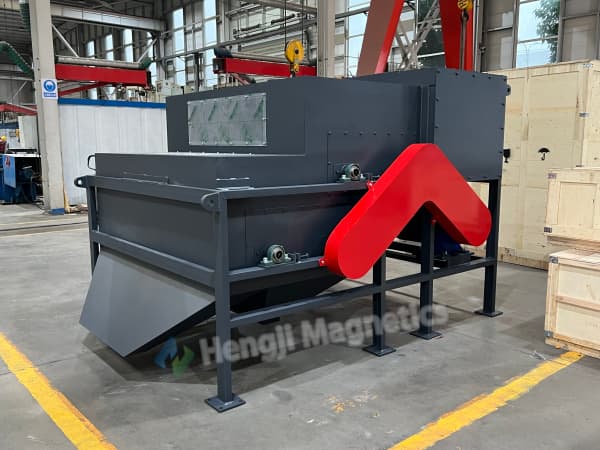
The rare earth roll magnetic separator uses high-performance Neodymium permanent magnets with a computer-optimized magnetic circuit, generating strong field strength and sufficient magnetic depth on the roll surface. Material is fed uniformly onto the conveyor belt by a vibratory feeder. As it passes through the magnetic roll zone, ferrous impurities are firmly attracted by the high field strength and then pushed out of the magnetic field by a discharge scraper—achieving clean separation. Additionally, the magnetic separator for grinding machine can be installed in-line at the mill discharge or in powder conveying pipelines, with multiple moving magnetic assemblies continuously capturing iron impurities. The iron discharge port is connected to the separation device, so discharged iron carries minimal material.
 Addressing Customer Concerns: Efficiency, Reliability, and Adaptability
Iron Removal Efficiency:
The rare earth roll magnetic separator combines rapid removal of coarse, large ferrous particles with fine separation of micron-sized iron powder—overcoming the limitations of single-purpose equipment in separation depth. The roll surface delivers strong field strength and high lifting force, significantly improving iron removal efficiency.
Operational Reliability:
The magnetic assembly is sealed inside the housing, with a roll-type design that fully isolates the magnetic roll from material—minimizing component wear. The permanent magnetic system requires no electromagnetic excitation, consuming very little power and offering maintenance-free operation. Once started, the magnetic separator for grinding machine operates continuously and automatically without supervision.
Installation Adaptability:
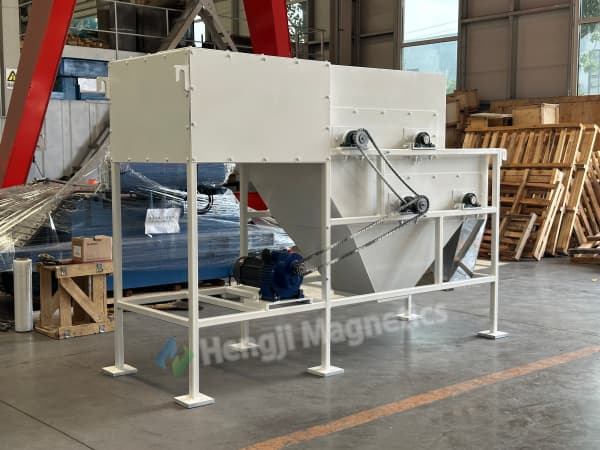
The compact, lightweight rare earth roll magnetic separator can be flexibly arranged according to site space, installed in-line in powder conveying pipelines. External dimensions can be customized to meet specific customer requirements.
Wide Application Validation
The rare earth roll magnetic separator is widely used in abrasives, refractories, non-metallic mineral processing, carbon black, grain, feed, and chemical industries. The roll speed is steplessly adjustable (40–200 rpm), and the vibratory feeder uses elastic supports, effectively handling different particle sizes.
As mineral processing moves toward finer, higher-quality production, the magnetic separator for grinding machine with rare earth roll magnetic separator technology deeply integrates high-intensity separation with in-line iron removal—delivering a complete equipment-to-process solution for iron removal and purification of ground materials.
 Key Features Summary
-
Strong magnetic capture: High-performance Neodymium magnets with computer-optimized circuits capture both coarse and fine ferrous particles.
-
Continuous automatic operation: No supervision required—iron is separated and discharged automatically.
-
Low maintenance: Sealed magnetic assembly and permanent magnet design eliminate routine field maintenance.
-
Flexible installation: Compact design fits into existing pipelines; dimensions customizable.
-
Broad material compatibility: Suitable for abrasives, refractories, non-metallic minerals, carbon black, and more.
Conclusion
The rare earth roll magnetic separator provides a reliable, integrated solution for iron removal in grinding processes. Whether in mineral processing, powder production, or chemical applications, it helps operations achieve higher product purity, protect downstream equipment, and reduce operating costs. If iron contamination in your grinding circuit is a concern, this technology deserves serious consideration.


