


 Categories
In power generation, mining, metallurgy, building materials, coal preparation, and chemical industries, ferrous contaminants such as nails and iron blocks in bulk materials are a persistent threat to equipment safety. Customers repeatedly ask: Can a suspended permanent magnet be mounted above the conveyor to save floor space? Can deeply buried tramp iron be effectively lifted? Can iron removal be automatic and continuous without manual cleaning shutdowns? Does the equipment require external power, and is energy consumption high? The suspended belt magnet was designed to meet these exact needs.
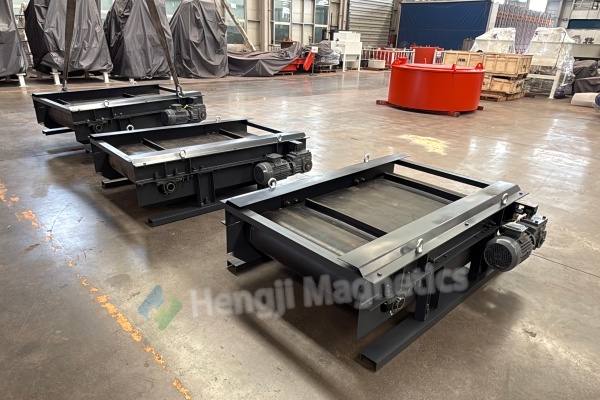
What Is a Suspended Permanent Magnet and Suspended Belt Magnet?
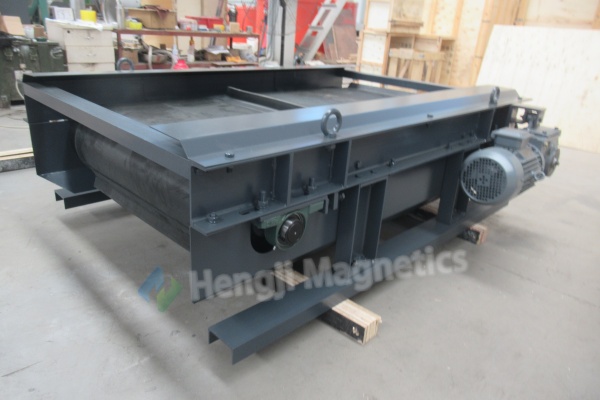
The suspended belt magnet consists of a high-performance permanent magnetic core, discharge belt, geared motor, frame, and pulleys. It uses high-strength permanent magnets to form a powerful magnetic core that lifts deeply buried tramp iron. The magnetic circuit is computer-optimized with a dual-pole structure to ensure maximum lifting force across the working distance. The large magnetic pole area provides sufficient exposure time for effective capture even at high belt speeds.
When bulk material on the conveyor passes beneath the suspended permanent magnet, ferrous contaminants—with liftable weights from 0.1 to 35 kg—are attracted by the powerful magnetic force. The continuously running discharge belt uses fixed cleats to scrape captured iron into a collection bin, achieving automatic iron removal. This makes the suspended belt magnet a reliable solution for continuous conveyor protection.
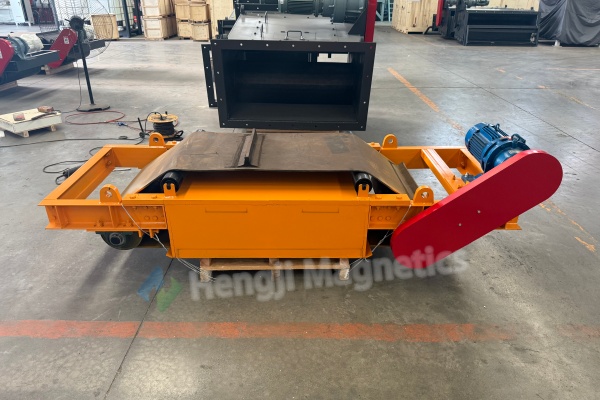 Key Features of the Suspended Belt Magnet
The suspended belt magnet offers several key advantages:
-
Suspended installation saves floor space: The suspended permanent magnet mounts above the conveyor with four lifting eyes, requiring no floor space.
-
Strong magnetic force: High-strength permanent magnets lift deeply buried tramp iron up to 35 kg.
-
Automatic continuous discharge: The discharge belt operates continuously, scraping captured iron into the collection bin without manual intervention.
-
No external power required: The suspended belt magnet uses permanent magnets as the magnetic source—no external power needed to generate the magnetic field.
-
Maintenance-free operation: No power consumption for field generation. The magnetic field remains stable with no decay.
-
Long service life: The permanent magnetic core provides years of reliable service.
-
Simple installation: Four lifting eyes allow easy suspension with adjustable height.
-
Reliable operation: Optimized mechanism design ensures trouble-free long-term operation in harsh environments.
These features make the suspended permanent magnet and suspended belt magnet ideal for conveyor iron removal applications.
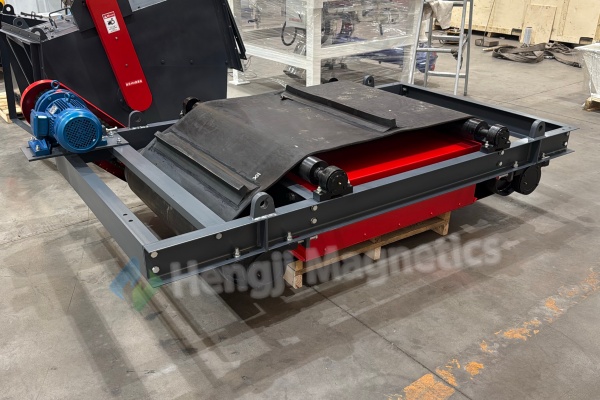 Installation Options for the Suspended Belt Magnet
The suspended belt magnet offers flexible installation options. It can be mounted in two main ways: one is installed at the conveyor head, where material trajectory helps the separator lift tramp iron. The other positions the self-cleaning belt perpendicular to the main conveyor, automatically removing ferrous contaminants in the perpendicular direction. It can be installed above the belt, above picking stations, or above vibrating screens. The magnetic centerline aligns with the belt centerline for maximum field coverage. The suspended permanent magnet mounts using four lifting eyes, with sufficient rigging strength and adjustable suspension height. This flexibility makes the suspended belt magnet suitable for various plant layouts.
Customer Case: Suspended Belt Magnet in Building Materials Plant
A building materials plant had long suffered from tramp iron on its conveyor line. Site space was limited, making floor-mounted equipment impractical. After installing the suspended belt magnet above the conveyor using its four lifting eyes, no floor space was occupied. Deeply buried nails and iron blocks were strongly lifted and continuously ejected into a collection bin by the automatic discharge belt. Crusher failure rates dropped significantly.
The suspended permanent magnet required no external power. After years of operation, no noticeable magnetic decay occurred. Annual maintenance costs were reduced by hundreds of thousands of dollars. The plant equipment manager stated that the suspended belt magnet is flexible to install, maintenance-free, and zero-energy—making it the ideal choice for their site conditions. This case demonstrates the practical value of the suspended permanent magnet in real-world production.
 Applications of the Suspended Permanent Magnet and Suspended Belt Magnet
The suspended belt magnet can be used indoors and outdoors, adapting to different environmental conditions. From power plant coal handling to mining ore processing, from building materials production to chemical raw material purification, the suspended permanent magnet and suspended belt magnet deliver maintenance-free magnetic force, automatic continuous discharge, and flexible suspended installation.
The suspended belt magnet solves the practical problem of tramp iron damaging downstream equipment on conveyor lines. It achieves zero energy consumption, maintenance-free operation, and automatic continuous iron removal. The suspended permanent magnet is suitable for both new plants and retrofits. Its flexible mounting options and reliable performance make it a dependable solution for conveyor iron removal.
Conclusion: Choose the Suspended Permanent Magnet and Suspended Belt Magnet
If tramp iron on your conveyor line is frequently damaging downstream equipment, the suspended permanent magnet and suspended belt magnet deserve serious consideration. They deliver maintenance-free magnetic force, automatic continuous discharge, and flexible suspended installation—achieving zero energy consumption and reliable operation.
From power generation to mining, from building materials to chemicals, the suspended belt magnet and suspended permanent magnet are solving real conveyor iron removal challenges. Contact us today for a free application review and find the right suspended belt magnet for your production line.


