


 Categories
In e-waste dismantling lines and auto shredder yards, copper chunks and aluminum flakes are mixed with plastic, rubber, and glass. How do you separate them? The answer lies in an alternating magnetic field and induced eddy currents. An eddy current magnetic separator uses differences in electrical conductivity to achieve separation. It is one of the most practical magnetic separators for recycling because it recovers copper and aluminum and reduces resource waste. This article explains how the machine works, what it is made of, what details matter, and how it performs in real recycling operations.
How the Eddy Current Magnetic Separator Makes Non-Ferrous Metals Jump Out
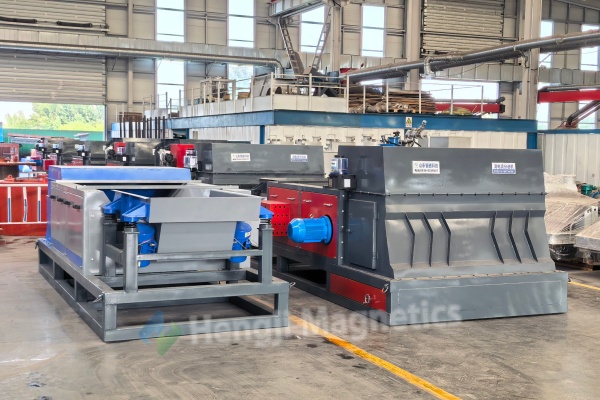
During operation, a high-frequency alternating strong magnetic field is generated on the separation rotor surface. When conductive non-ferrous metals pass through this field, eddy currents are induced inside the metal. These eddy currents generate a magnetic field opposite to the original field direction. The non-ferrous metal is propelled forward along the conveying direction by the repulsive force. It separates from non-metallic materials. The main separation criterion is the ratio of conductivity to density. Materials with higher ratios separate more easily. This is the core principle of the eddy current magnetic separator. It is also why magnetic separators for recycling can recover copper and aluminum with high efficiency.
 Key Components of Magnetic Separators for Recycling
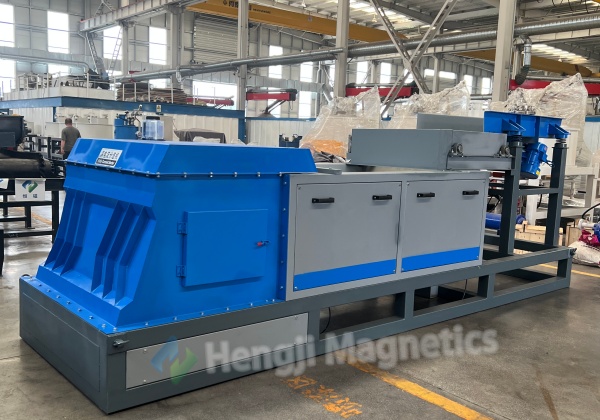
The eddy current magnetic separator consists of two main parts: the separator body and the control cabinet. The body includes the magnetic separation assembly, drive motor, frame, and housing. The separation assembly is the core component, consisting of a permanent magnetic drum and a material conveying system—conveyor belt, drive drum, and geared motor. The equipment also includes a chassis assembly, frame assembly, protective cover assembly, discharge outlet assembly, splitter plate assembly, rotary feeder assembly, damping device, separation rotor assembly, and control cabinet assembly. These components make magnetic separators for recycling reliable and durable in daily operation.
Two Details That Matter: Splitter Plate and Feeding in Recycling Magnetic Separators
The splitter plate assembly is mounted on the frame assembly. It can be adjusted based on material volume, density, and conductivity to improve separation. The upper frame supports the belt guard. A vibratory feeder is installed at the end, supported by damping devices for uniform feeding. The protective cover surrounds the frame to prevent material ejection and accidents. The discharge outlet assembly separates and collects the separated materials. The chassis assembly supports the equipment and ensures discharged materials are conveyed to the next process. These details are critical for the performance of any eddy current magnetic separator and for efficient magnetic separators for recycling.
 Customer Concerns in Recycling Applications
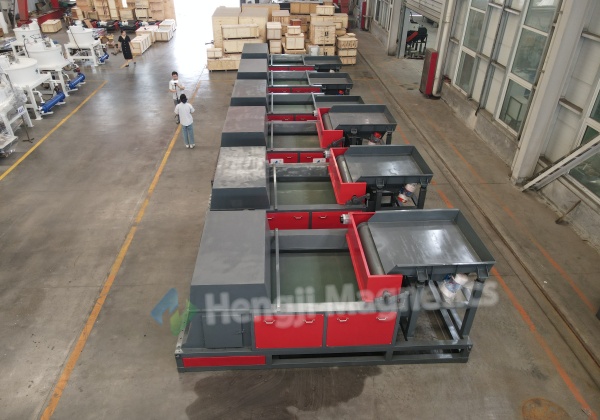
Recycling operators care about three things. First, can the equipment handle mixed materials? The eddy current magnetic separator is mainly used to recover copper, aluminum, and other non-ferrous metals from municipal solid waste, industrial waste, e-waste processing, glass cullet, waste plastic doors and windows, boiler bottom ash, and auto shredder residue. Second, will ferrous material interfere? Recycling feed often contains iron. An overhead magnetic separator can be used first to remove ferrous materials. It uses high-performance Neodymium magnets with high energy product, resistance to demagnetization, automatic discharge, and stable operation. It is widely used in steel slag processing and waste sorting under harsh conditions with sharp iron pieces. Third, will powder cause dust? In some applications, sealing and dust collection are needed to keep the workshop clean. These considerations make magnetic separators for recycling more practical and safe.
Case Study: How an Eddy Current Magnetic Separator Improved an E-Waste Dismantling Line
A recycling company operated a refrigerator dismantling line. The shredded mixed material contained copper, aluminum, plastic, and iron. Manual sorting was inefficient and caused high metal loss. The recovery rate of valuable metals was low. After introducing the eddy current magnetic separator, the material first passed through an overhead magnetic separator to remove ferrous pieces. It was then fed evenly by a vibratory feeder onto the conveyor belt. Through eddy current separation, copper and aluminum were propelled forward by the magnetic repulsive force and separated from plastic and other non-metallic materials. The splitter plate angle was adjusted according to material volume, density, and conductivity for more precise separation. The equipment is widely used in waste treatment and waste electrical appliance recycling. After commissioning, copper and aluminum recovery rates improved significantly. Manual sorting intensity decreased. The separation line ran more smoothly. This case demonstrates the value of the eddy current magnetic separator in real magnetic separators for recycling applications.
Hengci Service: From Selection to Commissioning for Recycling Magnetic Separators
Hengci Magnetic has extensive experience in manufacturing eddy current magnetic separators. The company offers multiple sizes and custom designs based on material characteristics. Support covers the full process from selection consulting to installation and commissioning. Provide your material types, throughput, and recovery targets, and Hengci will give you a practical selection reference. With reliable magnetic separators for recycling, Hengci helps recycling companies recover more non-ferrous metals and reduce waste.
Conclusion: Choose the Right Eddy Current Magnetic Separator
If your recycling line is losing copper and aluminum to mixed waste, the eddy current magnetic separator deserves serious consideration. As a key type of magnetic separators for recycling, it delivers efficient non-ferrous metal recovery, stable operation, and flexible adjustment. From e-waste dismantling to auto shredder residue, the eddy current magnetic separator turns waste into value. Contact Hengci Magnetic today for a free application review and find the right eddy current magnetic separator for your recycling operation.


