


 Categories
Imagine a magnetic trap that never needs to be turned off to be emptied. A device that continuously captures ferrous contamination while simultaneously ejecting it, all without interrupting the flow of your product. This is not a futuristic concept—it is the reality of modern inline magnetic separator technology. A self cleaning magnetic separator designed for continuous operation is an elegant solution to the fundamental challenge of magnetic separation: how to release captured metal without releasing the material stream. This article demystifies the engineering behind these remarkable machines.
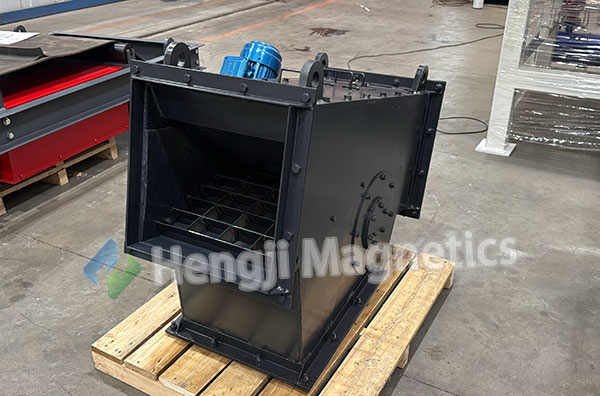
The Core Challenge: Separating Capture from Release
Every magnetic separator faces the same fundamental challenge. To capture ferrous particles, you need a powerful magnetic field in the product zone. But that same field holds the captured particles fast, preventing their release. Traditional solutions require stopping the process, de-energizing the magnet, manually cleaning, and restarting.
The genius of a self cleaning magnetic separator is the creation of two distinct zones: a high-intensity capture zone where contaminants are collected, and a low-field or field-free discharge zone where they are automatically released. The inline magnetic separator continuously cycles captured material from one zone to the other, achieving uninterrupted protection.
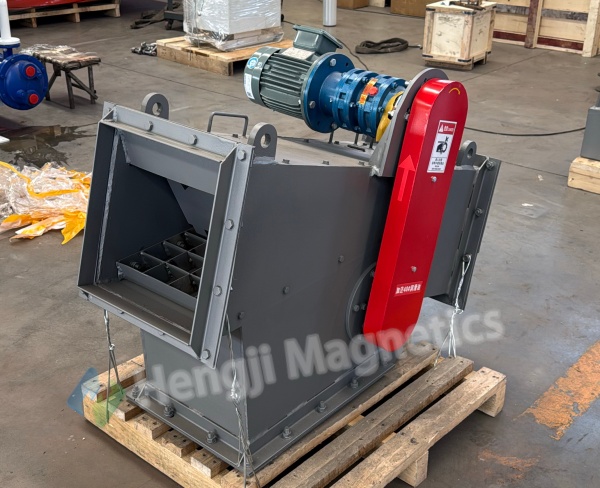 Type One: Moving Magnet Systems
This is the most common design for bulk material handling. The magnetic source itself moves, carrying captured contaminants away from the product stream.
How It Works:
-
Capture Phase: The magnetic assembly is positioned in the product zone—under a conveyor belt, inside a pipe, or across a chute. Ferrous particles are attracted and held firmly against a protective surface like a belt or wear plate. Product flow continues unimpeded through the inline magnetic separator.
-
Transfer Phase: A drive system slowly moves the magnetic assembly away from the product zone, carrying the captured particles with it. This movement may be linear or rotational.
-
Discharge Phase: As the magnets move into a separate, enclosed discharge chamber, the field strength at the captured particles drops dramatically. Gravity or a mechanical scraper then dislodges the now-liberated contaminants into a collection bin.
-
Return Phase: The magnetic assembly returns to the capture position, and the cycle repeats—all while the main product stream never pauses.
This design is the foundation of self-cleaning inline magnetic separator systems used in mining, recycling, and bulk material processing.
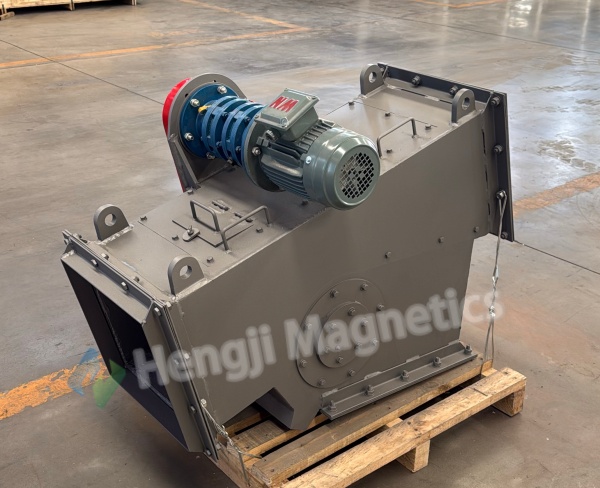 Type Two: Media Cleaning Systems
For liquid applications and high-purity powder lines, a different approach is used. Here, the magnetic media remains stationary while a cleaning mechanism strips away captured particles.
How It Works:
-
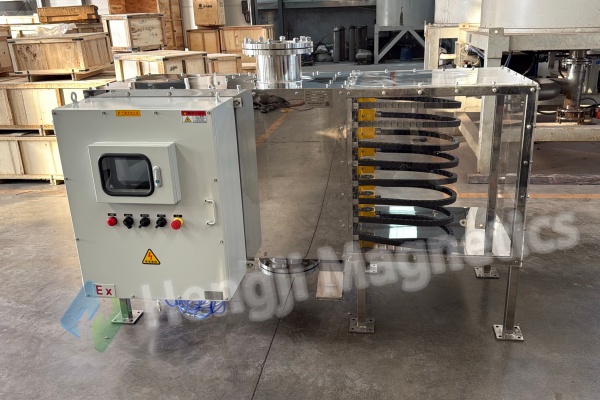
Stationary Capture Matrix: A bank of magnetic rods or grids is fixed within the product flow path of the self cleaning magnetic separator. Ferrous particles are captured on the surface of these magnetic elements.
-
Dynamic Cleaning: A set of scraper rings or a cleaning sleeve is driven along the length of the magnetic rods. As the scrapers move, they physically push the accumulated ferrous particles toward the end of the rod.
-
Isolated Discharge: At the end of the travel, the scrapers push the particles into a sealed discharge chamber or flush them away with a small volume of cleaning fluid. The main inline magnetic separator flow remains undisturbed.
This technology is essential for food, pharmaceutical, and lithium battery material processing, where hygiene and absolute purity are mandatory.
The Three Pillars of Continuous Operation
A reliable self cleaning magnetic separator depends on three integrated technologies:
1. Intelligent Magnetic Circuit Design:
-
Permanent Magnet Systems: Use precise mechanical movement to position magnets for capture and release.
-
Electromagnetic Systems: Employ rapid de-energization or field reversal in the discharge zone, controlled by PLCs for millisecond switching.
2. Robust Mechanical Systems:
-
Drives, belts, scrapers, and seals must withstand continuous duty in abrasive environments. In sanitary applications, all moving parts are designed for clean-in-place compatibility.
3. Smart Controls:
-
The system’s brain initiates cleaning cycles based on time, differential pressure, or metal detector signals. It monitors motor currents, temperatures, and cycle counts, providing remote diagnostics and predictive maintenance alerts.
Why Continuous Cleaning Matters
-
Zero Production Interruption: Your inline magnetic separator cleans itself without slowing or stopping your line. No more scheduling downtime for magnet maintenance.
-
Enhanced Safety: Personnel never enter hazardous areas to manually remove captured metal.
-
Consistent Performance: Automatic cleaning prevents magnetic saturation, maintaining peak capture efficiency hour after hour.
-
Lower Operating Costs: Eliminate labor costs for cleaning and drastically reduce unplanned downtime.
Conclusion: From Static Filter to Dynamic Guardian
The self cleaning magnetic separator transforms magnetic separation from a batch process into a continuous, automated operation. By creating separate zones for capture and release, and by automating the transfer between them, these systems provide an invisible, unbreakable defense for your production line. Whether moving magnets away from the product or moving scrapers across stationary magnets, the principle is the same: uninterrupted protection, automatically delivered.


