


 Categories
In industries such as plastics, food, pharmaceuticals, chemicals, and ceramics, pneumatic or gravity conveying of powdered materials is a common production step. However, ferrous contaminants—rust, weld spatter, wear debris from equipment—can compromise product purity and accelerate wear on downstream equipment. The challenge has always been how to remove these impurities efficiently and continuously without frequent shutdowns for cleaning. The inline magnetic separator with a drawer-style design has emerged as the ideal solution to this industry need.
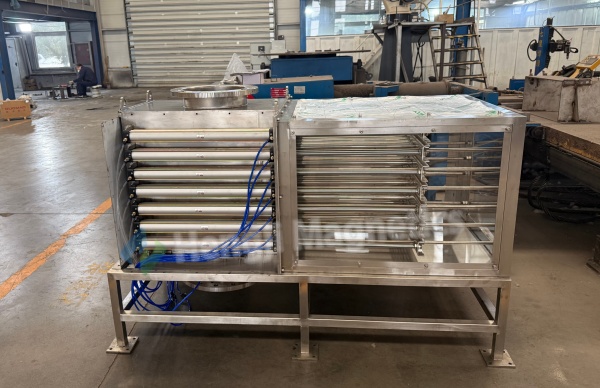
How Does a Magnetic Drawer Separator Work as an Inline Magnetic Separator?
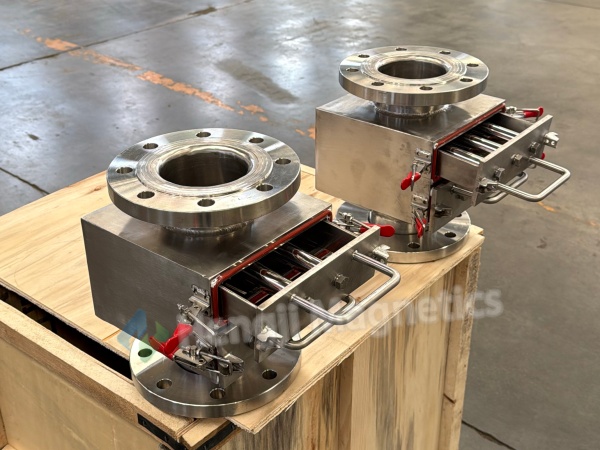
The magnetic drawer separator combines the strong magnetic capture capability of traditional drawer magnetic rods with online automatic cleaning, enabling continuous iron removal without interrupting material flow. The core component is one or more sets of high-strength magnetic rods made of seamless stainless steel tubes and rare-earth Neodymium magnets. These rods are arranged in a grid pattern and installed in vertical or inclined material pipelines. As powder flows by gravity through the magnetic rod area, ferrous impurities are captured on the rod surfaces. The purified material passes through smoothly to the next process stage.
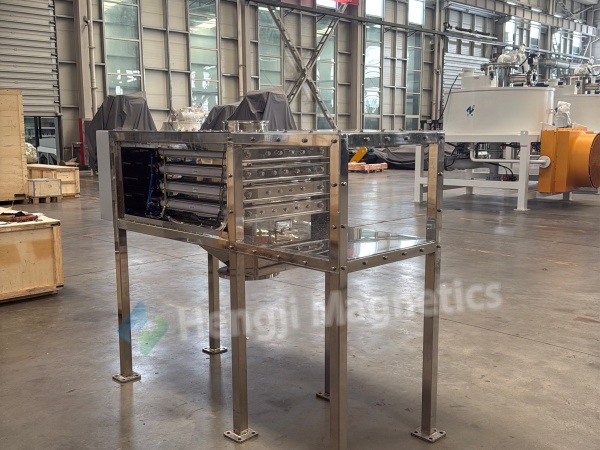 Key Customer Concerns About the Inline Magnetic Separator
Separation Efficiency and Stability
Many production lines operate 24/7. Traditional magnetic rod boxes lose effectiveness as captured iron builds up, shielding the magnetic field and requiring shutdown for cleaning. The inline magnetic separator solves this with a dual-chamber design: while one set of rods remains in the pipeline capturing iron, another set is automatically withdrawn to a cleaning station for backwashing or scraping. After cleaning, the rods return to service. This alternating operation allows the magnetic drawer separator to achieve fully automatic, continuous iron removal with consistently high efficiency, eliminating shutdown-related productivity losses.
Sealing and Safety
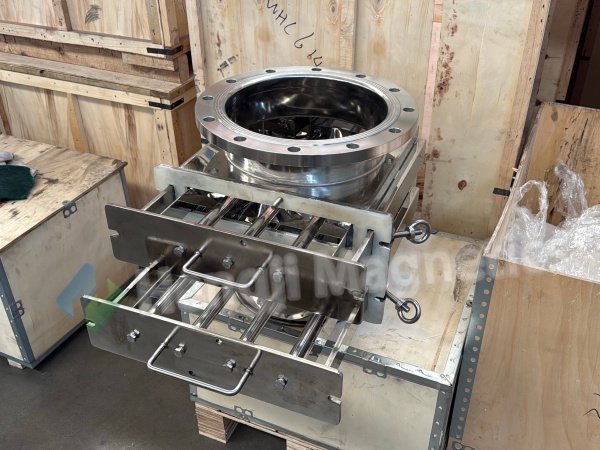
The inline magnetic separator features a fully sealed pipeline structure. Material flows through an enclosed channel, isolated from external moisture, dust, and contaminants. Constructed from food-grade stainless steel (SUS304) with a high-polish finish and cold-welded, polished seams, the interior is smooth and free of dead zones, preventing material buildup. Seals are made of food-grade silicone or PTFE, eliminating secondary contamination. These hygienic design features make the magnetic drawer separator suitable for demanding food and pharmaceutical applications.
 Applications of the Inline Magnetic Drawer Separator
The inline magnetic separator is ideal for removing ferrous contaminants from powders and small granules:
-
Plastics: Pellets, regrind, and additives.
-
Food: Flour, starch, milk powder, spices, sugar.
-
Pharmaceuticals: Active ingredients, excipients.
-
Chemicals: Raw materials, catalysts, pigments.
-
Ceramics and battery materials: Clay, feldspar, lithium precursors.
The magnetic drawer separator is typically installed in pipelines via flanges or clamps, at free-fall chutes, vertical conveying lines, or discharge outlets. For sticky or cohesive materials, a vibratory assist device can be added to ensure smooth material flow.
Maintenance and Wear Parts
Although the inline magnetic separator features online automatic cleaning, periodic inspection is still recommended. Manufacturers typically suggest weekly or monthly checks of rod surface buildup, adjusting cleaning frequency based on iron content. Wear parts include magnetic rods, seals, and actuators (pneumatic cylinders or electric push rods). Detailed spare parts lists and replacement guides are provided, enabling straightforward maintenance and long-term reliability.
 How to Select the Right Inline Magnetic Separator
Reputable manufacturers offer material testing services. Customers can send samples for laboratory trials using an actual magnetic drawer separator. Based on test results, technicians recommend the optimal rod quantity, arrangement, and automation configuration. This “test-before-you-buy” approach allows customers to verify performance on their specific material before purchase.
Conclusion
The inline magnetic separator configured as a magnetic drawer separator delivers continuous, automated iron removal for powder pipeline applications. With high separation efficiency, hygienic construction, low maintenance, and flexible installation, it helps processors improve product purity while maintaining uninterrupted production. For manufacturers seeking quality and efficiency, this technology offers a proven, reliable solution.


