


 Categories
After cleaning your magnetic separation equipment, the moment of truth arrives. Has every last ferrous particle been removed, or will remnants contaminate your next batch? For processors handling sensitive liquids, relying on a quick visual glance at your pipe magnets is not enough. The cleanliness of your liquid magnet trap directly impacts product purity and process reliability. This guide provides a systematic, four-level verification method to ensure your magnetic filters are genuinely clean and ready for the next production cycle.
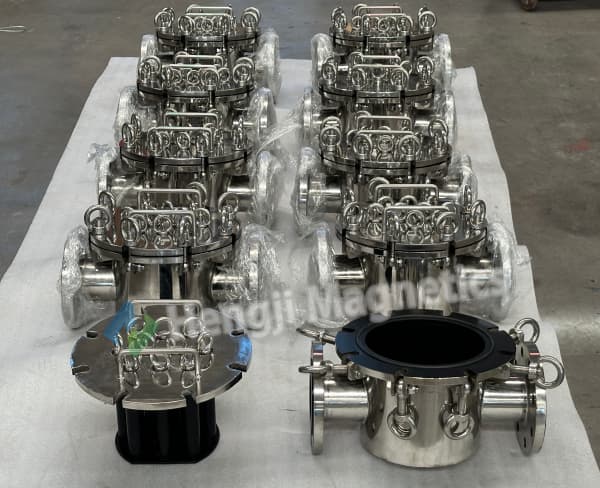
The Goal: Zero Residual Contamination
The objective is absolute: ensure that every magnetic rod, housing surface, and internal crevice is completely free of ferrous particles that could detach and contaminate your next batch of product. Achieving this requires moving beyond simple observation to structured validation.
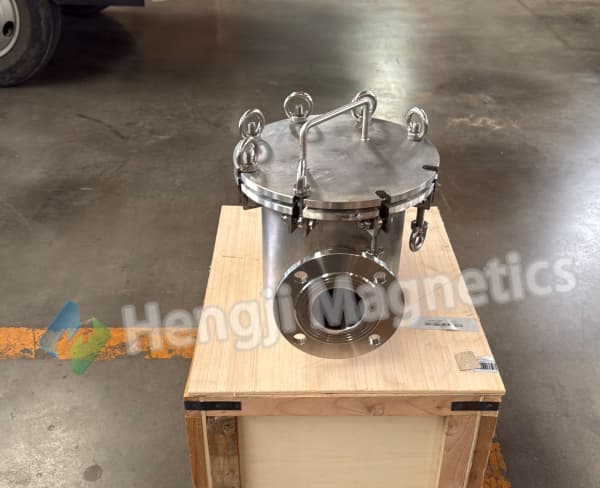 Level One: Basic Visual and Tactile Inspection – The Foundation
These steps are mandatory after every cleaning of your pipe magnets, before reassembly.
White Light and Bright Light Examination:
Inspect each magnetic rod under uniform white light from multiple angles. Use a strong flashlight directed at an oblique angle across the rod surface and housing walls. Fine metallic particles or flakes will reflect light and become visible against the stainless steel background.
The White Glove or White Cloth Test:
Take a clean, white, lint-free cloth or put on a fresh pair of white gloves. Wipe firmly along the entire length of each magnetic rod and across the interior surfaces of the liquid magnet trap housing.
-
Passing Standard: The cloth or glove shows absolutely no gray, black, or metallic smudges. Any discoloration means cleaning is incomplete.
Tactile Check:
With clean gloves, gently run your fingers along the rod surfaces and housing interfaces.
-
Passing Standard: The surface feels perfectly smooth. No grit, bumps, or adhered particles should be detectable.
Level Two: Tool-Assisted Precision Inspection – For Critical Applications
When basic inspection raises doubts or your product demands ultra-high purity, advance to these methods.
The Thin Film Test:
-
Cover a section of the pipe magnets rod with a piece of thin plastic cling film or PTFE tape.
-
Any residual magnetic particles still on the rod will be attracted through the film, creating visible specks on the surface. The film should remain completely spot-free.
Borescope Examination (for complex or blind passages):
-
Use an industrial borescope to inspect internal pipe sections, flanges, and weld joints of your liquid magnet trap that are not directly visible.
-
This is the most reliable method to verify cleanliness in dead zones and crevices where contamination hides.
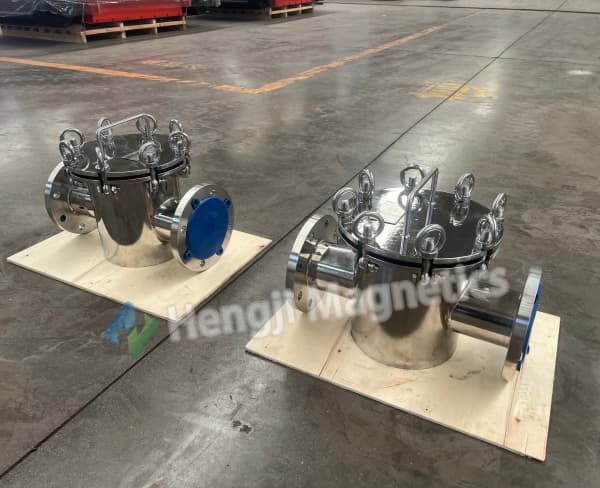 Level Three: Operational Verification – Before Production Resumes
After reassembly, confirm cleanliness dynamically before introducing your product.
The Clean Water Capture Test:
-
Reinstall the cleaned pipe magnets assembly and close the liquid magnet trap.
-
Circulate clean process water or purified water (with no product) through the system.
-
At a downstream sight glass or sample port, pass a strong hand-held magnet through the flowing water, or insert a clean test pipe magnets rod.
-
Passing Standard: No magnetic particles are captured. Any capture indicates residual contamination or particles introduced during reassembly.
Initial Flow Monitoring:
-
During the first 10-15 minutes of actual production, increase the frequency of product inspections downstream.
-
Watch for any bright spots, dark specks, or magnetic agglomerates that would indicate particles shedding from the liquid magnet trap.
Level Four: Quantitative Tracking – Long-Term Quality Assurance
Transform cleaning from a task into a managed quality process.
Maintain a Cleaning Log:
For each cleaning of your pipe magnets, record:
-
Date and operator name.
-
Cleaning method and tools used.
-
Verification methods applied (e.g., “white cloth passed,” “borescope clear”).
-
Photographs of the rods before and after cleaning, especially noting the worst areas.
Correlate with Product Quality Data:
Periodically compare your cleaning records with analytical results (e.g., iron content tests) from products processed during that period. If product contamination spikes occur, your cleaning log provides the first place to investigate for procedural failures.
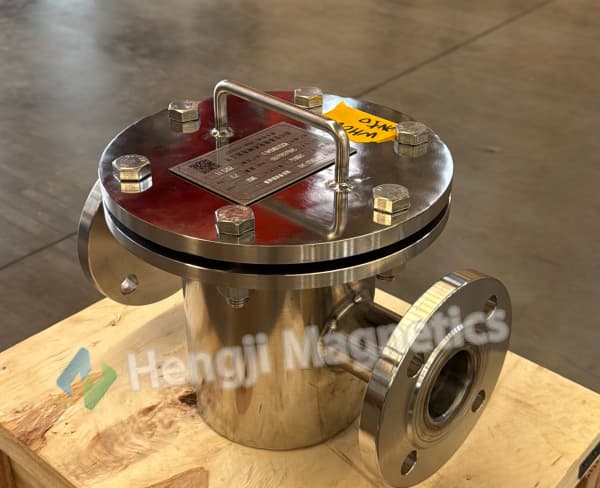 Common Failure Modes and Corrections
If verification fails, check these frequent causes:
-
Contaminated Tools: Brushes or cloths used for cleaning were dirty themselves. Use single-use or dedicated, clean tools stored separately.
-
Wrong Sequence: Particles dislodged from rods fell into a previously cleaned housing. Always clean the housing interior first, then the rods, and finally perform a combined inspection.
-
Incomplete Drying: Moisture allows fine particles to re-adhere. Ensure all components are completely dry before reassembly.
-
Environmental Recontamination: Dust or airborne particles settled on clean components. Perform cleaning in a designated area and minimize exposure time.
Conclusion: Trust but Verify
A truly clean pipe magnets or liquid magnet trap is not one that looks clean. It is one that has passed a structured, verifiable cleaning protocol. By implementing this four-level verification system—starting with basic white cloth testing, advancing to precision tools when needed, confirming with dynamic water testing, and documenting everything—you transform cleaning from an unverified assumption into a reliable quality control point. Your next batch of product deserves nothing less.


