


 Categories
In modern mineral processing, separating valuable minerals from gangue directly determines a plant’s profitability. The magnetic drum separator is a core piece of equipment for magnetic separation in mineral processing, widely used for beneficiation of magnetite, hematite, manganese, and for iron removal from non-metallic minerals. Understanding its working principles and key technical details is essential for optimizing production and improving concentrate grade.
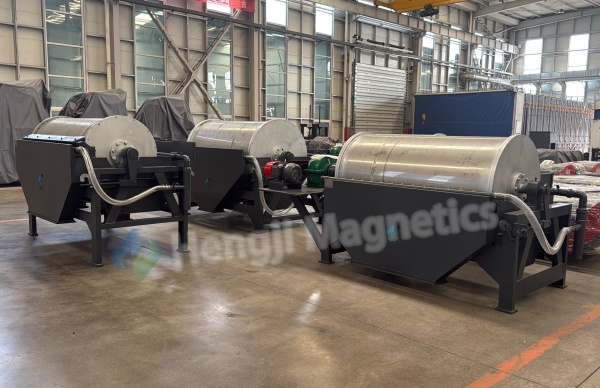
How Does a Magnetic Drum Separator Work for Magnetic Separation in Mineral Processing?
The magnetic drum separator consists of an internal magnetic system and an external rotating drum. It works on the difference in magnetic susceptibility between minerals. When slurry or dry feed enters the magnetic field, magnetic particles are attracted to the drum surface and carried out of the field. Non-magnetic particles fall into the tailings under gravity and centrifugal force.
This simple separation process demands excellent magnetic circuit design. A high-quality magnetic drum separator uses rare earth magnets for high field strength, deep penetration, and optimized pole arrangement. The drum shell is stainless steel to prevent magnetic retention of material.
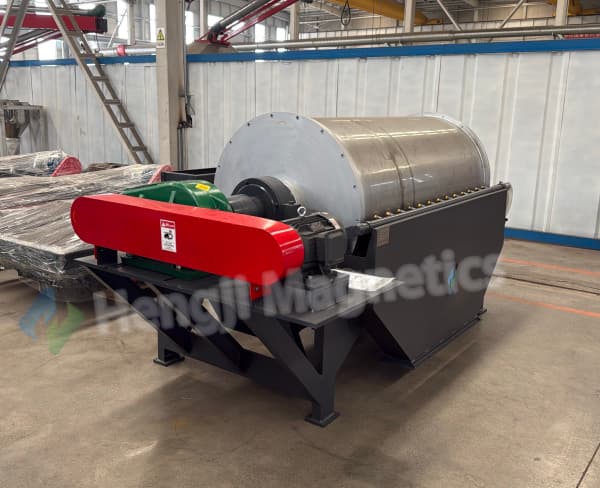 Three Key Performance Indicators Customers Ask About in Magnetic Separation in Mineral Processing
During selection and operation, customers focus on separation precision, throughput capacity, and durability.
Separation Precision: This directly affects concentrate grade. The magnetic drum separator allows adjustment of the magnetic angle. Operators can tilt the magnetic system to create a larger working zone and promote particle agitation. This helps dislodge entrapped gangue, improving final purity.
Throughput Capacity: Tank design and drum-to-tank clearance are critical. Proper clearance ensures smooth slurry flow without clogging. For dry magnetic separation in mineral processing, feed uniformity is vital. For wet operation, feed density should typically be at least 10% solids to provide sufficient retention time in the magnetic field.
Durability & Maintenance: The main bearing of a magnetic drum separator supports heavy magnetic loads and determines service life. Regular greasing with calcium-based lubricant reduces wear. The drive uses a cycloidal gearbox for compact size and high efficiency, minimizing downtime.
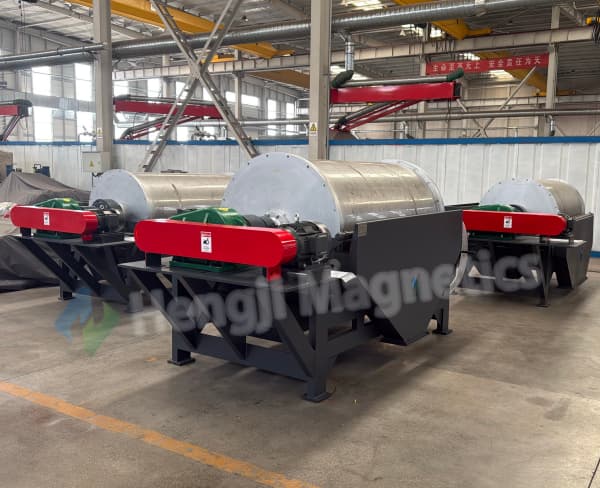 Installation, Commissioning, and Routine Maintenance of the Magnetic Drum Separator
Many customers rush to production, skipping critical installation steps. The magnetic drum separator must be mounted on a level frame; end-to-end flatness should be within tight tolerances. Otherwise, drum wobble accelerates bearing wear.
During commissioning, adjust the gap between drum and tank based on throughput. Too large a gap reduces magnetic force and recovery; too small a gap causes material jamming or shell abrasion. Install motor controls in a dry, accessible location.
Routine maintenance for magnetic separation in mineral processing includes:
-
Regular bearing lubrication.
-
Checking gearbox oil level and quality. Change mechanical oil every six months and clean the housing.
-
A no-load test run of at least 1 hour before loading. Check bearing temperature rise (should not exceed 60°C) and inspect for gearbox leaks. Only then gradually add feed to reach full capacity.
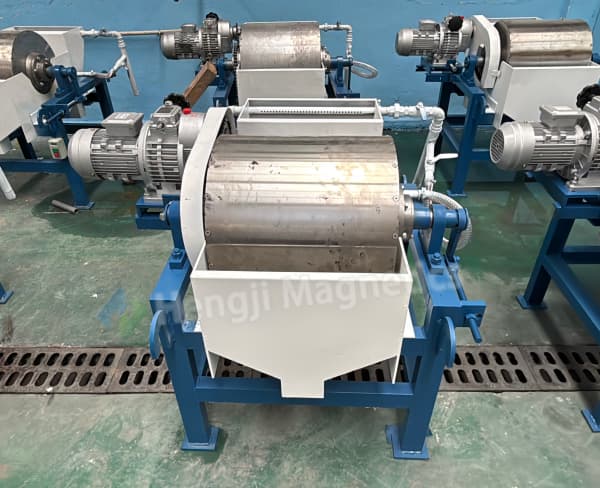 Environmental Adaptability and Selection Advice for Magnetic Separation in Mineral Processing
Although a magnetic drum separator is a general-purpose machine, selection should consider site conditions:
-
Dusty environments: Enhance sealing.
-
Humid conditions: Ensure electrical components are moisture-protected.
-
Fine ore: Choose a magnetic drum separator with a large magnetic wrap angle and high gradient.
-
Coarse ore: Prioritize drum wear resistance and high drive torque.
Conclusion
The magnetic drum separator is the gatekeeper in magnetic separation in mineral processing. Its performance depends not only on quality construction but also on proper installation, commissioning, and routine care. By understanding its working principles and attending to technical details, you can ensure stable, efficient operation that delivers lasting value for your mineral processing plant.


