


 Categories
In cement, mining, steel, abrasives, refractories, non-metallic mineral processing, carbon black, grain, feed, chemical, and waste treatment plants, tramp iron in the material stream becomes a problem at the next process stage. It can tear conveyor belts, damage pulley surfaces, or cause emergency shutdowns. The magnetic pulley separator is an iron removal machine that combines a magnetic pulley with a separation structure. The pulley contains a high-performance composite magnetic system. It provides high field strength, deep magnetic penetration, and no demagnetization after years of use. The machine is simple, compact, easy to install, and reliable. It does not consume power to generate the magnetic field, saving energy. This article explains magnetic system selection, field strength, material temperature, pulley surface options, installation, adjustment, a field case, and safety.
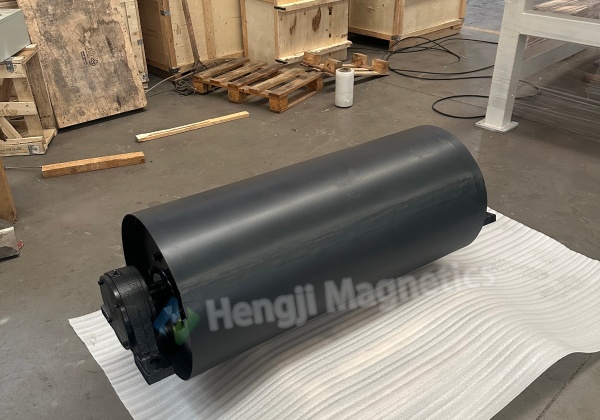
How the Magnetic Pulley Separator Works as an Iron Removal Machine
Magnetic Separation Principle
Customers first ask how iron removal is actually achieved. Magnetic separation uses differences in magnetic susceptibility between minerals. When material enters the separation zone, particles are acted upon by magnetic force and mechanical forces such as gravity and centrifugal force. Minerals with different magnetic properties follow different paths, achieving separation. In the magnetic pulley separator, the drum rotates along its centerline. Material is thrown out tangentially under gravity. Magnetic particles are acted upon by magnetic force greater than gravity. They move with the drum surface or with the belt covering the drum surface. Beyond the magnetic field range, they detach by gravity and centrifugal force. This is how the iron removal machine separates ferrous contaminants from the material stream.
Magnetic System and Field Strength Selection
Customers often ask whether the magnet is strong enough and how to select the right model. The magnetic pulley separator has a wide range of drum surface field strengths. Standard models provide 150 to 250 mT. Special models provide 300 to 600 mT. Custom values are also available. Materials with weaker magnetic response or thicker layers can use a higher magnetic strength grade. Easily separated materials can use the standard model. There is no need to choose the highest configuration for every application. The iron removal machine should be selected based on the actual material and working conditions. Proper field strength selection improves separation efficiency and avoids unnecessary cost.
 Pulley Surface Options for the Iron Removal Machine
Stainless Steel Surface and Rubber Lagging
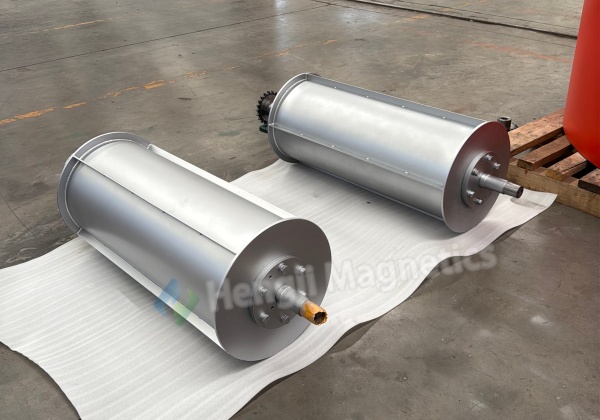
The pulley shell surface affects long-term performance. The magnetic pulley separator uses a stainless steel shell. The outer surface can be supplied as plain stainless steel or rubber-lagged. Rubber lagging options include plain, diamond, and herringbone patterns. The magnetic field is stable and maintenance-free, with a service life of over ten years. For materials with high abrasion, rubber lagging provides better wear resistance. For applications requiring a clean pulley surface, plain stainless steel is more suitable. The iron removal machine should be configured with the right surface for the material. This choice affects both service life and separation performance.
Matching the Magnetic Pulley Separator to Material Conditions
Material temperature must be confirmed before ordering. Different specifications have different allowable material temperatures. Some models cover higher temperature ranges. For high-temperature powders, heat-resistant magnets should be used. Ambient temperature should generally not exceed 45°C. Indoor installation is preferred. Outdoor installation requires rain protection. The magnetic pulley separator should be selected with the correct temperature rating. This prevents magnet damage and maintains stable iron removal machine performance.
Pipeline Iron Removal Machine for Powder Lines
Preventing Equipment Jambs
On powder lines, an iron removal machine often has another duty: preventing equipment jambs. Pipeline-type iron removal devices are connected in series at the bucket elevator discharge. When powder passes through, iron pieces, iron nodules, and iron powder are automatically separated and discharged. This prevents equipment jambs and ensures stable production. At the same time, iron impurities are recovered and turned into reusable material. The iron removal machine is widely used in cement, ceramics, building materials, chemicals, food, glass, metallurgy, steel, and power industries.
Installation and Adjustment of the Magnetic Pulley Separator
Installation details matter. The magnetic pulley separator should be installed according to site conditions. Before installation, check all parts for damage, deformation, or corrosion. The drum centerline should be parallel to the horizontal plane. Proper adjustment ensures stable iron removal. Bearings at all points should be greased regularly to prevent damage to the drum shaft and bearings. The iron removal machine should be checked after installation. Confirm the drum rotates smoothly and the belt runs correctly. These steps keep the magnetic pulley separator reliable.
 Case Study: Magnetic Pulley Separator in Cement Powder Handling
Reducing Jamb-Related Downtime
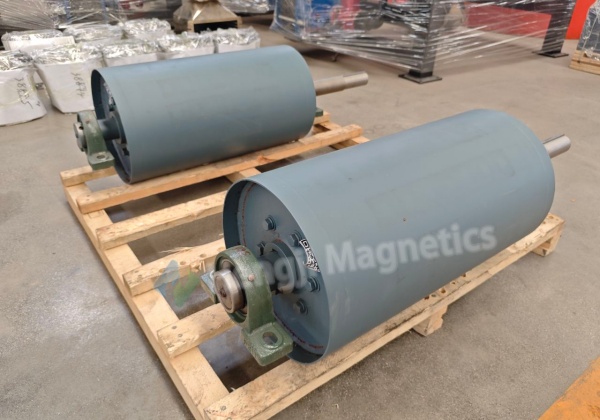
A cement company had no iron removal device at the bucket elevator discharge. Iron pieces and iron nodules entered downstream equipment with the powder. Jamb-related unplanned downtime occurred frequently. The site was dusty, and space on both sides of the belt was limited. Hengci Magnetic supplied a magnetic pulley separator connected in the discharge pipeline. Iron impurities were captured by the magnetic assembly and automatically separated and discharged as powder passed through. The magnet temperature rating was checked against the powder temperature. After commissioning, jamb failures dropped significantly. Discharged iron impurities could also be recovered. This case demonstrates the value of the iron removal machine in real production.
Safety and Selection Tips
Magnetic Field Safety for the Magnetic Pulley Separator
A strong magnetic field is present around the magnetic pulley separator. Do not place watches or instruments nearby. Operators must not carry sharp ferrous tools or objects close to the unit. These precautions prevent injury and equipment damage. The iron removal machine should be installed with sufficient safety clearance.
What to Prepare Before Selecting an Iron Removal Machine
Before selecting a magnetic pulley separator and iron removal machine, prepare material name, particle size, moisture content, material layer thickness, material temperature, and single-shift throughput. Provide these details to Hengci Magnetic. We will configure the magnetic system, field strength grade, pulley surface treatment, and installation form. Proper selection ensures that the magnetic pulley separator and iron removal machine deliver stable iron removal and long service life.
Conclusion
The magnetic pulley separator is an iron removal machine that uses drum surface magnetism to capture ferrous contaminants from the material stream. Magnetic system selection, field strength, material temperature, pulley surface treatment, and installation adjustment all affect performance. With the right magnetic pulley separator and iron removal machine, tramp iron is removed before it reaches downstream equipment. Production runs more smoothly, maintenance costs drop, and equipment life improves.


