


 Categories
In aggregates and mineral processing, customers consistently focus on a few core issues: Can the separation performance meet specifications reliably? Can the equipment operate online without interrupting production? Is installation flexible and maintenance simple? Are operating costs under control? The pipeline magnetic separator designed as a magnetic separator for aggregate addresses these pain points by integrating magnetic separation directly into the material conveying pipeline—allowing aggregates to be separated while they are being conveyed, in one step.
Core Design: Integrating Separation with Conveying
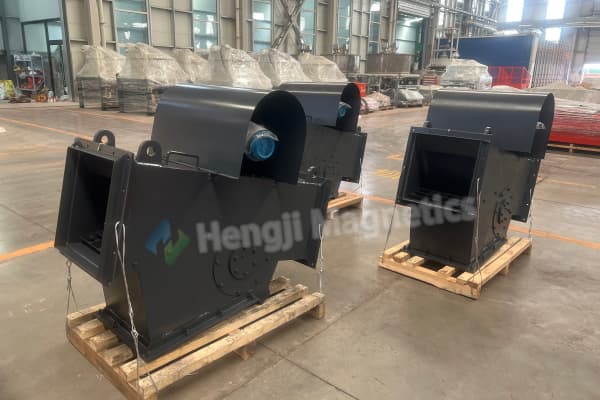
The core design of this pipeline magnetic separator is the integration of separation and pipeline conveying. The unit uses a pipeline structure, with a high‑performance rare earth magnetic system, separation channels, and impurity collection mechanisms built inside. As aggregate slurry or dry powder flows through the separation zone of the magnetic separator for aggregate, a strong magnetic field is generated. Ferrous impurities are instantly attracted to the separation components, while clean aggregate continues along the pipeline—both streams are separated simultaneously during conveying. This process requires no additional drive mechanisms, no separate separation tanks, and no manual intervention—truly achieving online, pipeline‑based, automated magnetic separation.
Reliable Iron Removal Performance
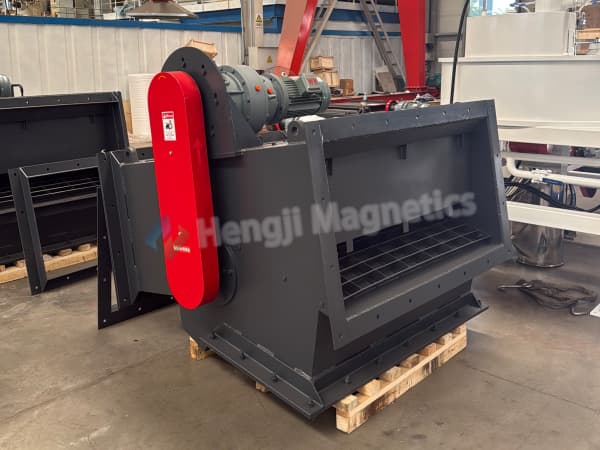
The separation effectiveness of this pipeline magnetic separator is backed by reliable performance. The internally computer‑optimized magnetic circuit provides high field strength, high gradient, and deep penetration—effectively capturing ferrous impurities ranging from strongly magnetic to weakly magnetic types. Whether mechanical iron filings from crushing or magnetic mineral particles from the raw ore, the magnetic separator for aggregate captures them instantly as aggregate flows through. The magnetic system uses high‑performance Neodymium magnets with high energy product and less than 5% demagnetization over eight years—ensuring stable field output and consistent separation performance over time. For wet aggregate applications, the internal flow channels are specially designed for smooth material passage, resisting clogging and handling large throughputs for continuous large‑scale production.
Stability and Maintenance for Aggregate Processing
The pipeline magnetic separator is designed for the demanding conditions of aggregate processing. Aggregate is abrasive and high‑impact, requiring high wear resistance and structural strength. All product‑contact components are made of high‑wear materials to withstand high‑speed impact and friction, ensuring long service life. The magnetic system is bonded with high‑strength adhesive and epoxy‑potted, with the surface reinforced by stainless steel strapping—preventing loosening or demagnetization. End seals with gaskets and sealant ensure water‑tight integrity. The simple, motion‑free design requires minimal daily maintenance—just periodic cleaning of captured magnetic impurities by opening the cleanout port, without affecting normal production.
 Applications Across the Aggregate Processing Line
The pipeline magnetic separator for magnetic separator for aggregate applications covers multiple key points in aggregate processing:
-
After crushers: Installed downstream of crushers to remove tramp iron from crushed aggregate, protecting screens, conveyors, and other downstream equipment from impact damage.
-
At the end of conveying lines: Installed at the discharge end of finished aggregate pipelines for final iron removal, ensuring aggregate purity meets quality requirements for concrete, asphalt, and other downstream applications.
-
Mineral processing: Used for recovery and upgrading of magnetic minerals from slurries, improving concentrate grade.
-
Cement, refractories, ceramics, glass, chemicals: Delivering effective separation in these industries as well.
Key Selection Factors for Pipeline Magnetic Separator
When selecting a pipeline magnetic separator for aggregate applications, customers should focus on several critical parameters:
-
Magnetic field strength: Choose based on the type and content of ferrous impurities in the aggregate—field strengths range from low to high, flexibly configurable.
-
Throughput capacity: Match the unit size to the production line’s conveying and processing requirements.
-
Connection size and method: Ensure compatibility with the existing pipeline system for easy installation.
-
Material temperature: Standard units suit general conditions; high‑temperature designs are required for hot materials, as permanent magnets are temperature‑sensitive.
Conclusion
The pipeline magnetic separator designed as a magnetic separator for aggregate embeds separation directly into the material conveying pipeline, achieving simultaneous separation and conveying. It retains the strong field, effective separation, and stable operation of traditional separators while overcoming the limitations of separate stations, large footprints, and complex installation. For customers seeking to improve aggregate quality, protect equipment, and reduce operating costs, the pipeline magnetic separator is a technology worth exploring and prioritizing.


