


 Categories
Is your new magnetic material separator performing as promised? How can you be sure your industrial magnetic separation equipment is catching all the tramp metal? The answer is not in the manual’s specifications, but in a simple, practical field test. This guide outlines the standard industry method to verify the real-world performance of your equipment.
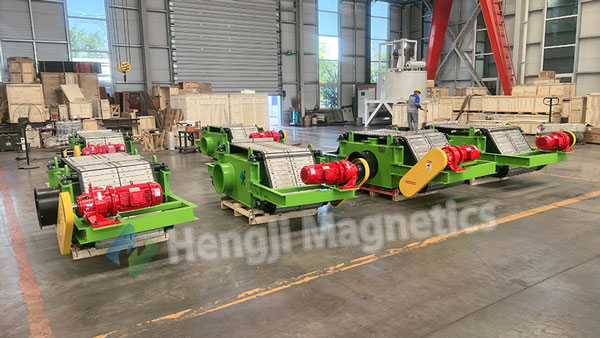
The Standard Performance Test: The “Dummy Tramp Iron” Test
This direct method is the most effective way to evaluate a magnetic material separator. It simulates real contamination and gives you visual, undeniable proof of your industrial magnetic separation equipment’s capability.
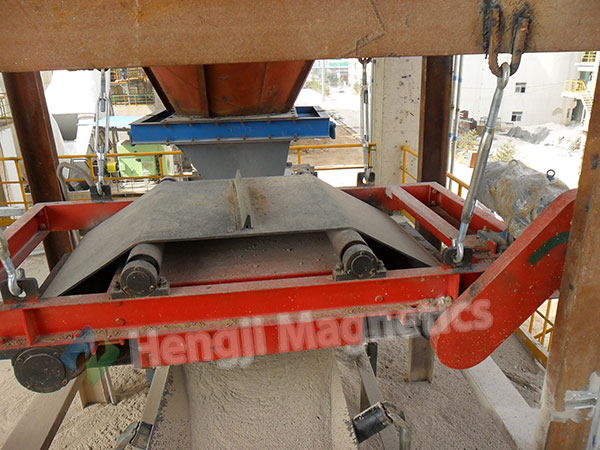 Phase 1: Preparing for the Test
1. Gather Your Test “Contaminants”:
-
Select a variety of small ferrous (iron or steel) objects.
-
Good examples: Standard nuts, bolts, washers, small machine keys, or smooth metal rods.
-
Key Point: Choose items of different weights and shapes to test the separator’s sensitivity and grip.
2. Ensure Operational Safety:
-
Inform all personnel in the area that a test is being conducted.
-
Ensure standard lock-out/tag-out procedures are followed for any nearby equipment not involved in the test.
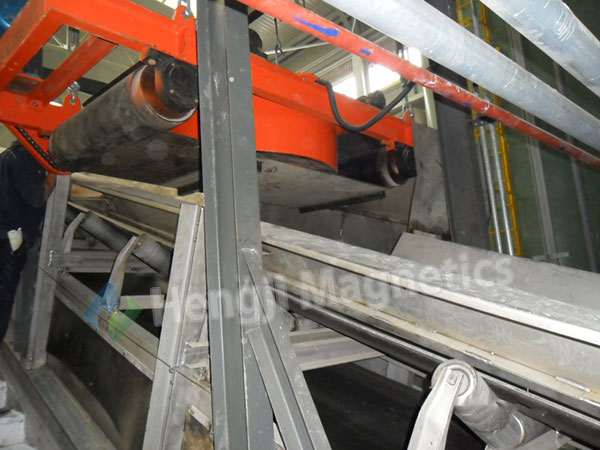 Phase 2: Executing the Test Procedure
Step 1: Start Your System.
Run your conveyor and the magnetic material separator under normal operating conditions. Allow the material flow to stabilize.
Step 2: Introduce the Test Pieces.
Carefully place your prepared test items onto the moving conveyor belt, upstream of the separator. Space them out to test the unit’s continuous capture ability.
Step 3: Observe the Critical Actions.
Watch what happens as each test piece approaches the industrial magnetic separation equipment. You are looking for two clear outcomes:
-
Capture: The magnet should powerfully and decisively lift the metal from the material bed.
-
Discharge: The captured metal should be cleanly and completely removed from the magnet face and deposited into the collection area.
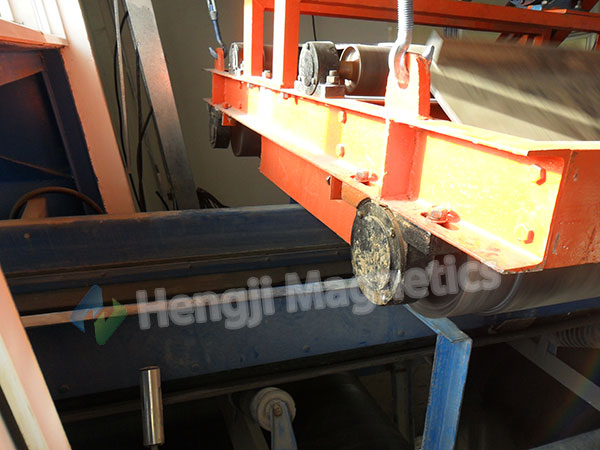 Phase 3: Evaluating the Results
A successful test proves your equipment is working. Evaluate based on these questions:
-
Capture Rate: Were 100% of the test pieces captured? Even the smallest one?
-
Discharge Efficiency: Were all captured pieces successfully released into the collection bin without falling back onto the clean product?
-
System Impact: Did the separator handle the event without affecting the normal material flow?
Critical Safety Warning for Testing
NEVER use improper test objects. The manual explicitly warns against this.
-
Do NOT use overly heavy scrap (e.g., large tools, heavy steel plates).
-
Do NOT use sharp, jagged, or pointed metal objects.
-
Why? These can cause severe damage to the conveyor belt, the magnet face, or the separator’s internal mechanisms, leading to costly repairs and safety hazards.
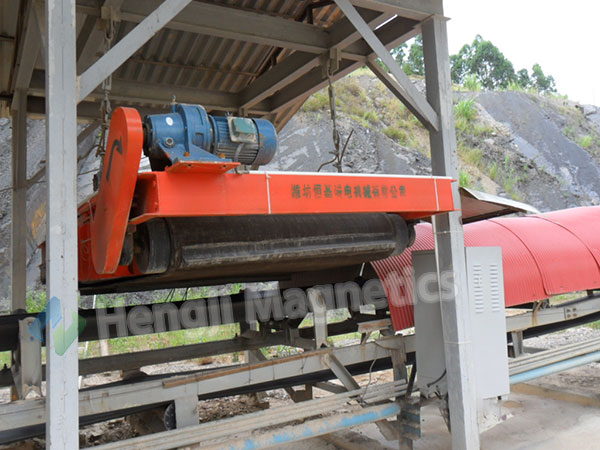 Phase 4: Adjusting Based on Test Findings
If the test reveals performance gaps, don’t assume the magnetic material separator is faulty. Often, simple adjustments can optimize your industrial magnetic separation equipment.
1. Check and Adjust Suspension Height:
-
Problem: Metal is not being captured.
-
Likely Cause: The magnet is hung too high above the material.
-
Solution: Lower the separator to the manufacturer’s recommended “Rated Suspension Height.”
2. Check and Adjust the Installation Angle:
-
Problem: Metal is captured but not discharged cleanly.
-
Likely Cause: The magnet’s angle is not optimized for the material trajectory.
-
Solution: Slightly adjust the tilt or angle of the separator per the installation guide.
Conclusion: Trust, But Verify
Your industrial magnetic separation equipment is a crucial guardian of product quality and machinery safety. The “Dummy Tramp Iron” test is a universal, practical method to move from trusting specifications to trusting performance. It provides immediate validation and a baseline for future checks.
Perform this simple test during commissioning and as part of regular performance audits. It is the most direct way to ensure your investment in a magnetic material separator is delivering its full protective value. For further guidance on optimal setup and maintenance to keep your equipment at peak performance, contact our technical support team.


