


 Categories
In steel mill scrap yards, foundry shakeout lines, and construction waste recycling plants, the nightmare scenario is all too familiar: a newly repaired crusher is jammed by a bent I‑beam, or an expensive conveyor belt is slashed by a sharp piece of scrap iron. At the same time, if the removed tramp iron is simply bulldozed away with dirt and slag, its value as steelmaking feedstock is almost completely lost.
To solve this double dilemma, the tramp iron magnetic separator is playing an increasingly critical role. It is no longer just a tool to remove “nuisance” iron. Instead, it has become a resource recovery machine that integrates powerful lifting, precise sorting, and clean recycling. At its core is magnetic separation recycling, which separates various steel scrap from thick material streams and converts it into clean, valuable metallic resources. This delivers both safety and profitability.
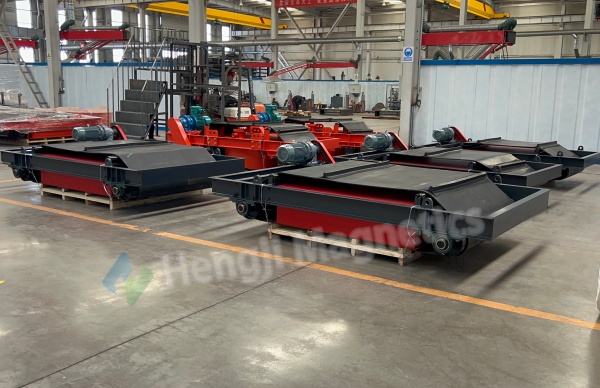
How Does a Tramp Iron Magnetic Separator Grab and Recover Valuable Scrap?
In messy, stacked material flows, tramp iron comes in many shapes. Some are steel beams several meters long; others are palm‑sized offcuts. The first question customers ask is: can a tramp iron magnetic separator reliably lift these differently shaped, different‑weight pieces, and when releasing them, separate them effectively from mud and slag?
The solution lies in its deep magnetic penetration and multi‑stage discharge path. Using an ultra‑strong rare earth permanent magnet or a high‑power electromagnetic coil arranged in a flat or belt‑type magnetic circuit, the tramp iron magnetic separator generates a powerful magnetic force at a considerable distance from its working surface. This force is strong enough to lift heavy steel scrap buried deep in thick, heavy material layers.
When the captured tramp iron is carried to the non‑magnetic discharge zone, the equipment often integrates a vibrating or grid‑type sorting device along the discharge path. This design shakes off any small amount of non‑metallic debris that was lifted with the iron. Clean, large steel scrap then drops precisely into the collection bin. This single action accomplishes magnetic separation recycling, greatly improving the purity of recovered scrap and its direct value for remelting.
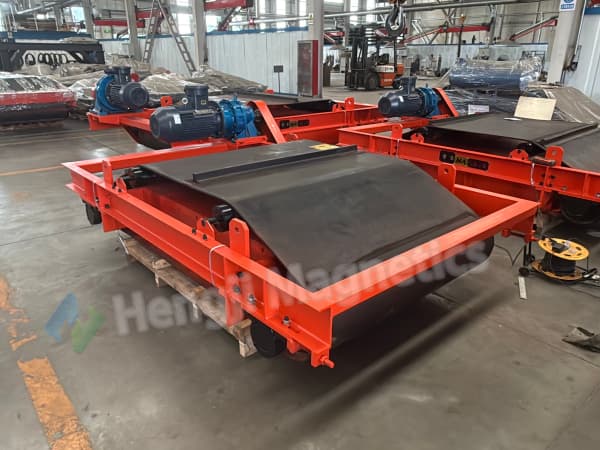 Ensuring High Capacity and Long‑Term Reliability in Magnetic Separation Recycling
Steel mills and solid waste processing plants handle tens of thousands of tons daily. If a tramp iron magnetic separator frequently stops for maintenance due to poor reliability, it will drag down the entire production line. This is the second major concern during selection.
A well‑designed tramp iron magnetic separator must be both tough and durable.
-
Heavy‑duty discharge belt: The self‑cleaning belt must be made of high‑strength, tear‑resistant rubber and feature automatic anti‑misalignment tracking to withstand the continuous heavy impact of ejected steel.
-
Robust drive system: The gearmotor must have a generous safety margin and be equipped with professional overload protection to prevent damage from occasional large iron block jams.
-
Protected magnetic circuit: The core magnetic system must fully consider the effects of material impact and high temperature. Permanent magnet designs require fully sealed stainless steel armor. Electromagnetic designs require forced oil or air cooling to ensure that, even during 24‑hour continuous, high‑intensity steel slag separation, the field strength and mechanical structure of the tramp iron magnetic separator remain stable. This guarantees consistent magnetic separation recycling efficiency.
 Beyond Steel Slag: Where Else Does a Tramp Iron Magnetic Separator Create Recycling Value?
With its powerful tramp iron capture and sorting capability, the tramp iron magnetic separator has found applications far beyond steel mills.
-
Construction waste recycling: Installed after crushers and screens, it recovers rebar ends, wire mesh, and metal connectors from crushed concrete and brick fragments. These recovered metals are excellent furnace feed for small steel mills.
-
Wood shredding and biomass processing: It pulls nails, staples, and hinge parts from recycled pallets and wood shreds, protecting downstream pellet mill knives. The separated clean iron fines also become a valuable by‑product for sale.
-
Incinerator bottom ash treatment: In waste‑to‑energy plants, it efficiently separates old tin can fragments and metal rings from sintered black ash, significantly increasing the metal recovery value of bottom ash used as construction aggregate.
Every high‑efficiency tramp iron magnetic separator is not just a safety device. It is a compact magnetic separation recycling unit that pulls discarded or low‑value scrap metal back into the circular economy value chain.
Conclusion: From Waste to Worth – The Real Value of Tramp Iron Magnetic Separation
The tramp iron magnetic separator transforms a hazardous contaminant into a profitable resource. By combining deep magnetic capture, automated discharge, and robust mechanical design, it delivers magnetic separation recycling that protects crushers, belts, and downstream equipment while generating clean scrap metal ready for remelting.
Whether you process steel slag, construction waste, wood residues, or incinerator ash, investing in a high‑quality tramp iron magnetic separator turns a cost center into a revenue stream. Stop burying value with your waste. Start recovering it with smart magnetic separation.


