


 Categories
The heart of any drum magnetic separator is its powerful magnetic assembly—the permanent drum magnets. While renowned for their reliability and minimal maintenance, these magnets are not immune to strength degradation. Recognizing early warning signs and understanding the correct response is key to preventing costly downtime and ensuring consistent separation efficiency. This guide will help you diagnose issues and make informed decisions about your equipment.
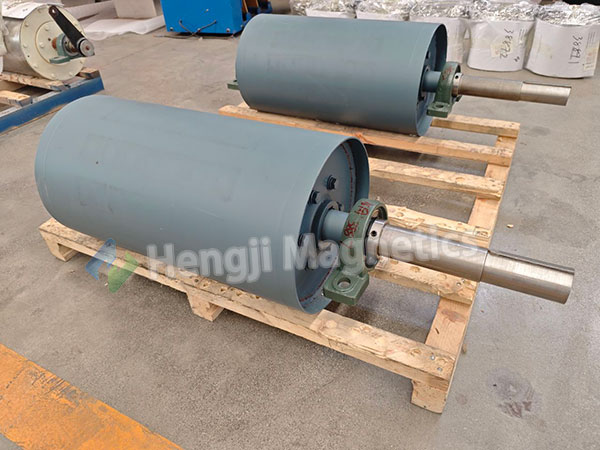
Understanding Magnetic Strength Loss in Permanent Drum Magnets
Degradation rarely happens overnight. It’s a process, often accelerated by specific operational factors. Modern permanent drum magnets, typically made from high-grade rare-earth materials like Neodymium, are designed for longevity. However, their performance can be compromised. The first step is recognizing the signs that your drum magnetic separator is losing its grip.
Early Warning Signs & Diagnostic Triggers
The most reliable indicator is a consistent drop in operational performance. Monitor these key signals closely:
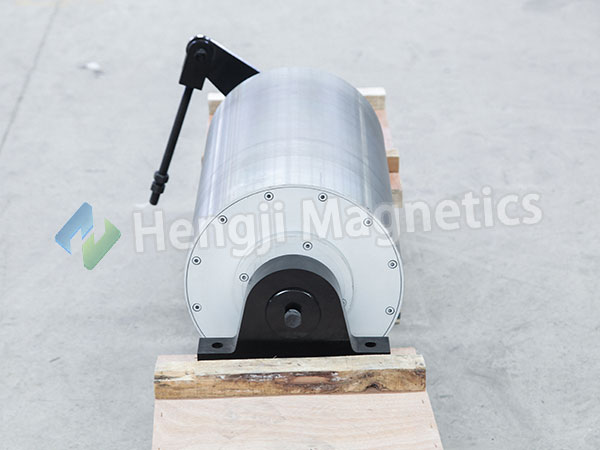 1. Declining Separation Efficiency – The Primary Signal
This is the most direct and critical warning. A drum magnetic separator with weakening permanent drum magnets will show a measurable drop in performance.
-
What to Observe: An increase in “tramp metal” or magnetic minerals appearing in your cleaned product stream. You may notice fewer ferrous contaminants being captured, or lower-grade concentrates in mineral processing.
-
Action: Before concluding magnet failure, systematically rule out other common issues:
-
Check for increased feed rate or material bed depth.
-
Verify correct drum speed and installation clearance.
-
Inspect for a worn or damaged drum shell acting as a barrier.
-
If these are optimal, magnet strength loss is the likely culprit.
-
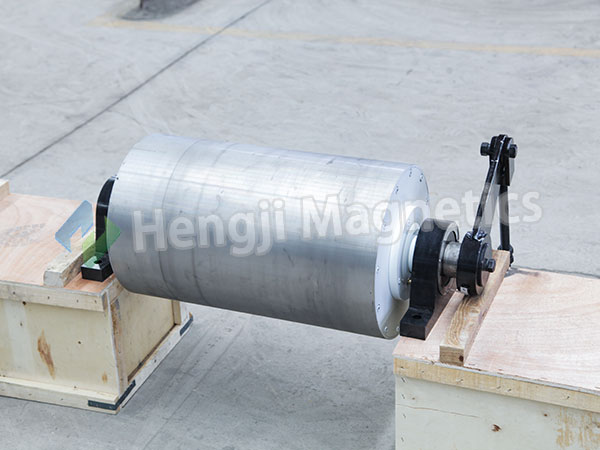
2. External Factors That Accelerate Degradation
Often, premature loss is caused by operating conditions outside the design limits of the permanent drum magnets.
-
Excessive Heat (The #1 Enemy): This is the most critical factor. Every standard drum magnetic separator has a maximum operating temperature (commonly 80°C/176°F). Exceeding this limit, even briefly, can cause rapid, irreversible loss of magnetic strength.
-
Mechanical Shock & Vibration: Severe impacts from large tramp metal or chronic, abnormal vibration can physically damage the magnet block assembly inside the drum, causing cracks or misalignment.
-
Corrosive Environments: While drums have stainless steel shells, prolonged exposure to acids, alkalis, or constant moisture can eventually compromise seals and corrode the internal magnet structure.
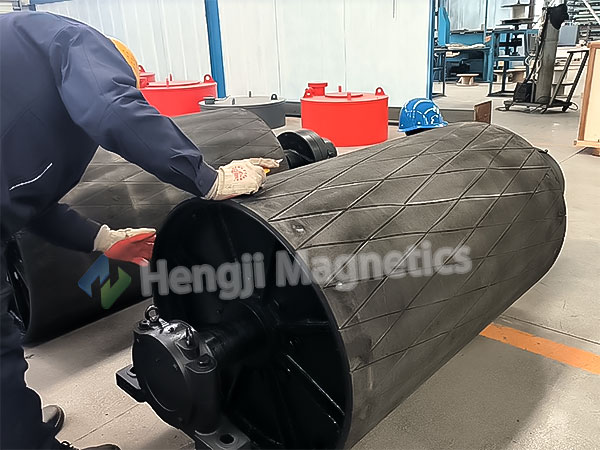 The Repair Dilemma: Can You Re-Magnetize Permanent Drum Magnets?
A common question from operators facing strength loss is: “Can the permanent drum magnets be re-magnetized?” The answer is nuanced and often leads to the more practical solution.
The Reality of Re-Magnetization
For modern rare-earth permanent drum magnets, re-magnetization is rarely a viable in-field repair option.
-
Why It’s Uncommon: These magnets are magnetized during manufacturing under powerful, controlled conditions. Their “natural” aging rate is very low (often less than 1% per decade under normal use). Strength loss is typically due to physical changes in the material’s structure (like from overheating), which cannot be reversed by simple re-magnetization.
-
Limited Applicability: In theory, only magnets that have suffered a specific type of magnetic disturbance (e.g., from a powerful opposing field) might be candidates. This scenario is exceptionally rare in standard plant operation. Your equipment manual likely does not mention re-magnetization as a standard service procedure.
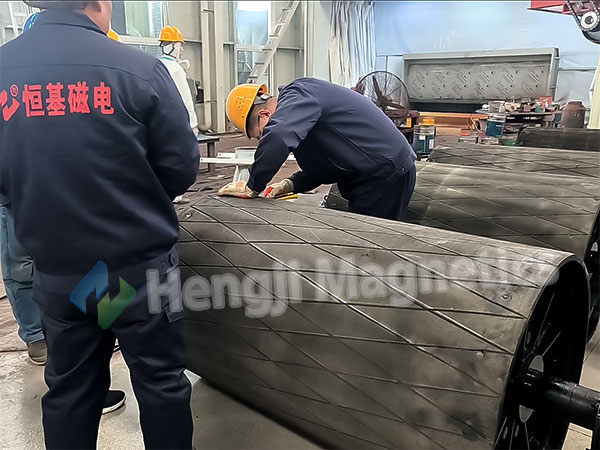 The Standard Solution: Replacement of the Drum Magnetic Separator Assembly
When faced with confirmed and impactful magnetic strength loss, replacement is the most reliable, efficient, and cost-effective solution.
When Replacement is the Necessary Choice:
-
Confirmed Overheating Incident: If the drum magnetic separator was exposed to temperatures above its rating, the damage to the permanent drum magnets is permanent. Replacement is required.
-
End of Service Life: After many years of faithful service, natural decay may finally impact performance. Upgrading restores peak efficiency.
-
Physical Damage: Visible drum shell deformation, or internal damage from a catastrophic mechanical failure, necessitates replacement.
-
Process Changes: If your new product requires higher magnetic strength or a different magnetic profile, upgrading your drum magnetic separator is the path forward.
Proactive Maintenance & Your Action Plan
Protecting your investment in a drum magnetic separator is straightforward. Follow this plan:
-
Prevent: Strictly adhere to the maximum temperature rating. This is the single most important maintenance rule for permanent drum magnets.
-
Monitor: Establish a routine to check separation efficiency. Keep records of product purity or captured contaminant volume as a baseline.
-
Diagnose: If performance drops, investigate. Ask: “Was there an over-temperature event?” Inspect for mechanical damage.
-
Act: Contact your original equipment manufacturer or a qualified service provider. They can perform a definitive Gauss meter test to measure surface field strength. Based on the cause and severity of degradation, they will recommend the best course of action—which, in the vast majority of cases, will involve replacing the magnetic drum assembly or the entire drum magnetic separator unit.
Conclusion
Your drum magnetic separator, powered by its permanent drum magnets, is built for durability. By understanding that performance decline is the key warning sign, and that overheating is the primary risk, you can take proactive steps. When magnetic strength fades to an unacceptable level, choosing a qualified replacement assembly from a trusted manufacturer is the surest way to restore optimal performance, ensure product quality, and secure a reliable return on your processing equipment investment.


