


 Categories
In ceramic, chemical, non-metallic mineral, and advanced material industries, slurry purity directly determines final product quality. How to efficiently and reliably remove fine, weakly magnetic iron impurities is a common challenge. This article addresses the most critical questions about the high intensity wet magnetic separator and explains how it transforms slurry purification.
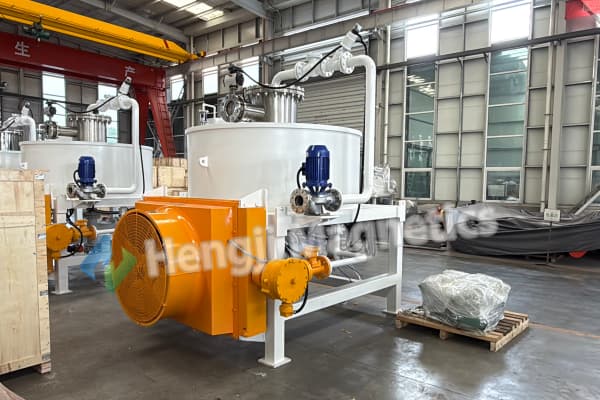
Problem 1: Poor Removal Efficiency for Fine or Weakly Magnetic Particles
Conventional wet magnetic separator units often lack sufficient field strength to capture micron-sized, weakly magnetic particles. The result is product discoloration or failed purity specifications.
The high intensity wet magnetic separator solves this with an electromagnetic field system generating stable working flux densities from 12,000 to over 20,000 Gauss. This extreme field captures weakly magnetic iron particles down to the micron scale. Using DC excitation, the internal magnetic matrix (typically 430 stainless steel) becomes instantly magnetized, creating high-gradient zones where even the weakest impurities are trapped. A wet magnetic separator with this power ensures no iron escapes.
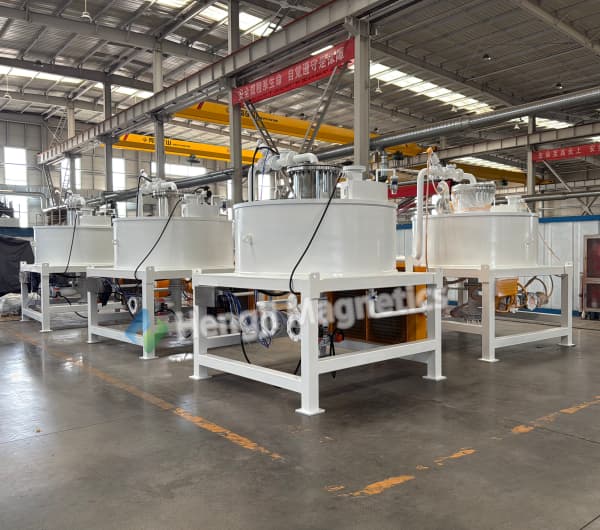 Problem 2: Clogging and Difficult Cleaning Affecting Production
Clogging is a major headache in wet processing, especially with high-viscosity or high-flow slurries. Traditional high intensity wet magnetic separator units require frequent stops for manual cleaning, disrupting production.
This wet magnetic separator features a clean discharge design. After de-energizing the magnet, a high-pressure water flush system activates. Strong water flow scours captured iron particles from the matrix and flushes them away. This “de-energize then flush” sequence fundamentally prevents clogging and ensures each cleaning cycle fully restores the high intensity wet magnetic separator for the next batch, minimizing manual intervention.
Problem 3: Coil Overheating and Burnout Risk
Electromagnetic wet magnetic separator units generate heat while producing strong fields. Inadequate cooling leads to insulation failure and equipment burnout—a major customer concern.
The high intensity wet magnetic separator incorporates an oil-cooled system with temperature monitoring. The coil is fully immersed in transformer oil. An oil pump circulates the heated oil through an external cooler (air-cooled or water-cooled), keeping the coil within safe operating limits. Built-in over-temperature and over-current alarms trigger protective actions when oil or coil temperature exceeds set points (e.g., 80°C or 90°C). This ensures reliable 24/7 operation of your wet magnetic separator.
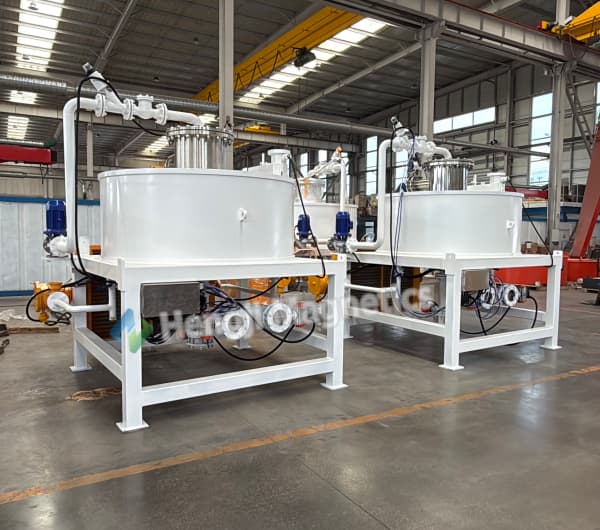 Problem 4: Complex Operation and Low Automation
Rising labor costs demand equipment that is easy to use and highly automated.
This high intensity wet magnetic separator features a PLC intelligent control system with a touchscreen HMI. Operators choose between manual and automatic modes. In automatic mode, the wet magnetic separator executes a preset cycle: feed, energize for capture, stop feed, de-energize, flush discharge, and re-energize. After setting initial parameters (feed time, flush time), the high intensity wet magnetic separator runs unattended, significantly reducing labor requirements.
Summary
The high intensity wet magnetic separator configured as a wet magnetic separator addresses four major pain points: insufficient capture of fine impurities, clogging, overheating, and complex operation. With ultra-high flux density, de-energized water flush cooling, intelligent oil-cooled temperature control, and fully automatic sequencing, it delivers efficient, stable, safe, and energy-saving slurry purification. Whether processing quartz sand, kaolin, potassium feldspar, lithium battery materials, or fine chemicals, this wet magnetic separator is the strategic upgrade to enhance product competitiveness. Choosing the right high intensity wet magnetic separator is not just a process improvement—it is a decisive step toward higher quality and lower operating costs.


