


 Categories
In industries like abrasives, refractories, non-metallic minerals, chemicals, and food processing, ferrous contamination has long been a persistent problem. A dry magnetic separator configured as a magnetic drum separator offers continuous automatic iron removal with energy-efficient, maintenance-free operation. But during selection and use, customers have many questions. This guide addresses those core concerns.
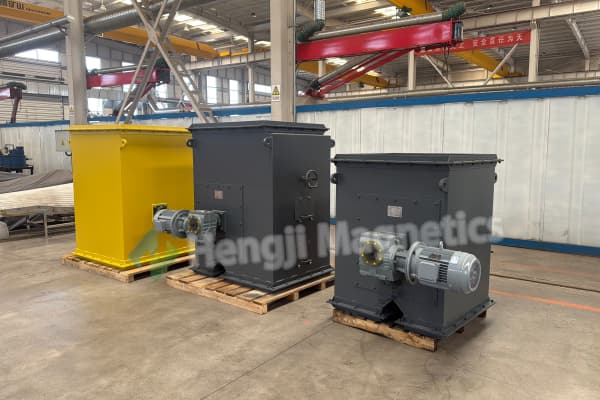
How to Ensure Iron Removal Efficiency in a Dry Magnetic Separator?
The key to efficiency in any magnetic drum separator lies in its magnetic source and circuit design. Quality dry magnetic separator units use high-grade Neodymium magnets. Computer-optimized magnetic circuits generate extremely high field strength on the drum surface. This means even fine iron powder or weakly magnetic impurities—which conventional magnetic drum separator models miss—are captured efficiently. Also critical is the magnetic wrap angle. A 185-degree angle, for example, gives magnetic material a longer travel path on the drum. Longer travel means more complete iron removal in your dry magnetic separator.
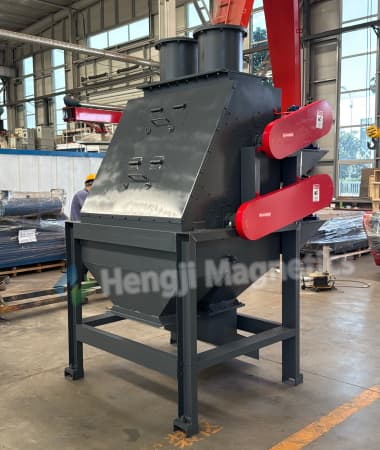
Can a Magnetic Drum Separator Handle Different Particle Sizes?
Yes. A well-designed dry magnetic separator accommodates diverse materials through adjustable vibratory feeders. These feeders use solid-state controls for stepless speed adjustment. Based on particle size, density, and flowability of your material, you can precisely control feed rate and bed depth.
-
For fine powder: Reduce vibration frequency to maintain a thin, uniform bed for optimal separation in the magnetic drum separator.
-
For coarse granules: Increase frequency and bed depth to maintain throughput.
Some dry magnetic separator models also offer variable drum speed (e.g., 0-40 rpm via VFD), allowing precise matching of separation parameters to your specific material.
Which Industries Benefit Most from a Dry Magnetic Drum Separator?
The magnetic drum separator in dry configuration serves nearly every industry requiring iron removal from dry powders. Common applications include:
-
Abrasives & Refractories: Removing iron from silicon carbide, corundum, and alumina.
-
Non-Metallic Minerals: Purifying quartz sand, potassium feldspar, and kaolin.
-
Food, Feed & Grain: Removing magnetic foreign particles from flour, rice powder, and feed ingredients.
-
Chemicals: Purifying carbon black, plastic additives, and rubber compounds.
A dry magnetic separator is versatile enough for all these applications.
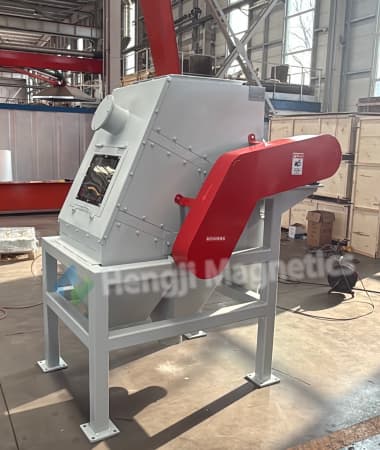
Is Installation and Maintenance Complicated? Is the Dry Magnetic Separator Truly Maintenance-Free?
Installation of a magnetic drum separator is remarkably simple. Mount the unit on a level floor, ground the housing, and connect to three-phase power. During commissioning, verify drum rotation direction through the viewing port—it must match material flow direction. Adjust the magnetic angle using the linkage on the machine side to achieve optimal separation.
The term “maintenance-free” refers specifically to the magnetic core. Neodymium magnets in a dry magnetic separator require no power and have no wearing parts. This delivers energy savings and operational safety. Routine maintenance for the magnetic drum separator is limited to occasional internal cleaning and bearing lubrication. The stainless steel drum shell (304 or 1Cr18Ni9Ti) provides excellent wear and corrosion resistance, ensuring long-term reliability for your dry magnetic separator.
Summary: Using Your Magnetic Drum Dry Separator for Higher Purity
When selecting a dry magnetic separator, focus on three factors:
-
Magnet material: Prioritize Neodymium.
-
Magnetic circuit: Computer-optimized designs deliver higher field strength.
-
Feed control: Stepless adjustable vibratory feeder to match your material characteristics.
During installation: level the magnetic drum separator, ground it properly, and confirm rotation direction.
Investing in a reliable dry magnetic separator is not just an emergency fix for iron contamination. It is a strategic choice to raise product brand value, reduce reject rates, and build a more competitive operation. For specific model or parameter questions, consult an experienced magnetic drum separator manufacturer with lab testing capability.


