


 Categories
In industries like abrasives, refractories, non-metallic minerals, and chemicals, ferrous contamination in dry powders is a hidden threat. It degrades product purity, damages downstream equipment, and causes unplanned downtime. The CTQ series dry magnetic separator, specifically designed as a magnetic roller separator, has become a mainstream solution. But with various models and technical parameters, customers often have questions about selection, installation, and maintenance. This guide addresses those core concerns.
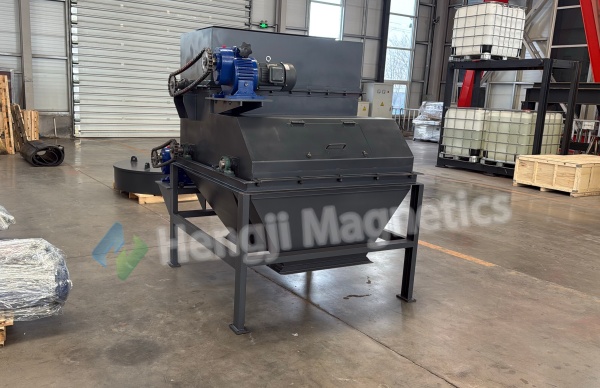
Selection Questions: Which Dry Magnetic Separator Fits My Material?
Question 1: What are my material characteristics?
A dry magnetic separator is designed specifically for dry powders. You need to define:
-
Particle size range and distribution.
-
Flowability (free-flowing or cohesive).
-
Moisture content (must be low for dry separation).
-
Approximate ferrous contamination level.
For cohesive powders, a specialized vibratory feeder may be required. For materials with high levels of strongly magnetic contamination, field strength requirements are less demanding than for weakly magnetic impurities.
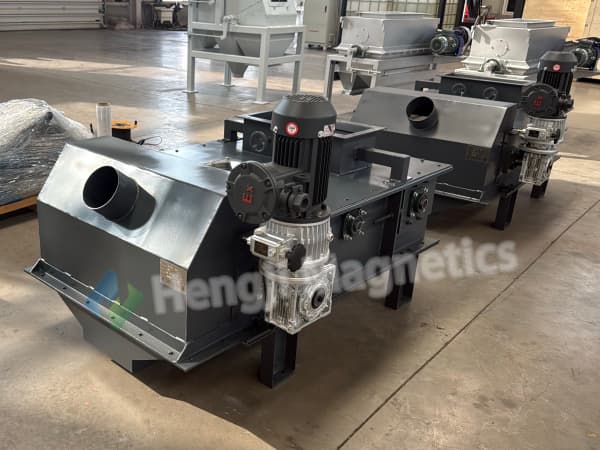
Question 2: What throughput capacity do I need?
Capacity (tons per hour) determines the size of your magnetic roller separator. Model numbers often indicate drum length and diameter. Match the unit to your peak production rate, adding a 10-20% margin for future increases. Oversizing wastes capital and energy.
Question 3: Why does speed adjustment matter?
CTQ dry magnetic separator models feature variable speed drives (VFDs or mechanical variators) with ranges typically from 8-40 rpm or 40-200 rpm. Speed adjustment is critical because it allows you to optimize material residence time in the magnetic field based on particle size, density, and purity requirements. Always confirm the speed range and control method during selection for your magnetic roller separator.
Installation & Startup: How to Ensure Reliable Operation from Day One
Question 4: What are the installation requirements?
-
Foundation: The dry magnetic separator must be mounted on a level, solid surface and properly grounded.
-
Rotation Direction: Before feeding material, verify that the magnetic roller separator drum rotates in the correct direction (forward, matching material flow). Reverse rotation will disable separation and may damage the unit.
-
Electrical Connections: Use the specified cable gauge (e.g., 3x1mm² or 3x4mm² copper). For units with vibratory feeders, confirm the motor connection and test rotation direction briefly.
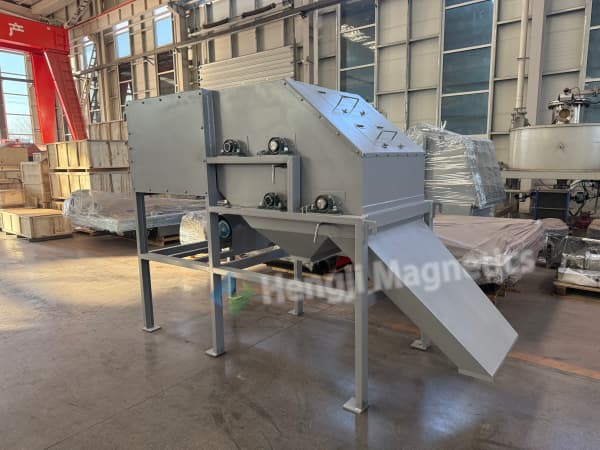 Question 5: What are the startup steps?
-
No-Load Test: Run the dry magnetic separator empty first. Listen for unusual noise and check for vibration or belt misalignment.
-
Initial Parameter Setting: Set vibratory feeder frequency and magnetic roller separator speed based on test results or initial recommendations.
-
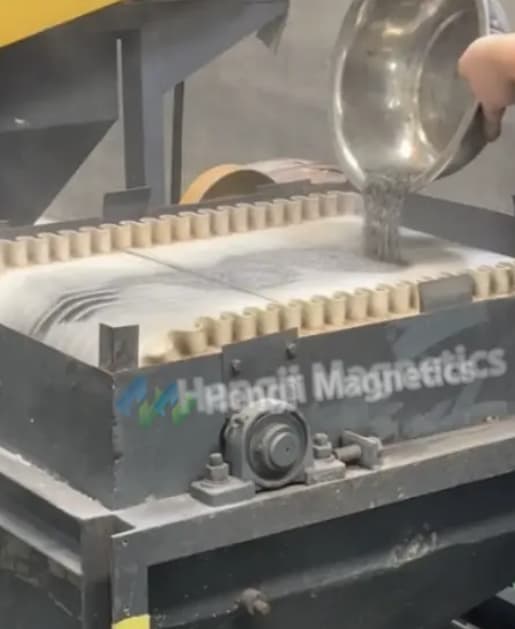
Test Run with Material: Feed a small quantity. Observe separation at the magnetic and non-magnetic discharge ports. Adjust feed rate and drum speed iteratively until achieving optimal separation.
Maintenance & Service Life: Will This Dry Magnetic Separator Be Difficult to Maintain?
CTQ magnetic roller separator units are known for low maintenance, not zero maintenance. The magnetic core (Neodymium) requires no routine service, but mechanical components do.
Question 6: What daily maintenance is required?
-
Lubrication: Bearings on the dry magnetic separator require periodic greasing (typically #2-4 calcium-based grease), usually monthly. This is essential for smooth operation and bearing life.
-
Cleaning: Wipe dust from the unit and viewing windows regularly. Inspect the belt and discharge scraper for wear.
-
Fastener Check: Periodically verify that all bolts are tight.
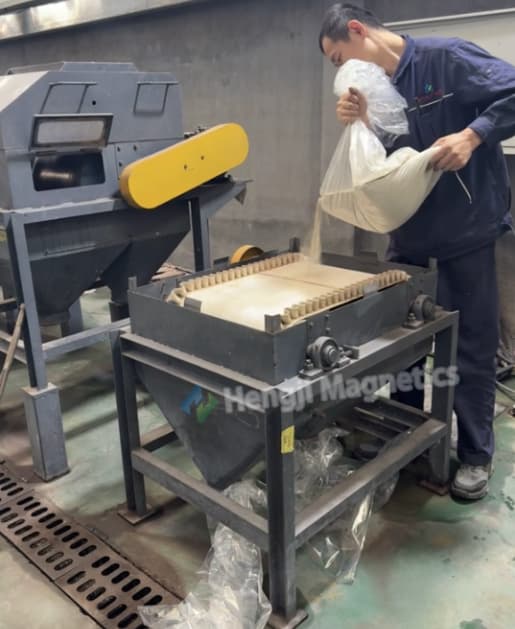
Question 7: What are the wear parts, and are they easy to replace?
Common wear parts on a magnetic roller separator include:
-
Conveyor belt.
-
Discharge scraper.
-
Vibrator support springs or elastic elements.
Quality units use modular designs for simple replacement. Request a wear parts list and estimated service life from your supplier for budget planning.
Question 8: How long will the dry magnetic separator last?
With proper maintenance, the mechanical structure of a dry magnetic separator will last for many years. The magnetic core—the heart of the magnetic roller separator—degrades very slowly under normal conditions (temperature below 80°C, no mechanical shock). Fully sealed magnetic circuits can guarantee less than 5% magnetic decay over ten years, meaning the core separation capability remains stable for a very long investment payback period.
Still searching for a reliable dry powder iron removal solution?
The CTQ dry magnetic separator configured as a magnetic roller separator delivers an effective balance of efficiency, reliability, and economy. Correct selection, proper installation, and simple maintenance are the three keys to unlocking this value. With professional laboratory testing available for your material, we can recommend the optimal dry magnetic separator model and parameters based on actual test data—ensuring your investment delivers maximum return.


