


 Categories
In mining, metallurgy, and building materials, tramp iron—drill bits, bolts, broken steel—is the number one threat to conveyor belts, crushers, and mills. A single piece of stray metal can tear a belt, jam a crusher, or destroy a grinding mill, costing hours of downtime and thousands in repairs. Installed over belt conveyors, a conveyor belt magnetic separator—often called a mining magnetic separator—is the essential safety guard. This article explains how it works, why it is reliable, and how it keeps your mine running.
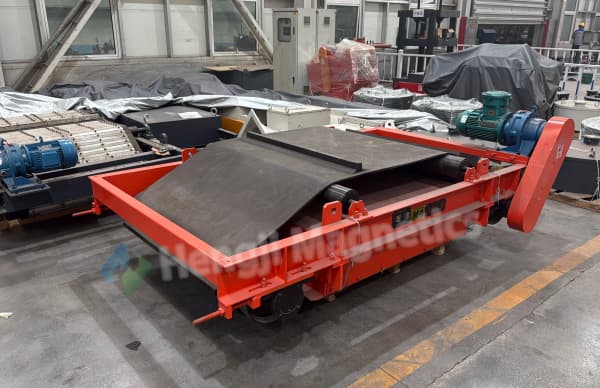
How Does a Mining Magnetic Separator Pull Iron from a Thick Ore Burden?
Customers often ask: with a deep, heavy layer of ore on the belt, how can a conveyor belt magnetic separator reach down and capture buried tramp iron?
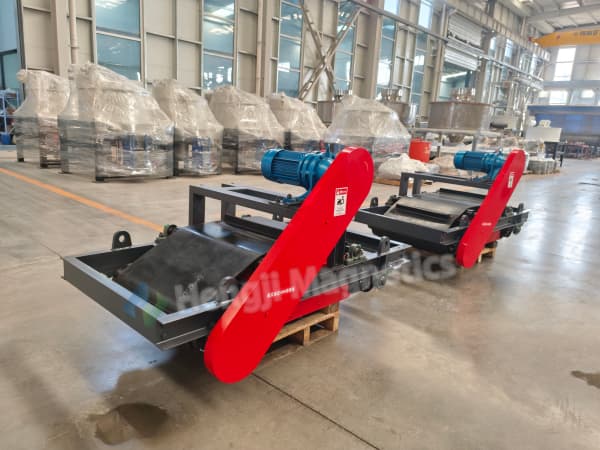
The secret lies in powerful magnetic circuits and deep-penetrating fields. Whether using high-grade Neodymium permanent magnets or an electromagnet coil, a mining magnetic separator generates a field strong enough to penetrate the entire burden. As ore moves underneath, ferrous objects—even those at the bottom—are lifted instantly from the flow. A self-cleaning belt then carries the captured iron sideways and drops it into a collection bin. This continuous automatic removal makes the conveyor belt magnetic separator the first and most critical defense for downstream crushers and mills.
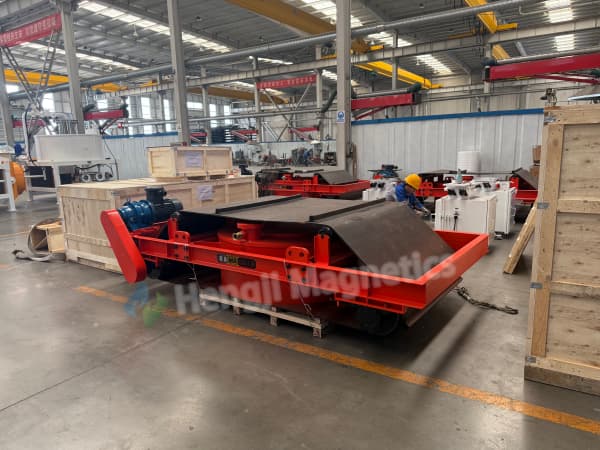 Is Installation Complicated? Can It Fit My Existing Conveyor Line?
Practicality matters. A mining magnetic separator is designed for easy retrofit with two standard mounting options.
Horizontal mounting (mid-conveyor): The conveyor belt magnetic separator suspends directly over the belt, usually above the carrying side. Its discharge belt runs perpendicular to the main conveyor, ejecting iron sideways. The magnetic center must align with the belt center for full-width coverage.
Inclined mounting (head pulley): Ideal for belt speeds above 2 m/s, the mining magnetic separator is placed just after the head pulley to use the material trajectory. For slower belts, move it closer to the pulley (which should be non-magnetic). The recommended starting distance between magnetic center and pulley center equals the pulley radius.
Suspension is simple: use rigid rods, chains, or wire ropes attached to overhead beams or trolleys. No major conveyor modification is needed.
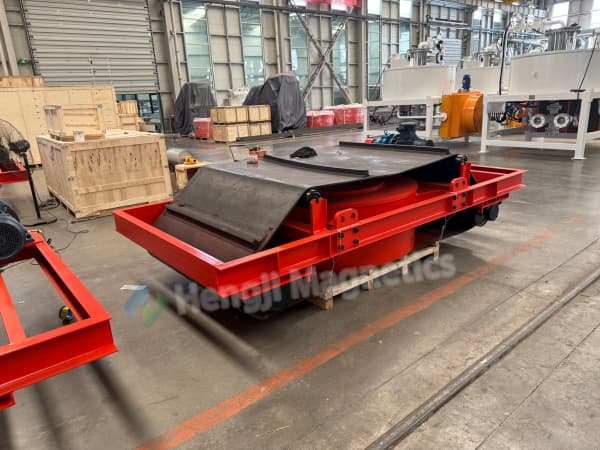
Does a Conveyor Belt Magnetic Separator Guarantee Iron Removal Without Disrupting Production?
Removal efficiency depends on field strength at the rated suspension height. Quality mining magnetic separators achieve 90 mT, 120 mT, or even 150 mT (milliTesla) at the working gap.
Proper positioning is key. For head-pulley inclined installations, the magnetic center-to-pulley distance should be roughly equal to the pulley radius. This ensures tramp iron is caught at the peak of its trajectory, in the strongest field. A conveyor belt magnetic separator with a crowned drive drum and rubber scraper prevents belt misalignment and ensures iron is ejected cleanly, without scattering or jamming. Production continues uninterrupted.
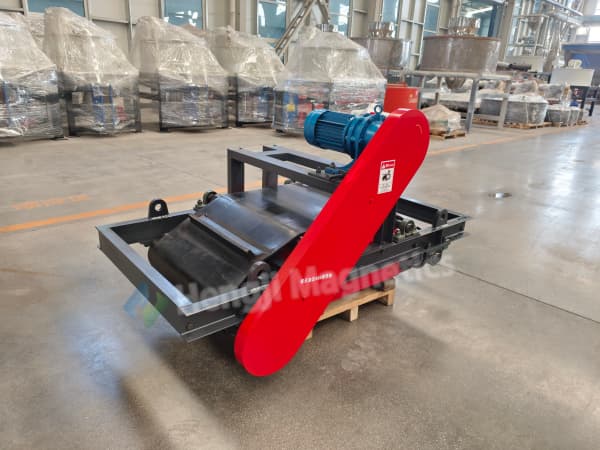 What About Maintenance? Permanent vs. Electromagnetic Mining Magnetic Separators
Maintenance directly affects long-term operating costs. Mining magnetic separators come in two types, each with different upkeep profiles.
Permanent magnetic separators: Truly “fit and forget.” No power is needed to sustain the field. No coils, no cooling systems. Magnetic decay is minimal, with a service life of 10+ years. Daily maintenance is limited to removing occasional iron buildup from the magnet face and checking belt tension. Ideal for operations that value low failure rates and continuous uptime.
Electromagnetic separators: Field strength is adjustable via a rectifier control, making them suitable for highly variable tramp iron loads. However, they require continuous power and have cooling systems (natural, forced air, or oil-cooled). Maintenance includes checking coil insulation, coolant levels (transformer oil), and fan operation. Choose electromagnetic when you need tunable strength or are handling very large, heavy tramp iron.
For either type, always start the conveyor belt magnetic separator before starting the main conveyor belt to avoid load starts that can damage drives.
 Where Are Mining Magnetic Separators Most Needed?
A mining magnetic separator is critical at several points in the mineral processing line:
-
Run-of-mine conveyors: Before primary crushers, to catch drill bits, bolts, and steel fragments.
-
Transfer points: Between conveyors, where tramp iron can fall through and cause jams.
-
Before screens and picking stations: To reduce manual labor and improve sorting efficiency.
Conclusion
The conveyor belt magnetic separator—the mining magnetic separator—is the silent guardian of your ore processing line. With powerful magnetic depth, flexible installation, reliable self-cleaning, and low-maintenance design, it protects crushers, mills, and belts from tramp iron damage. Choosing the right mining magnetic separator means protecting your investment, ensuring continuous production, and securing long-term profitability.


