


 Categories
In non-metallic mineral purification, fine chemicals, and new energy materials, iron impurity content directly determines product grade and market price. Faced with ever-stricter quality demands, conventional equipment often fails on fine, weakly magnetic impurities—suffering from poor capture, clogging, and serious product carryover. The magnetic plate separator has emerged as a breakthrough solution. When its design is combined with the principles of a wet high intensity magnetic separator, it not only represents a new equipment form but also redefines the boundaries of magnetic separation.
Why Does High Intensity Solve Clogging and Carryover?
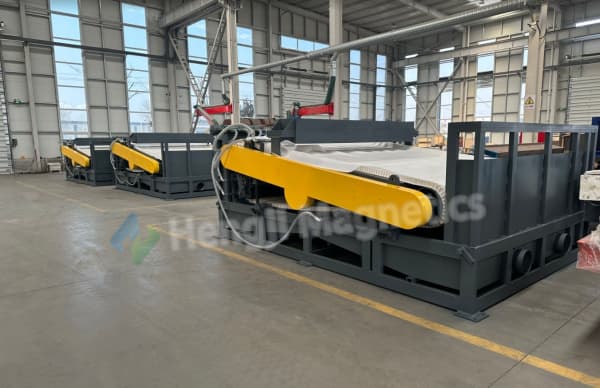
Many users have experienced this: with micron-sized slurry, traditional magnetic separators either lack sufficient field strength, causing weakly magnetic impurities to report to tailings, or their matrix (steel wool or grooved plates) quickly clogs with non-magnetic slime, forcing frequent backflushing. An efficient magnetic plate separator solves these problems by embracing the core philosophy of a wet high intensity magnetic separator while avoiding its typical matrix clogging.
The magnetic plate separator abandons clog-prone matrix structures and instead uses an ultra-high-intensity flat magnetic plate. Slurry flows by gravity as a thin layer over this plate. Ferrous and weakly magnetic impurities are instantly captured by the powerful magnetic force and held on the plate surface. Non-magnetic material flows out freely—physically eliminating clogging. Captured magnetic particles are carried through a long, multi-pass high-intensity zone and continuously scraped off by a reverse-running discharge system, achieving efficient, low-carryover iron removal. This non-contact “plate capture” mechanism maximizes the high-intensity advantage of a wet high intensity magnetic separator while avoiding its traditional weakness: matrix clogging.
 Balancing Separation Purity and Throughput
During selection, customers often worry that high purity will sacrifice capacity. The magnetic plate separator cleverly balances the precision of a wet high magnetic intensity separator with realistic throughput needs.
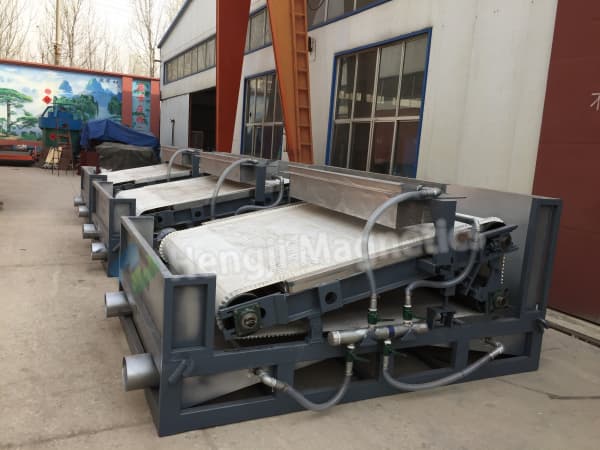
Using computer simulation, its magnetic circuit features an opposed-pole arrangement that maximizes capture area and force. The feed system includes an agitator to ensure uniform slurry density. The water system uses a single inlet with separate valves, allowing operators to adjust wash water at each point based on feed density, particle size, and throughput. This precise control keeps the separation boundary stable whether processing high- or low-density slurry, boosting both product value and production volume.
Long-Term Stability and Maintenance Costs
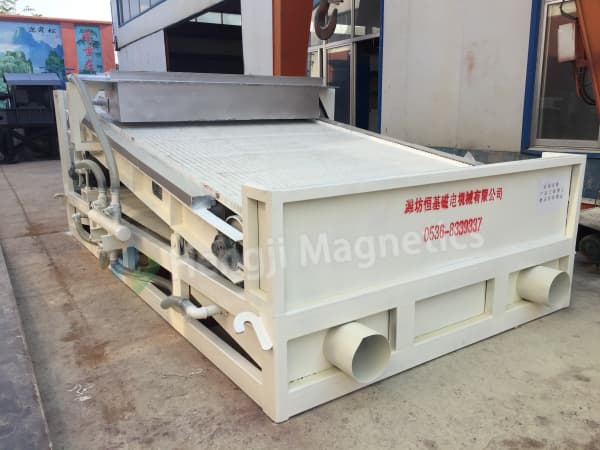
For continuous production, reliability and total cost of ownership are critical. The engineering legacy of the wet high intensity magnetic separator gives the magnetic plate separator exceptional stability. The magnetic circuit is fully sealed against oxidation and corrosion. Even in harsh environments, the high-intensity magnetic core loses less than 5% of its strength over ten years.
The drive uses a variable-speed motor for fully automatic continuous operation and iron discharge, saving labor and improving reliability. Daily maintenance is limited to checking the water system, periodic bearing lubrication, and monitoring belt wear on the discharge system. Compared to complex high-gradient designs (vertical or horizontal ring), the magnetic plate separator has a simpler structure—no complicated matrix handling, no high-pressure oil cooling. This reduces potential failure points and long-term upkeep, delivering both high performance and durability.
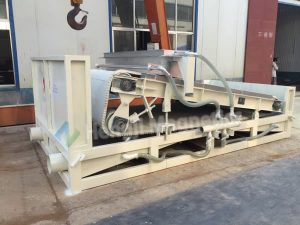 What Difficult Materials Can a Magnetic Plate Separator Handle?
The magnetic plate separator—as a practical embodiment of wet high intensity magnetic separator principles—has a broad application range. It effortlessly processes weakly magnetic minerals below 5mm for beneficiation and iron removal from non-metallic ores. The list includes:
-
Non-metallic purification: mica powder, quartz sand, potassium feldspar, nepheline, fluorite, sillimanite, spodumene, kaolin.
-
Weakly magnetic metal ores: manganese, hematite, limonite, siderite, ilmenite, chromite, wolframite, tantalum-niobium ores.
-
Special applications: coal-series pyrite, building materials, red mud comprehensive utilization.
Wherever a wet process requires precise, scalpel-like removal of fine, weakly magnetic impurities, the magnetic plate separator—with its wet high intensity magnetic separator heritage—helps turn what was once waste into high-value product, locking in profit at the source.


