


 Categories
In the production of high‑value powders—high‑purity quartz, fine ceramic powders, battery precursor materials—even a few parts per million of iron contamination can ruin whiteness, insulation, and chemical stability. Traditional wet magnetic separation works, but it brings costly wastewater treatment and energy‑intensive drying. The dry high intensity magnetic separator breaks this dilemma. Using rare earth permanent magnets to create an extremely high‑gradient field, it applies magnetism in separating mixtures without any water. As material falls or flows through the separation zone, ferrous impurities are instantly separated from the base material, achieving zero water consumption and zero discharge green purification.
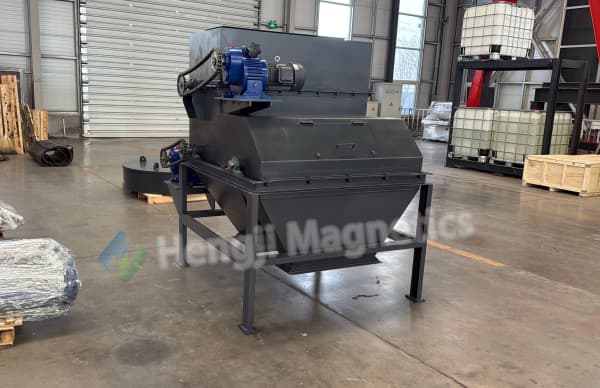
How Does a Dry High Intensity Magnetic Separator Achieve Precise Separation?
For customers concerned about separation efficiency, the core question is: can this equipment capture the finest, most difficult ferrous impurities from complex mixtures? Successful application of magnetism in separating mixtures depends on the scientific design of the magnetic circuit.
The dry high intensity magnetic separator uses computer‑optimized rare earth Neodymium magnets arranged in multi‑pole alternating and flux‑concentrating patterns. This creates a field strength and gradient far beyond conventional dry separators. Even hematite, limonite, or fine mechanical iron particles—only tens of microns in size—cannot escape the powerful magnetic pull when they pass through the separation zone.
Feed control is equally critical. The dry high intensity magnetic separator precisely regulates material bed thickness and velocity, ensuring every particle flows through the high‑field zone under optimal conditions. This is the engineering practice of magnetism in separating mixtures: magnetic particles are pulled toward the magnet surface while non‑magnetic particles follow a different trajectory, maximizing separation purity.
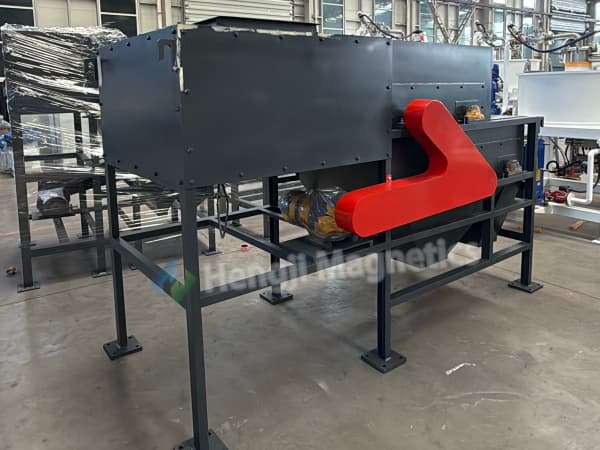 What About Cleaning and Maintenance? Will the Magnet Lose Strength?
In continuous operation, magnetic impurities gradually accumulate on the magnet system. Without timely cleaning, separation efficiency drops. The dry high intensity magnetic separator addresses this with modular, quick‑release magnetic assemblies.
Operators need no heavy tools. Simply open the locking mechanism on the side, and the entire magnetic rod or grate assembly slides out like a drawer. A dedicated demagnetizing sleeve instantly cancels the field, and the captured iron powder falls off or is easily scraped away. The whole cleaning process takes only a few minutes. After reinsertion, the dry high intensity magnetic separator immediately returns to peak performance.
Long‑term magnetic stability is another key concern. High‑grade permanent magnets are fully sealed inside stainless steel protective tubes, isolated from dust. Under normal conditions, the dry high intensity magnetic separator maintains its field strength for over eight years. This eliminates worries about magnetic decay and ensures that magnetism in separating mixtures remains consistently effective over the equipment’s lifetime.
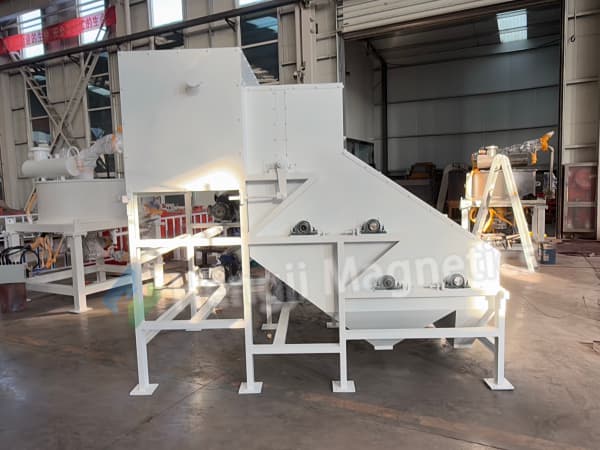
Which Materials Benefit Most from a Dry High Intensity Magnetic Separator?
The dry high intensity magnetic separator is ideal for applications where water cannot be used or where drying costs are prohibitive.
-
High‑purity quartz: Removing fine iron oxides to achieve photovoltaic‑grade silicon feedstock.
-
Ceramic powders: Eliminating iron‑bearing contaminants that cause black spots in fired ceramics.
-
Battery precursors: Reducing magnetic foreign matter to parts‑per‑billion levels for lithium‑ion battery safety.
-
Fine chemicals & pigments: Purifying powders without altering chemical composition or introducing moisture.
In every case, magnetism in separating mixtures is applied in a dry, continuous, and automated process.
How Does Dry High Intensity Magnetic Separation Compare to Wet Methods?
Water‑based purification requires extensive infrastructure for supply, treatment, and drying. It generates liquid waste and increases energy consumption. The dry high intensity magnetic separator eliminates all of these. There are no settling ponds, no filter presses, no dryers. The capital cost of auxiliary equipment is avoided. Operating costs are significantly lower because there is no water to purchase, pump, heat, or treat.
For moisture‑sensitive materials (many fine chemicals, some battery precursors), water cannot be used at all. In those cases, the dry high intensity magnetic separator is not just an option—it is the only viable solution for magnetism in separating mixtures.
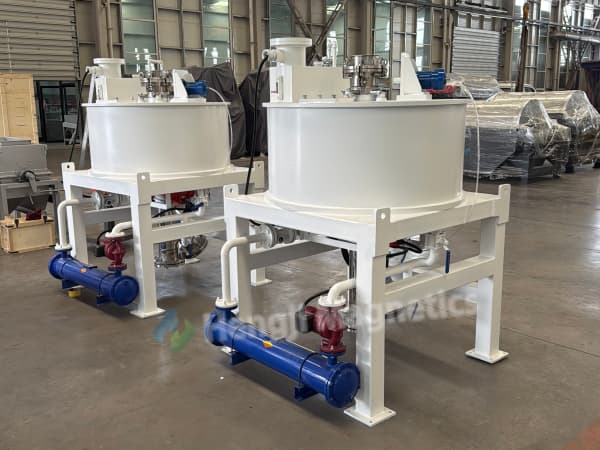 What Maintenance Practices Keep It Running Efficiently?
Field experience with magnetism in separating mixtures using dry high intensity magnetic separator units shows that maintenance is straightforward:
-
Daily: Check that the discharge chute is clear. Wipe any dust from the magnet housing.
-
Weekly: Inspect the sealing of the magnetic rod assemblies. Clean the drawer mechanism if needed.
-
Monthly: Measure surface field strength with a Gauss meter to confirm no decay. Check for wear on the feed chute liner.
-
Annually: Replace any damaged O‑rings or seals. Inspect the drive system for belt wear (if belt‑driven).
Because there are no coils, no cooling water, and no hydraulic systems, the dry high intensity magnetic separator is one of the most reliable pieces of equipment in a dry powder plant.
Conclusion: The Green Future of Dry Powder Purification
The dry high intensity magnetic separator represents a fundamental advance in applying magnetism in separating mixtures to dry powders. It combines high‑gradient rare earth magnetic fields, precision feed control, quick‑clean modular design, and long‑term magnetic stability. For processors of high‑purity quartz, ceramics, battery materials, and fine chemicals, it offers a water‑free, low‑cost, highly effective solution to iron contamination.
Choose a dry high intensity magnetic separator validated in real production environments. Experience the benefits of magnetism in separating mixtures without water, without waste, and without compromise.


