


 Categories
In many real‑world magnetic separation plants, customers face a common dilemma: standard‑model equipment performs reliably, but the “fit” with their specific material is always slightly off. For example, when sandy kaolin contains fine iron stain that requires high‑gradient separation, a standard drum separator falls short. When shredded plastic‑aluminum composite contains aluminum pieces of varying sizes that need precise sorting, off‑the‑shelf drive and magnetic parameters are not flexible enough. This is where custom magnetic separation equipment demonstrates its unique value. It is not a simple modification of a standard product. Instead, it is a prototype‑level development—from magnetic circuit design to mechanical structure—built around your raw material properties, process goals, and site conditions.
Engineers take every variable as a design input: particle size distribution (0‑5 mm or 0‑12 mm), magnetic susceptibility (strongly magnetic magnetite or weakly magnetic hematite/limonite), throughput (a few tons per hour or several tens of tons per hour), and installation constraints (limited headroom or angle). Using computer‑aided design and magnetic circuit simulation, they build a dedicated industrial magnetic separation equipment solution that precisely matches your separation accuracy, capacity, and energy consumption requirements.
How Does Custom Industrial Magnetic Separation Equipment Solve Real Problems?
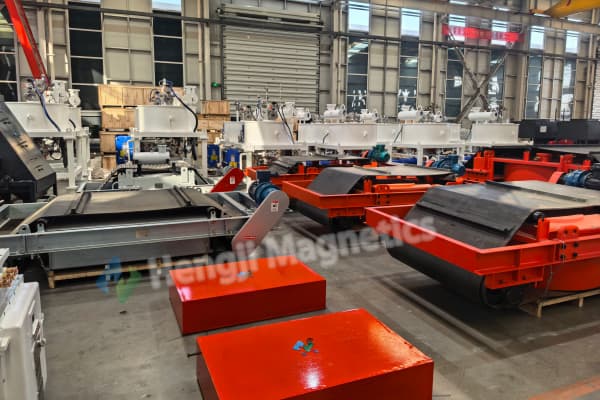
For custom magnetic separation equipment, the customer’s core expectation is simple: “Will it truly solve my problem after customization?” Whether it is a compact drawer‑type magnetic rod assembly for a narrow pipeline, or an explosion‑proof permanent magnetic system for underground coal mining, custom industrial magnetic separation equipment always revolves around the core principle of “precision fit.”
In magnetic circuit design, engineers select magnet grade and arrangement based on the mineral’s susceptibility. For magnetite—low iron content but strongly magnetic—a medium‑intensity, high‑gradient circuit balances throughput and grade. For a line processing weakly magnetic red hematite, a high‑gradient background field combined with magnetizable stainless steel matrix is essential to capture fine particles.
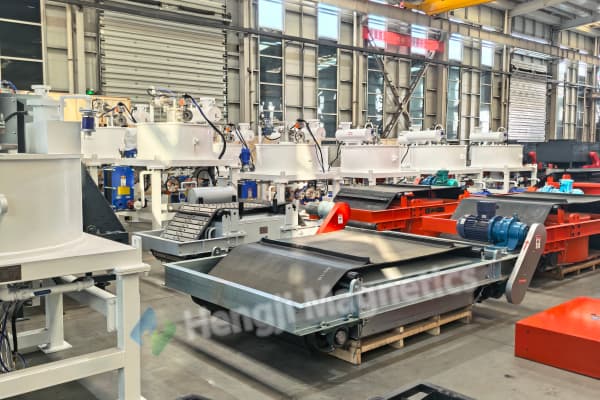
On the mechanical side, drum diameter and length, feed and discharge port heights and positions, and whether a vibratory feeder or belt conveyor drive is needed—all can be customized according to your site layout. This tailor‑made design approach allows custom industrial magnetic separation equipment to achieve process performance that standardized equipment cannot match for many complex materials and special conditions.
 What About Cost and Delivery Time? Is Customization Worth the Investment?
Admittedly, custom magnetic separation equipment often comes with a higher initial purchase price and longer delivery lead time than standard units. However, successful customization cases consistently show that this investment brings far greater returns over the long term. Because the equipment is perfectly matched to your material characteristics and production layout, its separation efficiency, throughput, and service life all reach optimal levels.
For example, a custom industrial magnetic separation equipment unit designed for a lithium battery material line had its magnetic angle and flow channel finely optimized. Magnetic impurity capture rate increased by over 30%, while product carryover was minimized. This directly translated into higher purity and lower re‑processing costs.
In after‑sales support, all design drawings and parameters for custom magnetic separation equipment are permanently archived. This facilitates future maintenance and upgrades. Choosing a well‑engineered custom industrial magnetic separation equipment means selecting the most targeted purification tool for your specific material and line—using flexible, non‑standard technology to continuously unlock resource potential.
Which Applications Benefit Most from Custom Magnetic Separation Equipment?
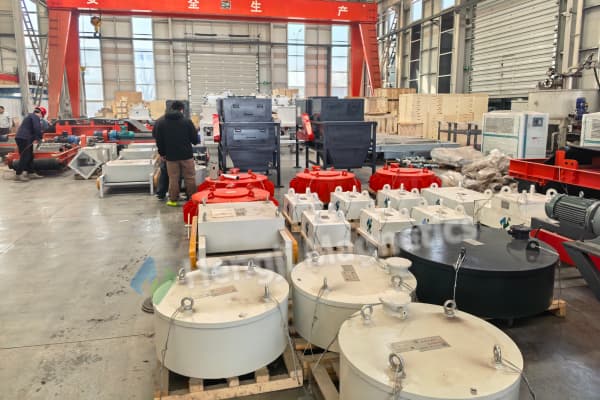 Custom industrial magnetic separation equipment is particularly valuable where standard designs cannot address unique challenges.
-
Variable particle size fractions: When your feed contains a wide range of sizes, standard gaps and matrices may not work. Custom designs adjust rod spacing, matrix density, and magnetic wrap angle to suit your specific sieve analysis.
-
Weakly magnetic, fine‑grained ores: Hematite, limonite, ilmenite, and manganese ores often require higher gradient and longer retention time. Custom magnetic separation equipment can incorporate multi‑stage cleaning or extended separation zones.
-
Space‑constrained installations: Existing plants often have limited headroom or odd‑shaped access. Custom mechanical frames, folded chutes, or angled feed arrangements fit into tight spaces without compromising performance.
-
Explosion‑proof or sanitary requirements: Food, pharmaceutical, and underground mining applications need special materials, seals, and certifications. Custom industrial magnetic separation equipment can be built with FDA‑approved stainless steel, ATEX‑certified motors, or dust‑ignition proof enclosures.
-
High‑throughput, high‑purity lines: When both capacity and purity must be maximized, off‑the‑shelf units may force a trade‑off. Custom design allows independent tuning of field strength, matrix volume, and flow velocity to meet both targets simultaneously.
What Is the Engineering Process for Custom Industrial Magnetic Separation Equipment?
The journey from concept to operational custom magnetic separation equipment follows a structured engineering path.
Step 1 – Material and process audit: The customer provides representative samples of feed material, along with throughput targets, product purity requirements, and site constraints (power, space, existing upstream/downstream equipment).
Step 2 – Laboratory testing: The material is tested in a laboratory‑scale custom industrial magnetic separation equipment simulator. This determines the optimal field strength, matrix type, feed rate, and retention time.
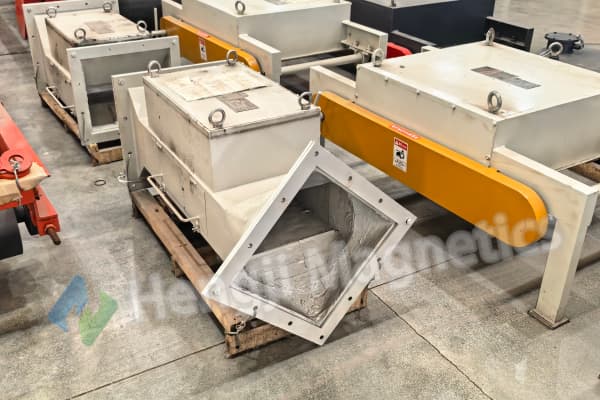 Step 3 – Computer‑aided design and simulation: Magnetic circuits are modeled using finite element analysis. Mechanical components are designed in 3D CAD to ensure fit, access for maintenance, and structural integrity.
Step 4 – Prototype or direct build: Depending on complexity, a prototype may be built and tested on a small batch of customer material. For mature designs, full‑scale custom magnetic separation equipment is fabricated.
Step 5 – Factory acceptance testing: Before shipment, the unit is run with a material simulant to verify separation efficiency, throughput, and power consumption against the agreed specifications.
Step 6 – Site installation and commissioning: On‑site installation, alignment, and parameter tuning are performed with customer personnel. Training on operation and maintenance is provided.
Step 7 – Performance documentation and archive: All design parameters, test results, and maintenance schedules are documented and stored for future reference.
Conclusion: Why Choose Custom Industrial Magnetic Separation Equipment?
Custom magnetic separation equipment is not an expense—it is an investment in process optimization. Standard machines are designed for average conditions. Your material is not average. Your plant layout is not average. Your purity targets are often more demanding than the industry standard.
By choosing custom industrial magnetic separation equipment, you ensure that:
-
Every magnetic circuit element is sized and arranged for your specific mineral.
-
Every mechanical dimension fits your existing space and material handling system.
-
Every operating parameter can be tuned to your exact feed rate and quality target.
-
Long‑term support includes your unique design files, not just a generic manual.
For processors of complex ores, high‑purity industrial minerals, battery materials, and specialty chemicals, custom industrial magnetic separation equipment is the key to unlocking maximum resource value and product quality. Work with an experienced industrial magnetic separation equipment manufacturer who offers engineering‑led customization. Provide your material sample and site data. Let the engineers build the separator that fits you perfectly.


