


 Categories
In recycling and environmental processing, efficiently recovering valuable non-ferrous metals like copper and aluminum from mixed waste is a core challenge. Traditional sorting methods are often inefficient and costly, failing to meet environmental regulations and economic targets. The eddy current separator addresses this challenge. Using a unique physical principle—without water or chemicals—it generates a high-frequency alternating magnetic field that produces a powerful repulsive force on conductive non-ferrous metals, instantly separating them from non-metallic materials. This eddy current waste separation technology delivers precise, efficient sorting, making the eddy current separator an indispensable tool in modern waste processing and resource recovery.
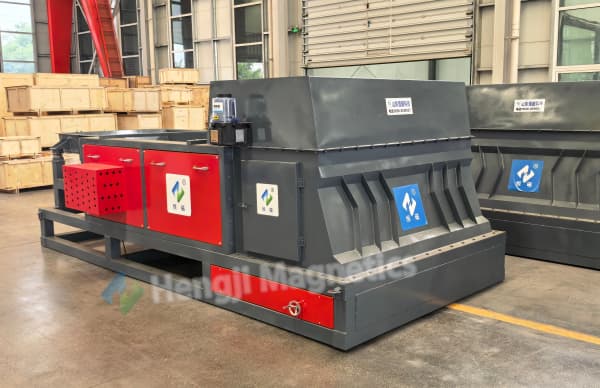
How the Eddy Current Separator Achieves Precision Separation
The core of the eddy current separator lies in its separation rotor, which generates a high-frequency alternating magnetic field. When material passes through this field, only conductive non-ferrous metals—aluminum, copper, zinc, lead—induce eddy currents, creating an opposing magnetic field that generates a powerful repulsive force. These metals are propelled forward along the conveyor trajectory, while non-conductive materials fall naturally. This physics-based separation principle ensures the eddy current waste separation process accurately distinguishes non-ferrous metals from non-metallic contaminants with high efficiency.
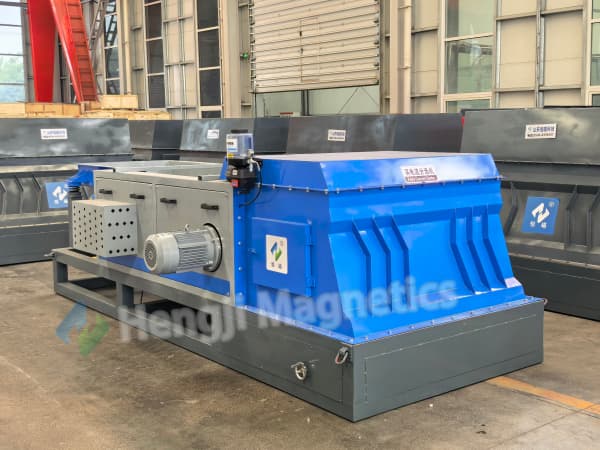 Separation Precision and Material Adaptability
Separation effectiveness depends on the ratio of conductivity to density—materials with higher ratios (like aluminum and copper) are more easily separated. The eddy current separator allows adjustment of rotor speed and belt speed to suit different material characteristics—particle size, shape, moisture content. The splitter plate position can also be adjusted for precise material streams, ensuring each fraction reaches the correct collection point. This flexibility makes the eddy current waste separation system adaptable to a wide range of feed materials.
Durability and Low Maintenance
The eddy current separator is built for continuous, heavy-duty operation. The separation rotor uses high-precision permanent magnetic materials requiring no frequent replacement—only periodic bearing lubrication and belt inspection. The conveyor belt is a wear part; inspect regularly for metal adhesion to prevent eddy-current burns. The unit has high protection ratings; key components—gearbox, motor, bearings—must be protected from moisture, especially during long shutdowns. Overall, the eddy current separator requires low maintenance, delivering long-term economic value.
Managing Ferrous Material in the Feed
The eddy current separator cannot process large amounts of ferrous material. Iron pieces will cut the belt and generate eddy currents inside the unit, potentially damaging the rotor protective cover. Therefore, pre-cleaning with an overhead magnet or magnetic drum is essential to remove ferrous material before feeding the eddy current waste separation process. Small amounts of iron can pass through without damage, but bulk ferrous content must be removed upstream.
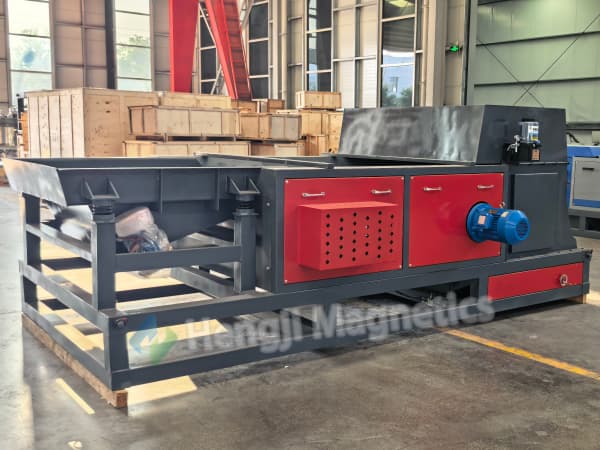 Applications of the Eddy Current Separator
The eddy current separator is widely used in:
-
E-waste recycling: Recovering copper and aluminum from shredded circuit boards and appliance scrap.
-
Automotive shredder residue: Separating aluminum and copper from shredder fluff.
-
Municipal solid waste: Extracting aluminum cans and foil from mixed waste.
-
Glass recycling: Removing aluminum caps and rings from crushed glass.
-
Plastic recycling: Removing non-ferrous metal contaminants from regrind.
-
Construction and demolition waste: Sorting metals from crushed concrete and wood.
In every case, eddy current waste separation enables efficient, water-free, chemical-free metal recovery.
Economic and Environmental Benefits
The eddy current separator transforms low-value waste into high-purity non-ferrous metals with strong market demand. By eliminating manual sorting and reducing downstream processing, it delivers short payback periods. Water-free, chemical-free operation makes it an environmentally responsible choice, aligning with circular economy principles. For any operation seeking to maximize resource recovery and profitability, the eddy current separator is a strategic investment.
Conclusion
The eddy current separator with eddy current waste separation technology offers a reliable, efficient solution for non-ferrous metal recovery from mixed waste. With high separation precision, flexible material handling, low maintenance, and strong economic returns, it is essential for recycling and environmental processing. For any business aiming to extract value from waste and drive the circular economy, the eddy current separator is the technology of choice—turning waste into valuable resources and enabling sustainable resource recovery.


