


 Categories
On production lines in power generation, mining, metallurgy, building materials, coal preparation, and chemical industries, ferrous waste—nails, bolts, steel slag fragments—mixed in non-magnetic bulk materials is a persistent headache for plant managers. Once these ferrous contaminants reach downstream crushers, mills, and other equipment, they can cause equipment damage or tear conveyor belts longitudinally, leading to unplanned downtime, significant economic losses, and safety risks. Removing ferrous waste efficiently and reliably during high-speed material conveying is critical to maintaining continuous, stable production.
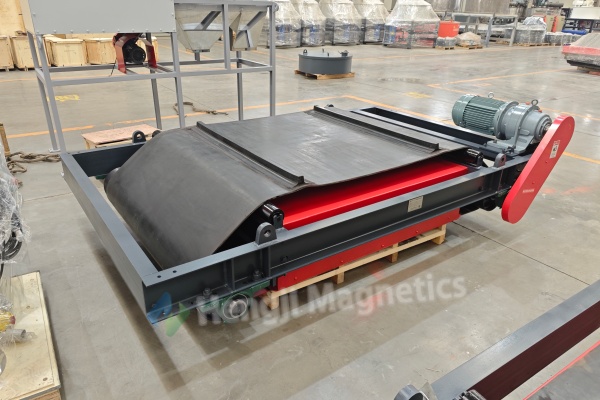
The suspended magnetic separator configured as a magnetic waste separator was designed specifically for this challenge. Installed at the head or middle section of belt conveyors, it removes ferrous waste from non-magnetic bulk materials. As material passes beneath the unit, ferrous waste is instantly attracted by the strong magnetic field and automatically ejected by the discharge mechanism—achieving complete separation of ferrous waste from the main material stream while protecting conveyor belts from tearing and ensuring downstream equipment operates safely.
Addressing Customer Concerns
In magnetic waste separator applications, customers typically focus on three key concerns: whether separation efficiency keeps pace with production capacity, whether the equipment operates reliably in dusty, heavy-load environments, and whether long-term maintenance costs are manageable.
 Case Study 1: Building Materials Production
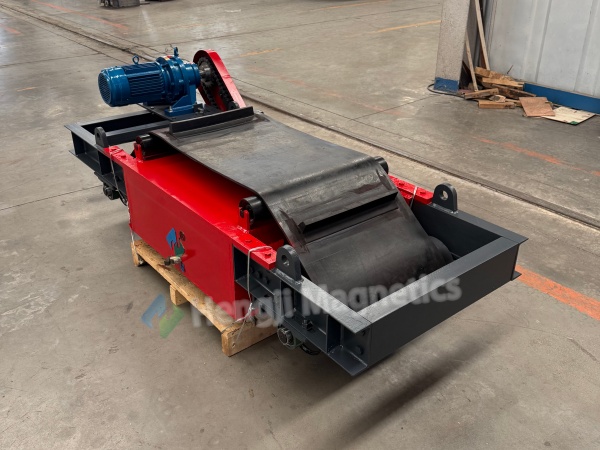
A building materials manufacturer faced frequent crusher damage from nails and wire mixed in raw materials, with each repair causing hours of production loss. After installing the suspended magnetic separator, the unit worked through its two main components—the separator body and the discharge mechanism—to achieve automatic online separation. The separator body features a computer-optimized magnetic circuit with high field strength and deep penetration, effectively capturing ferrous waste even from thick material layers. The discharge mechanism, consisting of a frame, geared motor, drive and tail pulleys, and a discharge belt with scrapers, continuously ejects captured ferrous waste without manual intervention. After installation, crusher failures dropped significantly, production continuity improved markedly, and ferrous waste was intercepted before entering the process.
Case Study 2: Steel Slag Processing and Waste Sorting
In steel slag processing and waste sorting, the challenge is more severe—high ferrous loads with sharp, heavy objects often puncture belts on conventional equipment. The magnetic waste separator demonstrated exceptional adaptability in these conditions. Its computer-optimized magnetic circuit delivers high field strength, steep gradient, and deep penetration, using high-performance Neodymium magnets with high energy product and minimal demagnetization—less than 5% over eight years. With a rugged steel housing and wear-resistant design, the suspended magnetic separator operates reliably for extended periods even under harsh conditions. A steel slag recycling operation effectively solved its belt damage problem and achieved online separation and real-time recovery of ferrous waste, significantly improving scrap steel recovery efficiency.
Case Study 3: Power Generation and Coal Preparation
In power generation and coal preparation, ferrous waste varies widely in type and size, demanding high adaptability. The suspended magnetic separator allows belt tension and tracking adjustments without stopping production, ensuring stable operation during continuous processing. The control system can be interlocked with belt conveyors, supporting both local manual and centralized control for flexible operation. Permanent magnet technology requires no external excitation energy, delivering very low operating costs—truly “one investment, long-term benefit.”
 Installation Flexibility and Operating Conditions
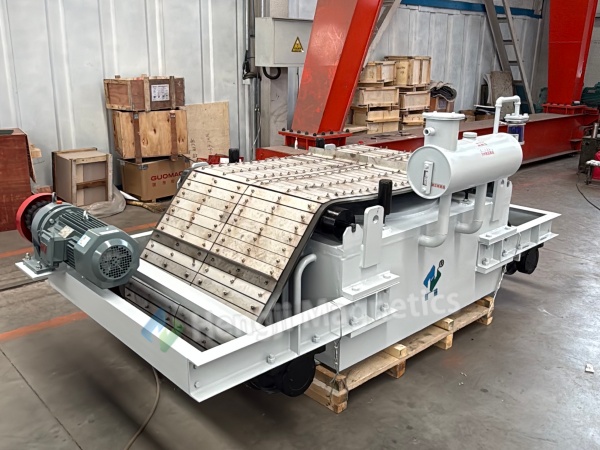
The magnetic waste separator is suitable for installation at both head and middle sections of belt conveyors, with flexible positioning to suit different layouts. It operates normally at altitudes up to 2000 meters, ambient temperatures from -20°C to +40°C, and relative humidity up to 90%, suitable for both indoor and outdoor use. Its compact design and reliable performance make it the preferred solution for online ferrous waste separation.
Conclusion
As resource recovery and recycling gain increasing attention, the suspended magnetic separator with magnetic waste separator capability is not only essential for protecting production equipment and ensuring continuous operation but also a key tool for resource recycling and value creation. With outstanding iron removal performance, stable operation, and extremely low maintenance costs, it is helping more operations solve online ferrous waste separation challenges and safeguard safe, efficient production.


