


 Categories
In non-metallic mineral processing and weakly magnetic mineral beneficiation, iron removal and purification have always been the critical factors determining product quality. Iron impurities mixed in materials such as quartz sand, potassium feldspar, kaolin, fluorite, and spodumene not only affect product whiteness and purity but also reduce selling prices—or even lead to customer rejections. Facing this challenge, the wet high intensity magnetic separator with plate magnetic separator design, with its ultra-high field strength and unique plate-type separation structure, is becoming the preferred iron removal solution for a growing number of operations.
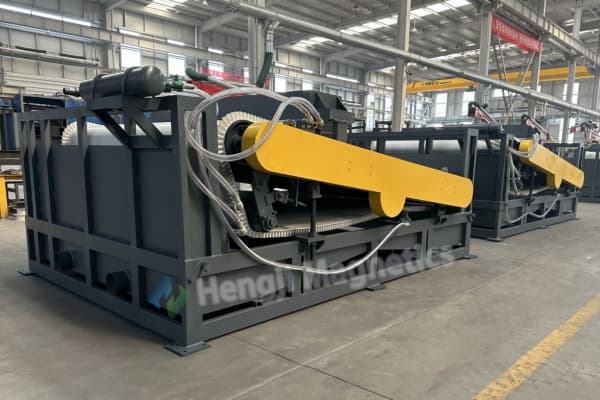
How Does the Wet High Intensity Plate Magnetic Separator Work?
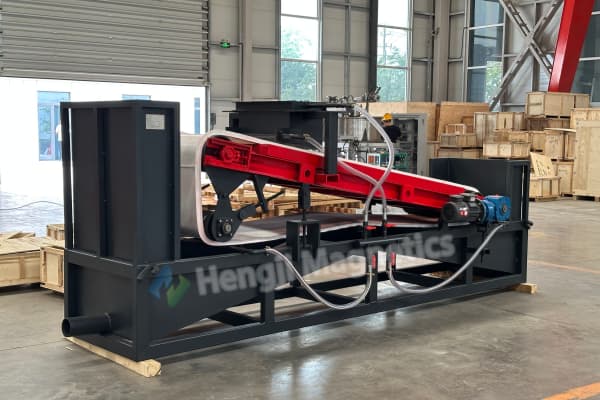
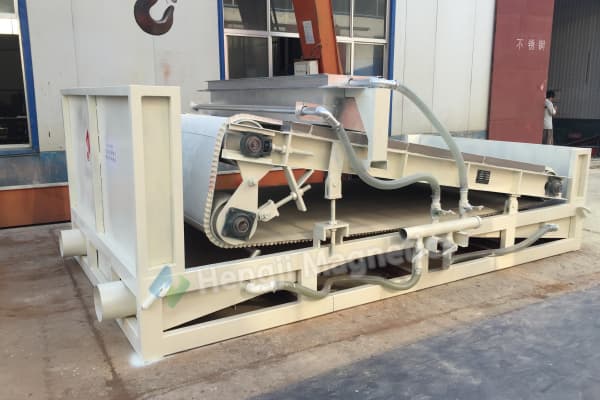
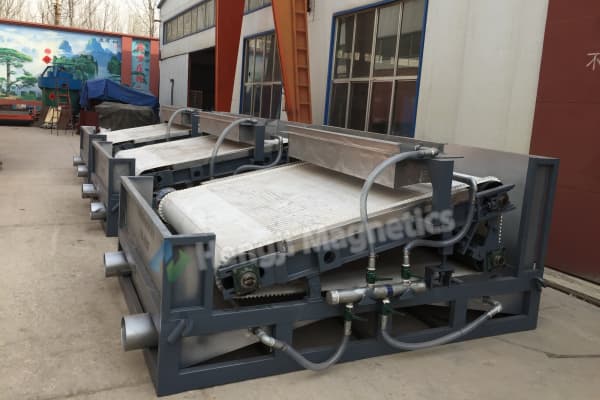
The wet high intensity plate magnetic separator integrates the technical advantages of wet high-intensity magnetic separation with the structural features of plate-type separation—a single unit handles everything from feed agitation to magnetic material separation. It consists of a support frame, a plate magnetic system, a feed agitation system, a water system, an iron discharge system, and an adjustment system. During operation, material flow and the discharge system move in opposite directions in a counter-current configuration—non-magnetic material flows out by gravity, while magnetic particles are captured over an extended, multi-pass high-intensity field zone and then carried by the reverse-running discharge system to the iron outlet, achieving complete separation of magnetic from non-magnetic materials.
 Customer Pain Point 1: Poor Iron Removal from Weakly Magnetic Minerals – High-Purity Requirements Not Met
A quartz sand processing company had long faced a difficult problem: weakly magnetic iron impurities in its raw material were difficult to remove with conventional equipment. Product iron content remained consistently high, whiteness could not meet the market requirements for high-purity quartz sand, and selling prices remained low. The company had tried multiple iron removal solutions, but none delivered satisfactory results.
After introducing the wet high intensity magnetic separator, the situation changed fundamentally. The plate magnetic separator uses an advanced computer-optimized magnetic circuit with an opposed-pole arrangement, maximizing capture area and capacity across the working zone. The magnetic core is constructed entirely from high-strength rare earth Neodymium magnets—high purity, high volume—achieving peak field strengths up to 18,000 Gauss, sufficient to fully capture weakly magnetic iron impurities. After implementation, quartz sand iron content dropped significantly, whiteness reached high-purity standards, and product value increased substantially. The plant manager noted that the equipment fundamentally solved a problem that had plagued them for years.
 Customer Pain Point 2: Severe Clogging with Fine Particles – Traditional Equipment Requires Frequent Shutdowns
When processing fine-grained materials, conventional magnetic separators are prone to clogging and material carryover—a well-known industry challenge. A potassium feldspar processor using a vertical ring high-gradient magnetic separator faced frequent clogging when processing materials below 5mm, requiring shutdowns every shift—affecting production and increasing labor costs.
The wet high intensity plate magnetic separator fundamentally solves this problem through its structural design. The plate magnetic separator changes the material passage design—non-magnetic material flows out by gravity, eliminating the cavities and channels that cause clogging in conventional separators. The feed system includes an agitator to ensure uniform slurry density when material enters the magnetic zone, delivering stable, reliable separation performance. After switching to this equipment, production continuity improved significantly—clogging shutdowns were completely eliminated.
Customer Pain Point 3: Rapid Magnetic Decay – Equipment Loses Effectiveness Within a Few Years
Magnetic durability is a key concern for customers selecting separation equipment. Some units show significant field strength loss after two to three years, with replacement costs representing a substantial additional investment.
The wet high intensity magnetic separator features a fully sealed magnetic system with oxidation protection, ensuring less than 5% magnetic decay over ten years in harsh environments. This means the plate magnetic separator maintains stable iron removal performance throughout its service life—eliminating concerns about magnetic decay.
 Customer Pain Point 4: High Equipment Cost – Unacceptable Cost-Performance Ratio
For many small and medium-sized operations, the purchase cost of high-gradient magnetic separation equipment is a significant barrier. The wet high intensity magnetic separator costs only one-tenth of a conventional vertical ring high-gradient magnetic separator, offering exceptional value. The variable-speed drive provides fully automatic continuous operation and iron discharge, saving labor and ensuring reliable, trouble-free performance. All product-contact parts are stainless steel or non-magnetic materials—preventing secondary contamination and further ensuring product purity.
Wide Application Range – One Solution for Multiple Materials
The wet high intensity plate magnetic separator is suitable for iron removal from weakly magnetic minerals below 5mm and non-metallic ores, including mica powder, quartz sand, potassium feldspar, nepheline, fluorite, sillimanite, spodumene, kaolin, manganese, magnetite, pyrrhotite, roasted ore, ilmenite, hematite, limonite, siderite, chromite, wolframite, tantalum-niobium ores, and red mud. It is also used for iron removal from coal, non-metallic minerals, and building materials. The unit is available in open or fully sealed configurations to suit different site conditions.
Conclusion
From iron removal effectiveness to clogging prevention, from magnetic durability to cost-performance, the wet high intensity magnetic separator with plate magnetic separator design delivers results on the issues customers care about most. It integrates the high-efficiency iron removal capability of wet high-intensity magnetic separation with the structural advantages of plate-type separation—a single unit meets the diverse needs of weakly magnetic mineral iron removal and non-metallic mineral purification. If you are seeking a stable, reliable, cost-effective magnetic separation solution, the wet high intensity plate magnetic separator is where to start.


