


 Categories
Recycling streams from municipal solid waste, industrial scrap, e-waste, glass cullet, waste plastic doors and windows, boiler bottom ash, and auto shredder residue contain valuable copper and aluminum. These metals are mixed with plastic, rubber, glass, and wood. Manual sorting is slow and impractical. The eddy current metal separatoris designed for this recycling duty. Hengci Magnetic builds the machine in two main parts: a separator body and a control cabinet. The body includes the magnetic separation assembly, drive motor, frame, and housing. The separation assembly contains a permanent magnetic drum and a material conveying system. This article explains how the machine performs magnetic separation for recycling, how ferrous material is controlled, how the splitter plate is adjusted, how throughput is matched, how maintenance and safety are handled, and how to select the right unit.
How the Eddy Current Metal Separator Works for Magnetic Separation for Recycling
Working Principle of the Eddy Current Metal Separator
Customers often ask how the eddy current metal separator picks out copper and aluminum. The separation principle is based on two physical phenomena: a time-varying alternating magnetic field always accompanies an alternating electric field, and a current-carrying conductor generates a magnetic field. During operation, a high-frequency alternating strong magnetic field is generated on the separation rotor surface. When conductive non-ferrous metals pass through this field, eddy currents are induced inside the metal. These eddy currents generate a magnetic field opposite to the original field direction. The non-ferrous metal is propelled forward along the conveying direction by the magnetic repulsive force. It separates from other non-metallic materials. The main criterion for magnetic separation for recycling is the ratio of conductivity to density. Materials with a higher ratio separate more easily than materials with a lower ratio.
Key Components of the Eddy Current Metal Separator
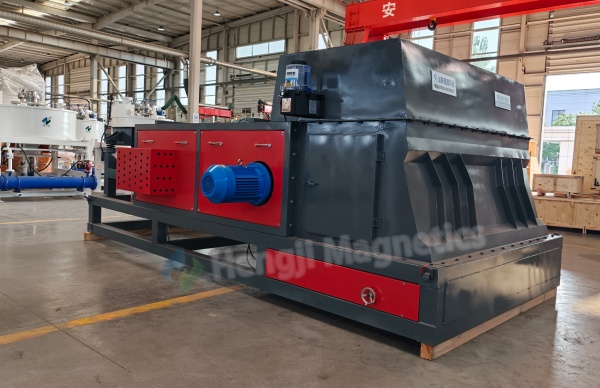
The eddy current metal separator consists of a separator body and a control cabinet. The body includes the magnetic separation assembly, drive motor, frame, and housing. The separation assembly is the core component. It consists of a permanent magnetic drum and a material conveying system. The conveying system includes the conveyor belt, drive drum, and geared motor. The splitter plate assembly is mounted on the frame. It can be adjusted according to material volume, density, and conductivity. This adjustment improves magnetic separation for recycling accuracy. A vibratory feeder is installed at the end of the upper frame. Damping devices support it to provide uniform feeding.
Ferrous Control Before Magnetic Separation for Recycling
Why Ferrous Material Must Be Removed Upstream
Recycling sites often ask whether iron in the feed will damage the eddy current metal separator. Large amounts of ferrous material must not enter this equipment. Iron pieces can scratch the conveyor belt. Inside the machine, iron can generate eddy current reactions that burn the outer protective drum. Small amounts of iron can pass through the eddy current metal separator without damage. For this reason, recycling lines usually place a ferrous removal device before the eddy current unit. The iron is intercepted first. This protects the machine and supports stable magnetic separation for recycling.
Protecting the Eddy Current Metal Separator in Recycling Lines
A proper recycling line uses an overhead magnet or other ferrous removal device ahead of the eddy current metal separator. This protects the belt and the separation rotor. Uniform feeding also matters. The vibratory feeder and damping device spread material evenly across the belt. Even feeding improves magnetic separation for recycling accuracy and reduces carryover. The eddy current metal separator performs best when the feed is prepared correctly.
Adjusting the Eddy Current Metal Separator for Accurate Separation
Splitter Plate Adjustment for Magnetic Separation for Recycling
Customers often report that separation is not accurate enough. The eddy current metal separator includes a splitter plate assembly. The splitter plate angle can be adjusted according to material volume, density, and conductivity. This makes separation more precise. During trial operation, feed a small amount of material first. Adjust the splitter plate position according to the actual separation result. Then start normal feeding. This step is critical for magnetic separation for recycling performance.
Belt Tracking and VFD Settings
If the belt runs off-track, adjust the connecting bolts and jack bolts on the bearing housing at the feed end. Tighten or loosen one side until the belt runs parallel. The variable frequency drive frequency is adjusted by a potentiometer. Turn clockwise to increase and counterclockwise to decrease. These adjustments keep the eddy current metal separator running smoothly and support consistent magnetic separation for recycling.
Throughput and Specifications of the Eddy Current Metal Separator
Matching Capacity to the Recycling Line
Customers also need to calculate throughput. The eddy current metal separator is available in different specifications. Capacity ranges from 4 to 12 cubic meters per hour. The magnetic drum speed ranges from 50 to 2,800 rpm. The separation drum speed ranges from 60 to 150 rpm. Belt speed is approximately 0 to 2 meters per second. Match the unit to actual material flow and separation accuracy requirements. Do not simply choose the largest model. Proper sizing improves magnetic separation for recycling efficiency and reduces operating cost.
Selecting the Right Eddy Current Metal Separator
Before selecting an eddy current metal separator, prepare material type, particle size, copper and aluminum content, ferrous content, and single-shift throughput. These details determine equipment specification, splitter plate configuration, and upstream and downstream process integration. With complete information, Hengci Magnetic can configure the eddy current metal separator in one step. Proper selection ensures efficient magnetic separation for recycling.
Case Study: Eddy Current Metal Separator in E-Waste Dismantling
Improving Copper and Aluminum Recovery
An e-waste dismantling line processed shredded refrigerator and washing machine material. The mix contained copper, aluminum, plastic, and a small amount of residual iron. Manual sorting on the belt was labor-intensive. Copper and aluminum recovery was unstable. Iron pieces sometimes scratched the belt in the separation section. Hengci Magnetic supplied an eddy current metal separator for this line. Residual iron was removed upstream first to prevent large amounts of ferrous material from entering the machine. In the separation section, material was spread evenly by the vibratory feeder. Conductive copper and aluminum particles jumped forward under the high-frequency alternating magnetic field of the separation rotor and landed in the non-ferrous collection area. Plastic and other non-metallic materials fell along their original trajectory. After commissioning, manual sorting was reduced. Copper and aluminum recovery became more stable. Belt scratching was controlled. This case demonstrates the value of the eddy current metal separator in magnetic separation for recycling.
Maintenance and Safety for the Eddy Current Metal Separator
Wear Parts and Lubrication
The conveyor belt is a wear part. Check the belt surface regularly for metal adhesion. Metal adhesion can cause eddy current heating and burn the belt. Replace the reducer and gearbox lubricating oil according to oxidation level. Lubricate moving parts every half month or twenty days. Use No. 3 lithium-based grease in summer and No. 1 or No. 2 grease in winter. For long-term storage, protect the equipment from rain and moisture. The magnetic drum, variable-frequency motor, reducer, and bearing housings must not be exposed to rainwater. These practices keep the eddy current metal separator reliable.
Safety Checks for Magnetic Separation for Recycling
Keep the working area clean during operation. Prevent debris from being drawn into the belt and magnetic drum. If abnormal noise is heard, stop the eddy current metal separator immediately and inspect moving parts. Check cables for damage and terminals for poor contact. Poor contact can cause short circuits. These checks support safe magnetic separation for recycling.
Conclusion: Choose the Right Eddy Current Metal Separator
Copper and aluminum are difficult to pick out of mixed waste by hand. The eddy current metal separator uses induced eddy currents and magnetic repulsive force to achieve efficient magnetic separation for recycling. Proper ferrous control, splitter plate adjustment, throughput matching, and routine maintenance are essential. Hengci Magnetic can help select the right eddy current metal separator based on material type, copper and aluminum content, ferrous content, and throughput. With the correct equipment and setup, non-ferrous metals are recovered instead of lost, and recycling lines run more profitably.


