


 Categories
In food, chemical, pharmaceutical, plastics, packaging, and recycling industries, fine powders often absorb moisture, cake, and adhere to equipment. When this happens in a conventional iron removal device, powder bridges between fixed magnetic bars. Iron removal drops, flow rate becomes unstable, and maintenance crews must stop the line to clean the magnet. The rotary magnetic separator combined with a permanent magnetic separator design addresses this problem. The integrated rotary permanent magnetic separator uses a motor-driven rotating magnetic bar assembly. It keeps powder moving while iron is captured, so sticky materials are less likely to block the magnetic zone. This article explains why the equipment is needed, how it works, where it can be installed, how it performs in a food ingredient plant, and what to check for cleaning, maintenance, safety, and selection.
Why a Rotary Magnetic Separator Is Needed for Sticky and Caking Powders
Common Problems with Fixed Magnetic Bars
A conventional permanent magnetic separator with fixed magnetic bars works well for free-flowing dry powders. However, when powder is moist, cohesive, or prone to caking, material can bridge between the bars. The bridge grows, the flow channel narrows, and iron removal becomes uneven. Operators then face frequent shutdowns for manual cleaning. In food and chemical plants, this also creates a hygiene and product loss problem. The rotary magnetic separator is designed to solve this specific issue.
How the Permanent Magnetic Separator Rotation Prevents Bridging
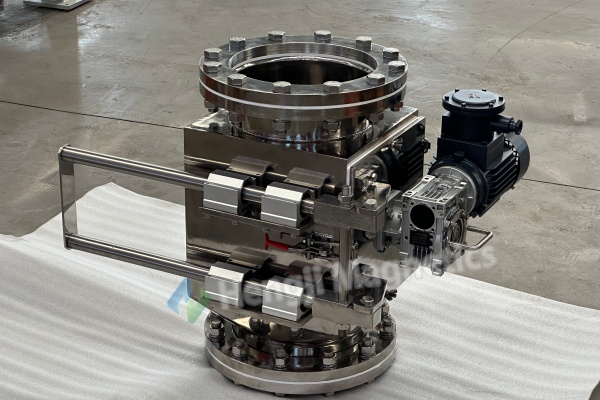
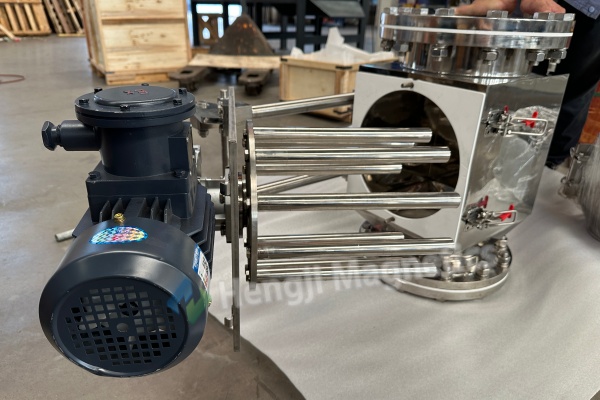
The rotary permanent magnetic separator uses a motor to rotate the magnetic bars continuously. Because the bars move, powder has less chance to settle and bridge between them. Iron capture and material flow happen at the same time. Once the unit is started, it runs in the set condition without an operator watching the magnetic zone. The permanent magnetic separator function remains active during rotation. The rotary magnetic separator function prevents the material from building up on the bars. This combination is why the integrated rotary permanent magnetic separator is suitable for difficult powders.
How the Rotary Permanent Magnetic Separator Works
Magnetic Source and Contact Materials
The rotary magnetic separator uses a rare earth Neodymium magnet as the magnetic source. The magnetic force is persistent and does not require continuous excitation power. The permanent magnetic separator design therefore keeps operating cost low. The parts that contact the powder are made of stainless steel. This prevents secondary contamination, which is important in food, pharmaceutical, and chemical applications. The equipment has a simple structure and is easy to use. The rotary permanent magnetic separator does not add extra excitation energy consumption during operation.
Material Range and Particle Size
The permanent magnetic separator is suitable for flowing, dry, free-flowing powders. It also handles fine particles and thin flakes. Applications include food powders, chemical raw materials, pharmaceutical excipients, quartz sand, potassium feldspar, mica, fine powder, and fly ash. The rotary magnetic separator can process fine powders from 10 to 500 mesh. Ferrous impurities in materials with particle diameters below 6 mm are attracted and held by the magnetic bars. This wide material range makes the rotary permanent magnetic separator practical for many production lines.
Installation Options for the Rotary Magnetic Separator
Free-Fall, Pipeline, and Standalone Use
The rotary magnetic separator supports free-fall installation, where material drops through the magnetic bar zone by gravity. It can also be connected in series in a material conveying pipeline, becoming part of the process line. Bulk materials can be processed with the unit used as a standalone machine. Standard pipe sizes range from 150 mm to 500 mm. Custom sizes are available based on site requirements. The permanent magnetic separator design allows flexible installation without a large separate structure. The rotary permanent magnetic separator can therefore fit different plant layouts.
Matching the Permanent Magnetic Separator to Site Conditions
Before selecting the rotary magnetic separator, check the material name, particle size, moisture content, flowability, pipe diameter, and installation method. These details determine the pipe size, magnetic bar configuration, and installation form. A permanent magnetic separator that is properly matched to the material will perform better than a standard unit chosen by size alone. The integrated rotary permanent magnetic separator should be configured for the actual powder, not just the pipeline.
Case Study: Rotary Permanent Magnetic Separator in Food Ingredient Powder
Reducing Unplanned Downtime
A food ingredient company had a powder that absorbed moisture and caked easily. The existing fixed-bar permanent magnetic separator at the discharge point became clogged after a few days. Iron occasionally passed through, and the crew had to stop the line every week for inspection and cleaning. Hengci Magnetic supplied a rotary magnetic separator installed in the discharge pipeline. The motor-driven magnetic bars rotated continuously, so powder did not bridge between the bars. Iron removal and material flow occurred at the same time. The pipe size and magnetic bar configuration were confirmed against the material characteristics. After commissioning, unplanned downtime decreased. Finished product inspection results became more stable. This case shows the value of the rotary permanent magnetic separator in a difficult food powder application.
Cleaning, Maintenance, and Safety
Manual Cleaning and Maintenance Schedule
The rotary magnetic separator uses manual iron removal. Production lines with high iron content should schedule manual cleaning by shift. At the end of each work cycle, clean the iron attached to the magnetic system promptly. This prevents unnecessary magnetic consumption. Routine maintenance mainly involves cleaning dust around the equipment. The magnetic bars, gear motor, and bearings are wear parts and should be inspected regularly. The gear reducer should receive an initial grease charge during the early service period, then be replaced at recommended intervals. These practices keep the permanent magnetic separator and rotary magnetic separator functions reliable.
Magnetic Field Safety for the Rotary Permanent Magnetic Separator
The magnetic system uses strong permanent magnets. Do not use ferrous tools or sharp objects near the magnetic field. The magnetic force can pull tools suddenly and cause injury. The magnetic field can seriously damage heart pacemakers. People with pacemakers must not approach the unit. Do not bring computer hard drives, tapes, credit cards, or mobile phones near the rotary permanent magnetic separator. These devices may become unusable. Follow these safety rules whenever working around the rotary magnetic separator and permanent magnetic separator.
Conclusion: Choose the Right Rotary Magnetic Separator and Permanent Magnetic Separator
Selecting a rotary magnetic separator and permanent magnetic separator for sticky or caking powders means matching material name, particle size, moisture content, flowability, pipe diameter, and installation method. Provide these details to Hengci Magnetic. We will configure the pipe size, magnetic bar arrangement, and installation form. With the right rotary permanent magnetic separator, powder flows more smoothly, iron is captured more consistently, and manual cleaning stops are reduced. The combined rotary magnetic separator and permanent magnetic separator design is a practical solution for food, chemical, pharmaceutical, plastics, packaging, and recycling powders.


