


 Categories

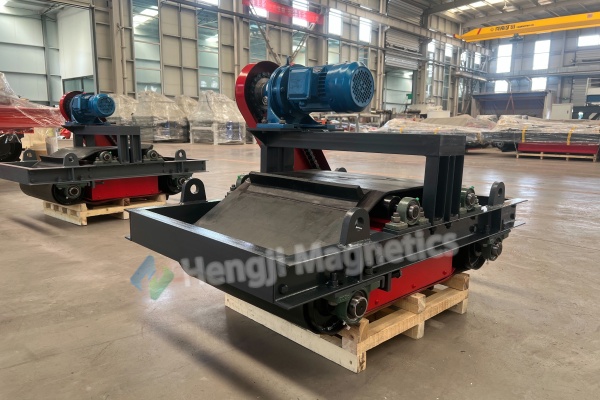
Wood processing, panel production, furniture manufacturing, and woodchip biomass power plants all face a common problem. Nails, staples, wire, and metal chips in incoming wood look harmless, but they can break chipper knives, saw blades, refiners, and sanders—causing downtime and expensive repairs. The overbelt magnetic separator designed as a magnetic separator for wood is installed above the wood conveyor belt. It lifts ferrous contaminants from boards, chips, and sawdust, then discharges them automatically. Hengci Magnetic has extensive field experience with these conveyor iron removal applications. This article answers common questions about lifting ability, installation position, suspension height, automatic discharge, operating conditions, safety, and maintenance.
Why the Overbelt Magnetic Separator Is Needed in Wood Processing
Protecting Chippers, Refiners, and Sanders
Wood material often contains nails, staples, and wire. If these enter a chipper, refiner, or sander, they can damage cutting edges and stop production. A magnetic separator for wood removes these ferrous items before they reach critical equipment. The overbelt magnetic separator protects the conveyor belt from longitudinal tearing and protects downstream crushers and mills. For wood processing lines, this protection directly reduces maintenance cost and unplanned downtime.
How the Magnetic Separator for Wood Lifts Thin Chips and Heavy Boards
Customers often ask whether thin wood chips and light boards allow nails to be captured. The overbelt magnetic separator uses a well-designed magnetic circuit with high field strength and deep penetration. It is suitable for thick material layers. When ferrous material is lifted, the discharge belt ejects it automatically. The magnetic separator for wood can handle nails embedded in stacked wood, but actual capture depends on magnetic force, belt speed, and material layer thickness. If the nail tip points downward or the wood pile is high, the suspension height and magnetic strength must be carefully matched.
 Installation Position for the Overbelt Magnetic Separator
Head Pulley Installation
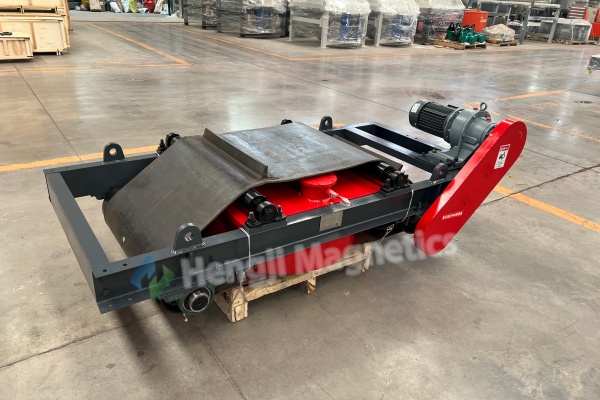
The overbelt magnetic separator is usually installed at the head or middle of the belt conveyor. For inclined installation at the head, the unit is mounted at the conveyor terminal. If belt speed is high, it can be installed slightly away from the pulley. The material trajectory helps lift tramp iron. If belt speed is low, the unit should be moved closer to the pulley. The pulley should be made of non-magnetic material. Proper position improves capture efficiency and reduces missed iron.
Horizontal Installation and Non-Magnetic Idlers
For horizontal installation, the discharge direction of the magnetic separator for wood should be perpendicular to the main material conveyor. The unit can be installed above the conveyor belt, above a picking station, or above a vibrating screen. Non-magnetic straight idlers should be installed below the separator. This prevents the magnetic field from being weakened by standard steel idlers. The overbelt magnetic separator therefore works more effectively when the conveyor structure is matched to the magnetic field.
Suspension Height and Automatic Discharge
Setting the Correct Suspension Height
Suspension height is the distance from the bottom of the magnetic box to the lowest belt surface. It should be as low as possible without interfering with material passage. It must not exceed the rated suspension height. The frame includes lifting eyes for installation. The rigging must have sufficient strength and allow height adjustment. On wood lines with high material piles and fast belt speeds, if the height cannot be reduced, pre-screening or flow diversion upstream may be necessary. Correct height is essential for the magnetic separator for wood to capture nails effectively.
Automatic Discharge with Self-Cleaning Belt
Manual cleaning is a major labor concern. Models with a discharge belt use a self-cleaning mechanism to discharge captured ferrous material into a collection bin without power-off manual cleaning. Belt tension and tracking can be adjusted without stopping production using bearing adjustment devices. Wood lines are dusty, so the drive drum uses a crowned structure and fully sealed cast steel bearing housings to prevent dust ingress. This improves bearing life and equipment stability. The overbelt magnetic separator with automatic discharge reduces manual work and keeps the line running.
Operating Conditions and Safety
Suitable Environment for the Magnetic Separator for Wood
The equipment is suitable for altitudes not exceeding 2,000 meters. Ambient temperature should be no higher than 40°C and no lower than -20°C. The environment must be free from explosion hazards and corrosive gases. Relative humidity should be moderate. Indoor and outdoor use are both acceptable. These conditions ensure reliable performance of the magnetic separator for wood.
Startup Sequence and Safety Precautions
The startup sequence must be followed. Start the overbelt magnetic separator first, then the conveyor belt. Stop the conveyor belt first, then stop the separator. This prevents tramp iron from slipping through. Before startup, check the bottom of the equipment for ferrous material. It must be removed before starting. Never start under load, or the sprocket, bearing, gearbox, or motor may be damaged. A strong magnetic field is present around the unit. Do not place watches or instruments nearby. Operators must not carry sharp ferrous tools or objects close to the overbelt magnetic separator.
 Case Study: Overbelt Magnetic Separator in Panel Production
Reducing Knife Breakage and Downtime
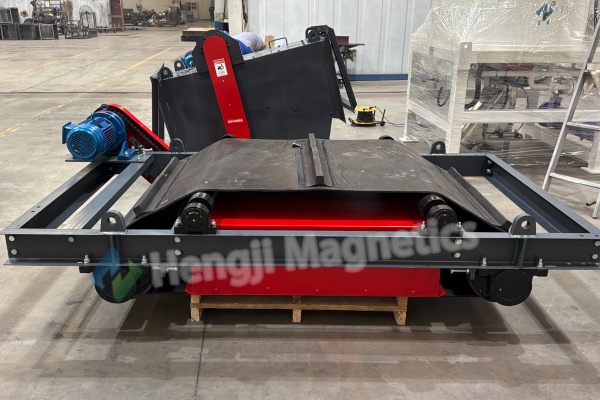
A panel production company reported occasional nails and staples in incoming wood chips. There was no iron removal stage before chipping. Chipper knives broke several times, and each knife change required half a day of downtime. The site was dusty, and clearance above the belt was limited. Hengci Magnetic supplied an overbelt magnetic separator installed above the conveyor. The suspension height was lowered according to the feed height. The magnetic center was aligned with the belt center. Captured iron was ejected by the discharge belt into the collection bin without manual power-off cleaning. After commissioning, knife breakage dropped significantly. Knife change intervals were extended. This case demonstrates the value of the magnetic separator for wood in real production.
Maintenance and Selection Tips
Daily Maintenance for the Overbelt Magnetic Separator
Daily maintenance is straightforward. During shift handover, check the adsorption condition and belt running status. Clean dust around the unit regularly and grease bearings. Inspect the discharge belt and power cables for damage. Replace damaged parts promptly. Keep the magnetic face clean. These practices keep the magnetic separator for wood reliable and safe.
What to Prepare Before Selecting a Magnetic Separator for Wood
Before selecting an overbelt magnetic separator, prepare the wood form (boards, chips, or sawdust), belt width, belt speed, material layer thickness, iron size and frequency, and available suspension space. These details determine the installation position, suspension height, and whether automatic discharge is needed. Provide this information to Hengci Magnetic. We will configure the right magnetic separator for wood for your line. Correct selection ensures that the overbelt magnetic separator captures nails and metal chips before they reach chippers, refiners, and sanders.
Conclusion
Wood processing lines need reliable iron removal to protect cutting equipment and maintain production continuity. The overbelt magnetic separator designed as a magnetic separator for wood lifts nails, staples, and wire from wood materials and discharges them automatically. Proper installation position, suspension height, automatic discharge, and routine maintenance are essential for effective capture. With the right overbelt magnetic separator and magnetic separator for wood, ferrous contaminants are stopped before they cause knife breakage and downtime.


