


 Categories
In today’s era of environmental consciousness and resource circularity, efficiently recovering valuable non‑ferrous metals from mixed waste has become a critical technical challenge. This applies to WEEE recycling, auto shredding, municipal solid waste treatment, and industrial residue processing.
Traditional methods—manual sorting or simple gravity separation—are inefficient, offer poor recovery rates, and struggle with complex material mixtures. The eddy current magnetic separator provides a transformative solution for magnetic separation recycling. It uses a unique physical principle: instead of directly attracting metals with magnetic force, it generates repulsive forces through induced eddy currents, precisely separating non‑ferrous metals like copper and aluminum from non‑metallics. This technology turns what was once waste into valuable secondary resources.
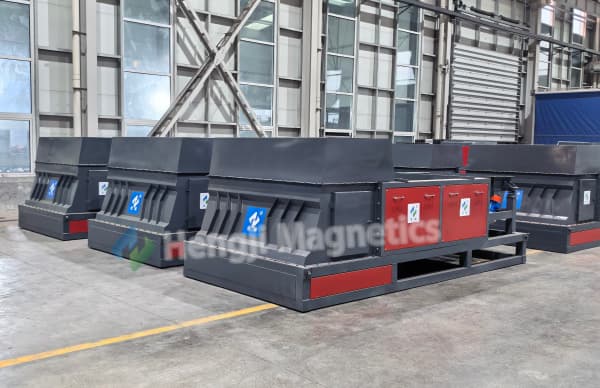
Separation Precision and Recovery Rate
On e‑waste processing lines, mixed plastics, rubber, glass, and non‑ferrous metals are difficult to separate by traditional means. The eddy current magnetic separator exploits differences in electrical conductivity. A high‑frequency alternating magnetic field on the separation rotor induces eddy currents in conductive non‑ferrous metals. These currents create an opposing magnetic field, generating a repulsive force that propels metals forward while non‑conductive materials fall normally.
The key separation criterion is the ratio of conductivity to density. Materials with higher ratios—copper and aluminum—are more easily separated. The eddy current magnetic separator achieves exceptionally high purity in recovered metals, meeting strict feedstock requirements and maximizing economic value in magnetic separation recycling.
Adaptability Across Waste Streams
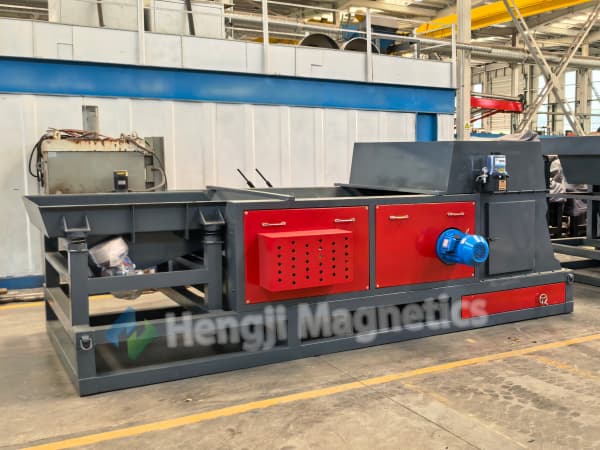 Recovered materials vary widely in form, size, and composition. The eddy current magnetic separator addresses this with broad applicability in magnetic separation recycling:
-
E‑waste processing: Recovering copper and aluminum from shredded circuit boards and appliance shredder residue.
-
Municipal solid waste: Separating aluminum cans and foil from mixed waste.
-
Glass recycling: Removing aluminum caps and rings from crushed glass.
-
Auto shredder residue: Separating aluminum and copper chunks from shredded vehicles.
-
Plastic recycling: Removing non‑ferrous metal contaminants from regrind.
-
Construction and demolition waste: Extracting metals from crushed concrete and wood waste.
-
Bottom ash treatment: Recovering non‑ferrous metals from incinerator bottom ash.
This versatility makes the eddy current magnetic separator an essential component in diverse recycling operations.
Stability and Maintenance
Waste processing involves abrasive, sharp, and heavy materials, requiring robust equipment. The eddy current magnetic separator is designed for durability. The main unit consists of the separator assembly (permanent magnetic rotor, conveyor belt system, drive motor) mounted on a heavy‑duty frame with protective covers.
The permanent magnetic rotor requires no external power to sustain its field, minimizing energy consumption. Daily maintenance focuses on belt inspection, tracking adjustments, and routine bearing lubrication. This low‑maintenance design ensures reliable magnetic separation recycling with minimal downtime.
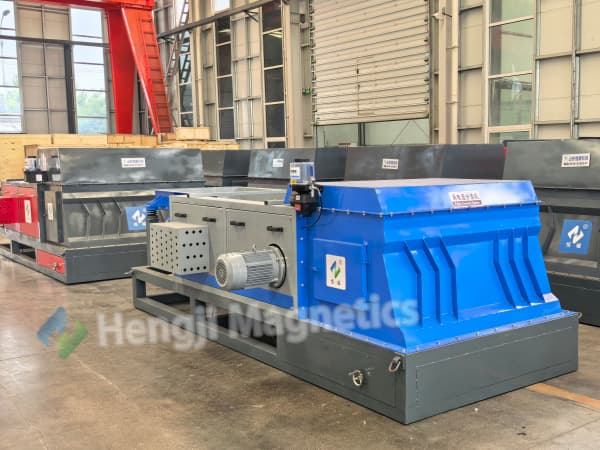 Economic Value and Return on Investment
Customers evaluate both initial cost and lifecycle returns. The eddy current magnetic separator delivers high throughput and precise separation, converting low‑value waste into high‑purity copper, aluminum, and other non‑ferrous metals with strong market demand. The payback period is typically short.
By eliminating manual sorting costs and reducing operational expenses, the eddy current magnetic separator offers an economically compelling solution. For any business committed to resource recovery, investing in this technology is a strategic move toward efficient, profitable magnetic separation recycling.
Conclusion
The eddy current magnetic separator represents a technological breakthrough in magnetic separation recycling. With high precision, excellent recovery rates, broad material adaptability, and low operating costs, it has become an essential tool in modern recycling. For companies seeking to extract maximum value from waste and drive the circular economy, the eddy current magnetic separator is the clear choice—building an efficient, low‑carbon, high‑return recycling system from the ground up.


