


 Categories
In power generation, mining, metallurgy, building materials, and chemical industries, ferrous contaminants—anchor rods, wire rope ends, bucket teeth, bolts—hidden in non‑magnetic materials are a constant threat to downstream crushers, mills, and other critical equipment. Once these tramp iron pieces enter the next process stage, they can cause abnormal wear, reduced production efficiency, or catastrophic jams and equipment failure, leading to huge economic losses. The overhead magnetic separator powered by permanent magnetic separator technology is widely used to meet this challenge. Installed above the head or middle section of belt conveyors, it uses high‑performance rare earth permanent magnets as the magnetic source to generate a strong, stable field without interrupting material flow, efficiently lifting and removing ferrous contaminants from bulk non‑magnetic materials. It has become an indispensable safety guardian for modern industrial conveyor lines.
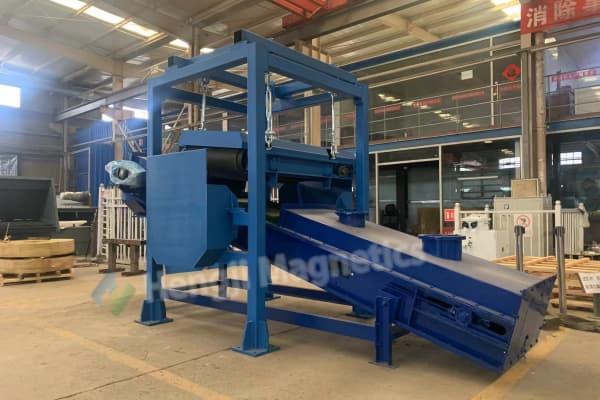
How Does an Overhead Permanent Magnetic Separator Work?
The core advantage of this overhead magnetic separator lies in its permanent magnet‑driven design. The magnetic circuit is computer‑optimized with a dual‑pole structure to ensure maximum lifting force and sufficient penetration depth at rated working distance. The large magnetic pole area provides ample capture time even at high belt speeds. Unlike electromagnetic units requiring continuous power, the permanent magnetic separator uses high‑coercivity, high‑remanence Neodymium magnets to generate a powerful field without external power—truly zero‑energy operation. This not only saves electricity costs but also eliminates common electromagnetic failures like coil overheating and insulation aging, resulting in a simple structure with extremely low failure rates.
Key Customer Concerns About the Overhead Permanent Magnetic Separator
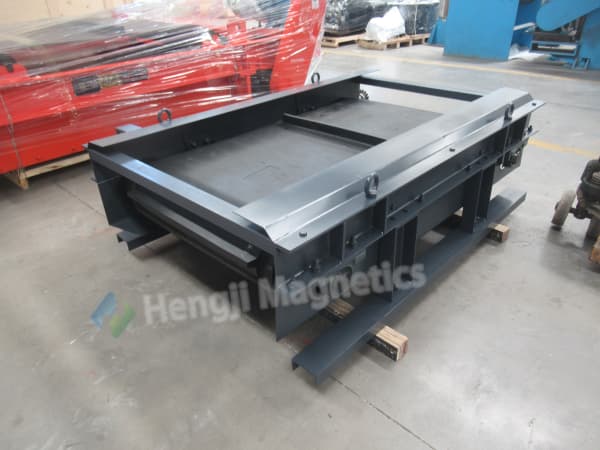 Separation Efficiency and Tramp Iron Handling Capacity
Many customers worry about insufficient lifting force for heavy tramp iron buried in thick material layers. The overhead magnetic separator features a high‑performance rare earth magnetic core that easily lifts ferrous objects from 0.1 kg to 30 kg, including bolts, nuts, spikes, hammer fragments, and wire rope ends. For thick‑burden applications, the permanent magnetic separator offers high field strength and deep penetration to capture iron deep in the material. Two series are available: permanent type requires no power with a 10+ year magnetic life, and electromagnetic type provides adjustable, deeper‑penetrating fields via a control cabinet, adapting to fluctuating iron content.
Installation Flexibility and Space Adaptability
Conveyor line layouts vary widely, making installation flexibility critical. The overhead magnetic separator offers two mounting options: inclined (head pulley) and horizontal (mid‑belt). Inclined installation at the head pulley uses material trajectory to aid capture at belt speeds above 2 m/s; for lower speeds, the overhead magnetic separator moves closer to the pulley. Horizontal installation positions the permanent magnetic separator over the belt, screen, or picking station, with the discharge belt perpendicular to the main conveyor. Non‑magnetic idlers beneath the unit maximize field effectiveness. Custom suspension systems are available for perfect site fit.
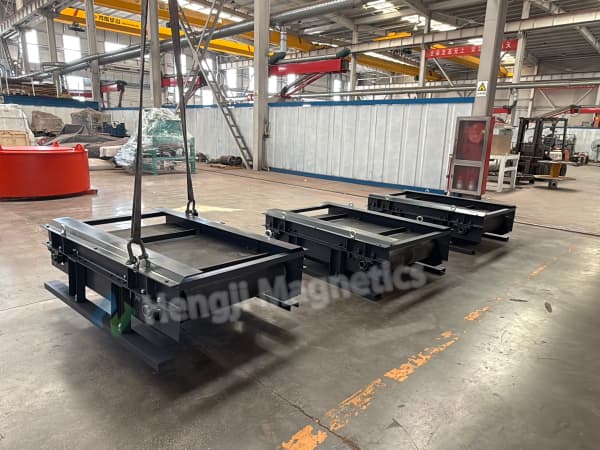 Stability and Maintenance Convenience
The fully sealed housing of the overhead magnetic separator provides high protection against dust, moisture, and corrosive gases, ensuring less than 5% magnetic decay over ten years in harsh environments. For self‑cleaning models, a cycloidal gearmotor drives the discharge belt to continuously scrape captured iron into a collection bin—fully automatic, no manual intervention. Belt tension and tracking adjustments are made without stopping the line. Daily maintenance is limited to cleaning fine iron powder from the pole face and checking fasteners.
Economic Value and Return on Investment
While the initial cost of a permanent magnetic separator may be slightly higher than conventional units, its lifecycle economics are outstanding. The permanent magnetic system consumes no power, maintains stable field performance, and the core magnetic circuit lasts over ten years with virtually zero demagnetization risk—no ongoing maintenance costs for magnetic strength. It protects downstream crushers and mills, preventing equipment damage worth many times the separator’s price and avoiding costly unplanned downtime. This “one investment, long‑term benefit” characteristic makes the overhead magnetic separator a high‑return safety investment.
Applications of Overhead Permanent Magnetic Separators
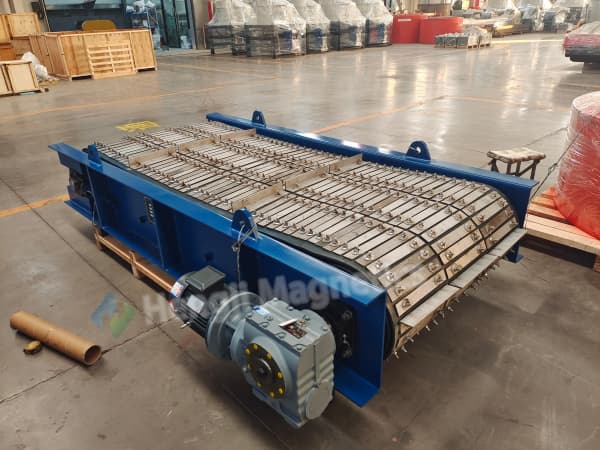
Overhead magnetic separators with permanent magnetic separator technology are widely used in:
-
Mining and aggregates: Removing tramp iron from ore before crushing.
-
Coal handling: Extracting bolts, wire rope, and steel from run‑of‑mine coal.
-
Cement and building materials: Capturing steel balls and broken mill liners.
-
Recycling and waste processing: Separating ferrous metals from shredded waste.
Conclusion
The overhead magnetic separator powered by permanent magnetic separator technology is becoming a standard safety device on conveyor lines in power, mining, building materials, and chemical industries. With zero‑energy operation, reliable permanent magnetic design, flexible installation, and no‑stop maintenance, it provides a 24/7 automated safety barrier. For any operation committed to line safety, efficiency, and profitability, a high‑performance overhead magnetic separator is a strategic investment that protects equipment and ensures continuous production.


