


 Categories

On belt conveyors in power generation, mining, metallurgy, building materials, coal preparation, and chemical industries, tramp iron can damage belts, jam crushers, and stop production. The electro suspended magnets combined with a suspended belt magnet design are built for these demanding conditions. The unit uses resin-cast, self-cooling, fully sealed construction. It offers deep magnetic penetration, strong lifting force, dust resistance, rain resistance, and corrosion resistance. This article answers common customer questions about lifting depth, installation height, automatic discharge, cooling, energy savings, and safety.
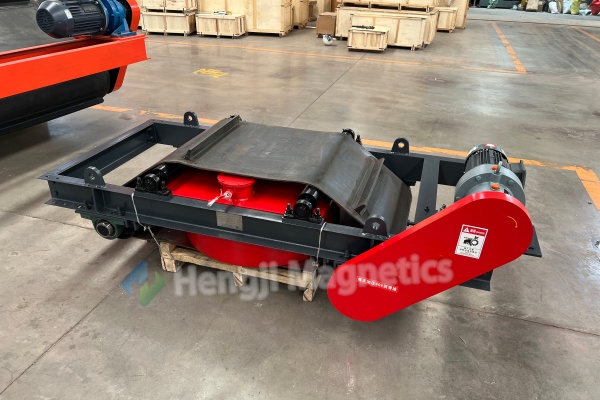
How Electro Suspended Magnets Lift Deep-Buried Iron
Magnetic Circuit Design and Lifting Force
The first question customers ask is whether iron buried under a thick material layer can still be lifted. The electro suspended magnets use a well-designed magnetic circuit with high field strength and deep penetration. The sealed resin-cast body provides strong lifting force at the working distance. Similar suspended units can remove ferrous objects weighing from 0.1 to 15 kg. If site conditions involve heavier iron, this should be stated during selection.
Matching the Suspended Belt Magnet to Material Conditions
A suspended belt magnet must be matched to belt width, belt speed, material layer thickness, and iron size. If the material layer is thick or the iron is deeply buried, a stronger magnetic circuit is needed. The electro suspended magnets design allows the magnetic force to reach through the burden. Without this match, iron may pass under the magnet even when the unit appears to be working.
Installation Position and Suspension Height for the Suspended Belt Magnet
Head Pulley vs. Mid-Conveyor Installation
Installation position directly affects performance. A suspended belt magnet is usually installed at the head or middle of the belt conveyor. At the head, the unit works in an inclined position. If belt speed is high, it can be installed slightly away from the pulley so material trajectory helps iron capture. If belt speed is low, it should be moved closer to the pulley, and the pulley should be non-magnetic. For mid-conveyor installation, the unit works horizontally. The discharge belt runs perpendicular to the main conveyor. It can be installed above the belt, picking station, or vibrating screen.
Adjusting Suspension Height for Electro Suspended Magnets
Suspension height is critical. The electro suspended magnets should be installed as low as possible without interfering with material flow. It must not exceed the rated suspension height. The frame includes lifting eyes for installation. The rigging must have sufficient strength and allow height adjustment. If the unit is hung too high, magnetic force at the material surface drops and iron can slip through.
Automatic Discharge and Manual Cleaning Options
Suspended Belt Magnet with Self-Cleaning Discharge
Iron removal must be matched to labor costs. A horizontal suspended belt magnet uses a discharge belt to eject captured iron automatically. This prevents longitudinal belt tearing and protects crushers and mills. For production lines with frequent iron and tight shifts, a self-cleaning model reduces manual work and improves safety.
Simple Suspended Units for Low-Iron Applications
Simple suspended units without a discharge belt require manual removal. When the permanent magnet captures enough iron, an operator must use a non-magnetic scraper or gloves to remove it. These units suit continuous operation with low iron content. During selection, calculate the labor and downtime cost. High-iron lines benefit from automatic discharge; low-iron lines may find simple structures more economical.
Cooling and Energy-Saving Operation
Oil Cooling for Electro Suspended Magnets
Long-term coil heating is a common concern. The electro suspended magnets use a sealed body with transformer oil as the cooling medium. The oil has good insulation and a suitable boiling point. When the coil heats up, heat transfers to the oil. A dedicated oil pump circulates hot oil to a condenser, where fans provide forced cooling. This forced oil circulation effectively lowers coil temperature. Some models use self-cooling with a fully sealed structure. Selection should consider duty cycle and site temperature.
Metal Detector Control for Intermittent Operation
Energy savings matter when iron appears intermittently. A metal detector can be added to the suspended belt magnet. The separator operates only when the detector signals tramp iron. If the detector fails, the system can switch to continuous operation. An electric traveling trolley can also be added for applications that require iron discharge without stopping material flow.
Case Study: Suspended Belt Magnet in Coal Preparation
Solving Intermittent Iron and Dust Problems
A coal preparation plant reported intermittent tramp iron in the main conveyor. Manual power-off cleaning created gaps during shift changes, and iron had reached downstream crushing equipment. The site was dusty, and installation space on both sides of the belt was tight. Hengci Magnetic supplied electro suspended magnets installed at the conveyor head. The suspension height was set within the rated limit and lowered to the minimum clearance for material passage. Captured iron was ejected by the discharge belt into the collection bin. A metal detector was added because iron content was low. The unit operated only when iron was detected, avoiding long idle power consumption. The fully sealed body resisted dust and rain. Operation was stable in the dusty environment.
Optional Traveling Trolley for Flexible Discharge
If the site requires moving discharge, an electric traveling trolley with a programmable control cabinet can be added. The suspended belt magnet moves above the collection bin and de-energizes to release iron. The collection bin must be made of non-magnetic material. This option improves flexibility for plants with multiple collection points.
Safety and Maintenance Tips
Electrical and Cable Care for Electro Suspended Magnets
The control cabinet must be reliably grounded. After a long shutdown, check electrical performance and power lines before restarting. Do not damage, impact, or pull the cables. Confirm power is off before plugging or unplugging connectors. For outdoor installation, rain protection is required. Water damage to the coil is not covered by warranty.
Magnetic Field Safety Around the Suspended Belt Magnet
A strong magnetic field is present around the suspended belt magnet. Do not place watches or instruments nearby. Operators must not carry sharp ferrous tools or objects close to the unit. These precautions prevent injury and equipment damage.
Conclusion: Choose the Right Electro Suspended Magnets and Suspended Belt Magnet
Selecting the right electro suspended magnets and suspended belt magnet means matching belt width, belt speed, material layer thickness, material properties, iron size and frequency, and installation space. Provide these details to Hengci Magnetic. We will configure the installation position, suspension height, cooling method, and discharge control in one step. With the right electro suspended magnets and suspended belt magnet, tramp iron is caught before it reaches downstream equipment.


