


 Categories

Iron contamination in dry powder is easy to miss and expensive to ignore. A dry drum magnetic separator pulls ferrous particles out of free-flowing powder continuously, protecting downstream crushers, grinders and product quality.
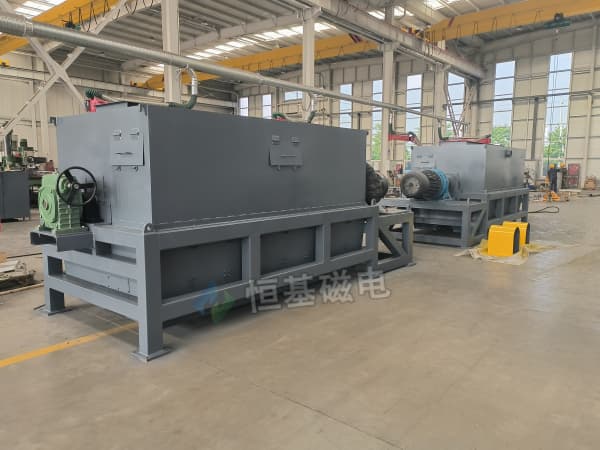
What a Dry Drum Magnetic Separator Does
A dry drum magnetic separator is a magnetic separation device that removes iron from dry, free-flowing powder automatically and continuously. It handles abrasives, refractories, non-metallic mineral processing, carbon black, grain, feed and chemical raw materials. Because no water is involved, the dry drum magnetic separator suits processes where slurry handling is impractical, and where product moisture must stay low.
Working Principle of the Dry Drum Magnetic Separator
Magnetic separation relies on the difference in magnetic properties between minerals. Material entering the separation zone is acted on by both magnetic force and mechanical force (gravity, centrifugal force), so particles follow different paths. Inside the dry drum magnetic separator, a high-intensity magnet system stays fixed while the drum shell rotates. The shell, made of stainless steel, drags magnetic particles through the magnet zone. Once they leave that zone, they fall away under gravity and centrifugal force — the dry drum magnetic separator separates material without any washing water.
Key Design Features
The magnet circuit inside the dry drum magnetic separator is simulated by computer for a tailored field. A high-performance neodymium (NdFeB) magnet serves as the magnetic source, giving a strong field and high holding force at the drum surface. Some dry drum magnetic separator models use a 185° magnet wrap angle, and the drum shell may come in a plain stainless finish or with rubber coating in smooth, diamond or herringbone patterns. The dry drum magnetic separator consumes no power for the magnet itself — energy savings come from the drum being free of electrical excitation.
Feeding and Speed Control
Most dry drum magnetic separator units use a vibratory feeder driven by a silicon-controlled rectifier supply, giving stepless adjustment to suit different particle sizes. On roller-type layouts, drum speed is also adjustable, typically from 8 to 40 rpm or 40 to 200 rpm depending on the model. Getting the speed right matters: a faster dry drum magnetic separator moves material through the field quicker, while a slower setting lengthens exposure time. Material can also be pre-selected in a coarse dry magnetic separator where the dry drum magnetic separator is used for magnetite and dry ore pre-concentration, raising mill feed grade and lowering processing cost.
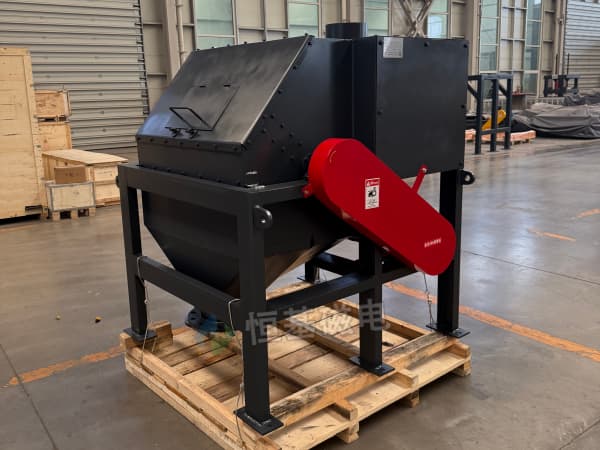
Applications and Selection Factors
Before choosing a dry drum magnetic separator, confirm material particle size, bulk density, moisture content, iron content and hourly throughput. Check whether the dry drum magnetic separator is intended for simple iron removal or for pre-concentration with concentrate and tailings control. Field intensity should match the material: a dry drum magnetic separator for strongly magnetic ore needs less field than one handling weakly magnetic fines. Drum surface field strength spans a wide range across models, so the dry drum magnetic separator can be matched to the job rather than over-specified.
Installation and Operation
A dry drum magnetic separator is mounted directly on a level floor, with the housing reliably earthed. Check drum rotation direction through the inspection opening — the drum should rotate forward, in the same direction as the feed. On start-up, open the main power, place the receiving device at the discharge port, then feed material gradually. The rear discharge port takes iron, the front one takes non-magnetic product. The magnetic angle adjustment rod is set at the factory and normally needs only fine adjustment, moving the magnet system up or down to suit the material.
Maintenance Points
Bearing lubrication on the dry drum magnetic separator uses calcium-based grease, applied monthly and filled to about two-thirds of the space. Gearbox oil should be changed and cleaned every six months. Feed, spray and concentrate pipes must be checked for blockage. As for the wet-drum cousin of this machine, bearing temperature rise should stay within limits during test running, and a loaded trial should start at no more than half rated feed. Belt tracking on belt-type dry drum magnetic separator units can be corrected by adjusting the take-up bolts on the bearing housings.
Why Choose a Dry Drum Magnetic Separator
A dry drum magnetic separator delivers continuous, automatic iron removal with minimal power consumption and low maintenance demand. For plants handling dry powder, it is often the simplest way to keep ferrous contamination out of the finished product and away from critical equipment.


