


 Categories
In ceramic glazes, high-purity quartz, lithium battery precursors, and fine chemical pigments, iron contamination is often the final barrier between good products and premium grades. When customers demand iron content drop from hundreds of ppm to just tens or even single-digit ppm, traditional magnetic bars or permanent drum separators fall short.
Why? Because fine iron particles—especially weakly magnetic minerals like hematite and pyrrhotite—have very poor magnetic response. They require an extremely high gradient, deep-reaching magnetic field to be captured effectively.
However, pursuing the ultimate gradient usually means using dense collecting matrices such as steel wool or magnetic screens. These media are prone to clogging by non-magnetic slurry or fine powder. Separation efficiency plummets, and operators must frequently stop for cleaning.
That is where the self cleaning magnetic separator comes in. It is not simply a standard separator with an automatic discharge feature. Instead, it deeply integrates high gradient magnetic separation media principles with clever mechanical switching logic. The equipment can continuously feed material while automatically cleaning and regenerating the saturated media, maintaining peak iron removal performance without interruption.
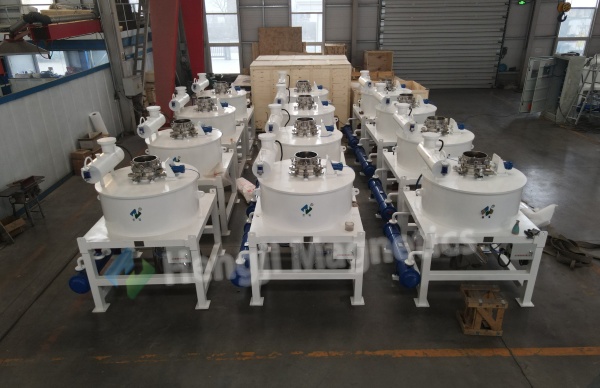
How Does a Self Cleaning Magnetic Separator Prevent Media Clogging While Achieving High Gradient Magnetic Separation?
This is the core question customers ask. They want both high gradient for clean iron removal and a clog‑free process without shutdowns.
The self cleaning magnetic separator solves this with a unique “zone‑by‑zone, time‑shared” working mechanism. Inside the machine, there are typically two or more sets of magnetic media modules (e.g., cartridges filled with steel wool or profiled plates). These modules are alternately pushed or rotated into a strong magnetic field zone where high gradient magnetic separation occurs.
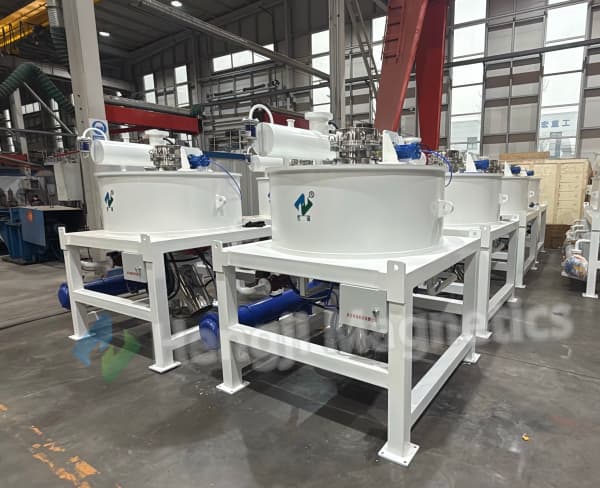 When one module is in the working zone, the background magnet magnetizes the media, creating an extremely high gradient magnetic trap. Fine, weakly magnetic iron particles are captured from the slurry. Meanwhile, another saturated module is automatically moved out of the magnetic field and into a non‑magnetic “washing station.”
In this offline washing station, the magnetic field is removed or shielded. Powerful high‑pressure backwash water or compressed air pulses strip away the accumulated iron sludge from the media surface and gaps. The media is regenerated, as clean as new, and then rotated back into the working zone.
A PLC control system precisely sequences this switch and regeneration cycle, completing it in seconds. The main material flow never stops. The result: the powerful capture capability of high gradient magnetic separation combines with the self‑cleaning system’s periodic regeneration, fundamentally eliminating efficiency loss from media clogging. This ensures continuous, stable removal of fine iron at ppm levels.
Can Separation Precision and Throughput Be Balanced? How Is Magnet Stability Guaranteed?
Customers often worry: will chasing high precision sacrifice processing capacity? A well‑designed self cleaning magnetic separator fully balances both.
The magnetic circuit is optimized through computer simulation. Media thickness and gap are rationally arranged within the limited pole space. Slurry passes through the high gradient magnetic separation zone at an optimal velocity and flow pattern, ensuring every particle has sufficient opportunity to be captured.
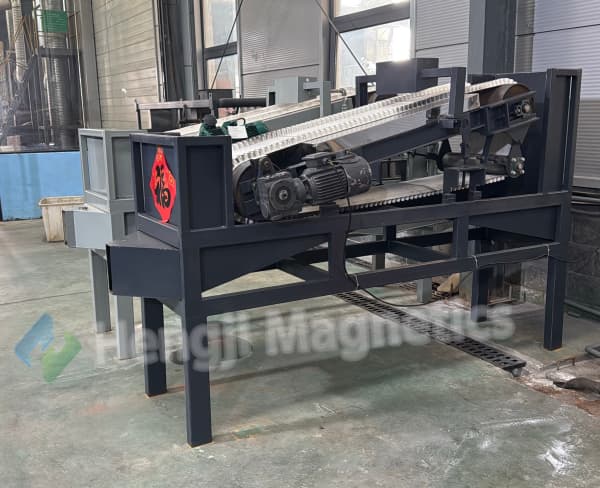 Operators can flexibly adjust:
-
Feed rate
-
Wash water pressure and flow
-
Media switching cycle
This allows fine‑tuning of iron removal depth and throughput.
Regarding magnet stability, the self cleaning magnetic separator uses either high‑grade rare earth Neodymium (permanent magnet type) or high‑power electromagnetic coils. Permanent magnet assemblies are fully sealed to isolate them from slurry corrosion, ensuring over ten years of stable field strength. Electromagnetic types feature forced oil or water cooling, keeping coil temperature rise under control and insulation reliable, delivering consistent high‑gradient output under constant current.
What Difficult Materials Can a Self Cleaning Magnetic Separator Handle? What Are the Maintenance Points?
The self cleaning magnetic separator is extremely versatile. It excels with materials that have strict iron requirements, high slurry viscosity, or weakly magnetic iron minerals.
Applications include:
-
Non‑metallic mineral processing: Removing fine hematite and ilmenite from quartz sand, feldspar, kaolin, potassium‑sodium feldspar, boosting whiteness above 90%.
-
Fine chemicals: Eliminating iron, cobalt, nickel impurities from ceramic pigments, powder coatings, catalyst carriers.
-
Tailings re‑processing and industrial water purification: Recovering valuable metal fines.
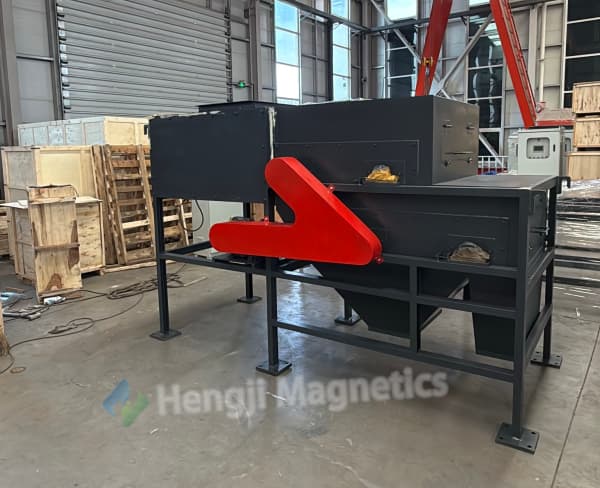 Maintenance is simple. The self cleaning magnetic separator is designed for ease of use. Daily tasks include:
-
Checking seals of pneumatic or hydraulic actuators.
-
Periodically cleaning pipeline filters.
-
Inspecting media for wear.
Because the media regeneration and iron discharge are highly automated, operators only need to set parameters on the control panel. Manual intervention is minimal.
Conclusion: The Strategic Choice for Stricter Purity Standards
The self cleaning magnetic separator is not just another iron removal device. It is a sophisticated system that integrates high gradient magnetic separation with intelligent, automatic media regeneration. It delivers the extreme gradient needed to capture fine, weakly magnetic particles while eliminating the clogging that plagues traditional high‑gradient designs.
With stable magnet performance, adjustable throughput, and minimal maintenance, it empowers your production line to meet ever‑stricter purity standards—from hundreds of ppm down to single‑digit ppm. Choose the right self cleaning magnetic separator and break through your iron removal bottleneck.


