


 Categories
In bulk material handling across mining, metallurgy, building materials, power generation, coal preparation, and chemical industries, ferrous contamination has long been a persistent challenge for production managers. Once tramp iron enters crushers, grinding mills, and other core equipment, it can cause accelerated wear, equipment damage, or even complete production stoppages. Even more concerning, sharp tramp iron can tear conveyor belts—paralyzing entire production lines.
The suspended magnetic separator with overbelt magnetic separator design provides an efficient, reliable solution to this problem. Combining suspended installation with automatic belt discharge, it can be installed at the head or middle section of belt conveyors. It lifts ferrous contaminants from non-magnetic bulk materials, and the discharge belt automatically ejects them—delivering continuous, automatic iron removal.
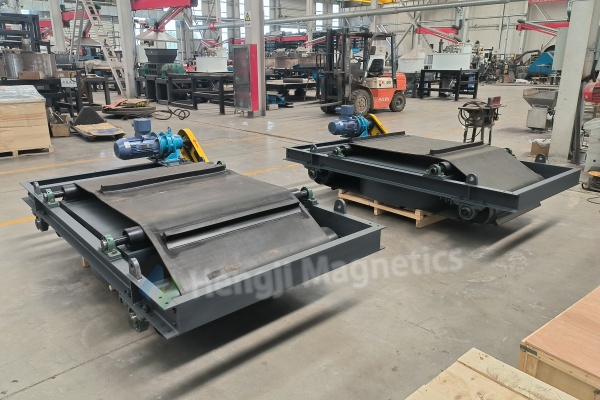
Customer Concern 1: Does the Suspended Overbelt Magnetic Separator Remove Iron Thoroughly? Can It Handle Both Large and Small Pieces?
In bulk material conveying, tramp iron comes in many forms—from heavy bolts and welding rods weighing several kilograms to fine iron filings and nails. If the equipment only handles large pieces, small tramp iron will slip through and still damage downstream equipment.
The suspended overbelt magnetic separator features a specially optimized magnetic circuit. The separator body is designed with high field strength and deep penetration—effectively attracting tramp iron even from thick material layers. Captured ferrous material is automatically ejected by the discharge belt into a collection bin, requiring no manual cleaning—achieving fully automated iron removal.
A cement plant installed a suspended magnetic separator at the front of its crushing line. Previously, hammer replacement due to tramp iron entering the crusher occurred three times per month. After installation, this dropped to less than once per month—saving tens of thousands of dollars annually in hammer maintenance alone. More importantly, the conveyor belt has not experienced any emergency stoppages from tramp iron tearing.
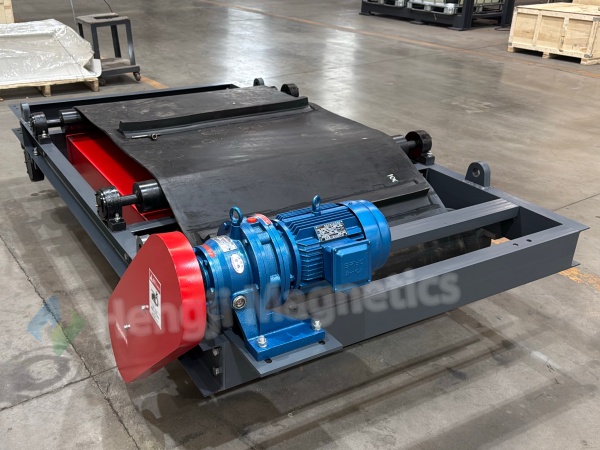 Customer Concern 2: Does Installing the Suspended Overbelt Magnetic Separator Affect Existing Production Lines? Does It Require Downtime?
Many plants have been running for years—the simpler the installation, the better. No one wants to shut down an entire production line for an extended period just to add iron removal equipment.
The suspended overbelt magnetic separator offers exceptional installation flexibility. Inclined mounting at the conveyor head uses material trajectory to assist iron capture. Horizontal mounting positions the unit above the belt, picking stations, or vibrating screens—with the discharge belt running perpendicular to the main conveyor for automatic tramp iron removal. The magnetic centerline must align with the belt centerline, ensuring precise magnetic field coverage matching the material flow path.
Suspension methods are also flexible—rod-mounting, chain suspension, or wire-rope trolley systems—adapting to different building structures and installation scenarios. Non-magnetic idlers should be installed beneath the separator to prevent field interference and ensure iron removal effectiveness.
A coal preparation plant added a suspended overbelt magnetic separator to its existing conveyor line—the entire retrofit was completed during a single maintenance day without affecting normal production.
Customer Concern 3: Is Daily Maintenance Complicated for the Suspended Overbelt Magnetic Separator? What If the Belt Misaligns?
Once equipment is in service, maintenance convenience directly affects service life and operating costs. If a simple belt tracking issue requires production stoppage, the loss goes far beyond maintenance time.
The suspended overbelt magnetic separator is designed for easy maintenance. The discharge mechanism consists of a frame, worm-geared motor, drive and tail pulleys, guards, and a discharge belt with scrapers. Belt tension and tracking adjustments are made without stopping production, using bearing adjustment devices—simple operations that do not affect production schedules.
One building materials plant reported that since installing the suspended magnetic separator, the equipment has experienced no unscheduled downtime beyond routine inspections. Quarterly bearing greasing and gearbox oil checks represent the full maintenance requirement—operating costs are extremely low.
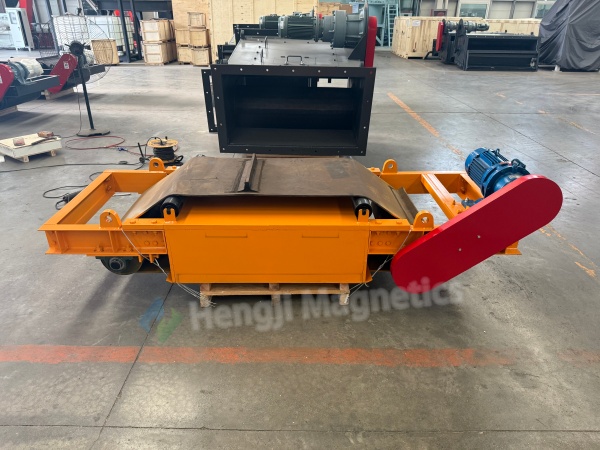 Customer Concern 4: Can the Suspended Overbelt Magnetic Separator Withstand Harsh Environments? Is It Suitable for Outdoor Use?
Production sites in power, mining, and building materials are often dusty with wide temperature and humidity swings. Equipment must operate reliably under these conditions—a key customer concern.
The suspended overbelt magnetic separator is designed for diverse operating conditions. It operates normally at altitudes up to 2000 meters, ambient temperatures from -20°C to +40°C, and relative humidity up to 90%—suitable for both indoor and outdoor use. The permanent magnetic system requires no external excitation power, delivering energy savings and reliable performance—ideal for continuous industrial operations.
Conclusion
The suspended magnetic separator with overbelt magnetic separator design—with its powerful magnetic penetration, flexible installation, easy maintenance, and reliable operation—is helping power plants, mines, metallurgical plants, building materials facilities, coal preparation plants, and chemical plants solve bulk material iron removal challenges. It protects crushers, grinding mills, and other core equipment from tramp iron damage while preventing conveyor belt tearing—ensuring safe, stable production line operation. Choosing the right suspended overbelt magnetic separator has become an important step in ensuring production continuity, reducing maintenance costs, and improving overall operational efficiency.


